
National Water Academy: Essential Guide to Courses, Training and Opportunities
Discover how India's National Water Academy supports water resources professionals through specialist training, hydrology education, and practical learning.

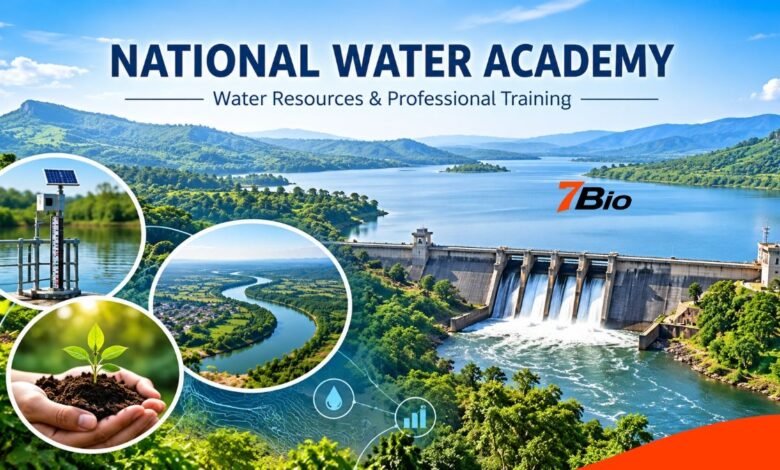
The National Water Academy (NWA) is a specialist training institution in Pune, Maharashtra, India, operating under the Central Water Commission and the Ministry of Jal Shakti. Its primary purpose is to improve professional knowledge and practical capabilities in water resources development, planning, and management.
The academy provides training in hydrology, flood forecasting, irrigation systems, dam safety, environmental management, and related technical subjects. Its activities serve government engineers and other professionals, while selected programs also involve researchers, educators, private-sector participants, and wider community stakeholders.
Unlike a conventional university offering undergraduate admissions, the academy concentrates on professional development, technical instruction and capacity building.
This article explains the academy’s background, training programs, eligibility, online learning options, and application process, along with practical considerations for prospective participants.
What Is the National Water Academy?
The National Water Academy is a training institution associated with India’s Central Water Commission (CWC), a government organization responsible for technical work on water resources.
Located in Khadakwasla, Pune, the academy operates as a center of excellence for professional training and capacity building.
Its work is connected with the development of technical expertise needed to address water management challenges, including river basin planning, irrigation development, flood preparedness and infrastructure management.
Training is particularly relevant to professionals already working in the water sector who need to develop new skills or update their existing knowledge.
The institution also participates in educational collaborations and awareness programs that extend beyond its traditional engineering audience.
History and Development of the National Water Academy
The academy traces its origins to 8 March 1988, when the Central Training Unit was established within the Central Water Commission.
The original institution was created to train engineers working in central and state organizations involved in water resources development.
The United States Agency for International Development helped establish it, and the World Bank-assisted Hydrology Project later supported its development.
The Central Training Unit developed into the National Water Academy in 2001.
A major development followed in 2012, when the academy was recognized as a Regional Training Center of the World Meteorological Organization (WMO).
This strengthened its role in specialized hydrological education and distance-learning activities.
The academy has since broadened its programs to include new technologies, online learning, professional development, and awareness of sustainable water management.
What Courses Does the National Water Academy Offer?
The academy covers both technical and non-technical aspects of water resources management. Its training subjects vary by program and participants’ professional backgrounds.
Hydrology and Water Resources Management
Hydrology is among the academy’s principal training areas. Courses may address rainfall, river flow, surface water, groundwater, hydrological observations and the analysis of water-related data.
These subjects are relevant to engineers and specialists responsible for assessing water availability, planning projects and understanding changing hydrological conditions.
Flood Forecasting and Flood Management
Flood management training addresses the technical knowledge required to understand flooding and support preparedness activities.
Subjects include flood forecasting, hydrological modeling, river behavior, and flood risk assessment.
Such training can help professionals understand the analytical methods used in flood management and emergency planning.
Dam Safety and Hydraulic Engineering
The academy’s training portfolio includes subjects related to dam design, safety, operation, and monitoring.
Depending on the program, participants may study engineering calculations, hydraulic analysis, structural considerations, and specialized modeling software.
Irrigation and Water Conservation
Irrigation management forms another important part of the curriculum.
Relevant subjects include watershed management, command area development, participatory irrigation management and the efficient use of available water resources.
These areas connect engineering knowledge with the practical challenges of agricultural water distribution.
Geospatial Technology and Data Analysis
Modern water management increasingly involves digital geographical information and data-processing tools.
The academy’s published course areas include remote sensing, Geographic Information Systems (GIS), hydrometry, and technical data analysis.
Training in these areas supports professionals who need to interpret geographical information and apply it to water resources planning.
Main Types of Training Programs
The National Water Academy offers different forms of learning rather than relying on a single standard course.
| Training Type | Main Purpose |
|---|---|
| Induction training | Introduces newly recruited officers to professional and technical responsibilities |
| Specialist technical training | Develops skills in specific water resources subjects |
| Refresher programmes | Updates existing professional knowledge |
| Management development | Strengthens administrative and leadership capabilities |
| Distance learning | Provides selected training through online delivery |
| Awareness programmes | Supports learning among teachers, NGOs and other stakeholders |
The availability, duration, and eligibility requirements of individual programs depend on the training calendar and specific course announcements.
Who Can Join the National Water Academy?
Although the academy has traditionally served government engineering personnel, its participation guidance identifies a broader audience for regular training programs.
Potential participants include central and state government employees, public-sector organization staff, private-company professionals, academics, NGO representatives and individuals interested in relevant subjects.
Some selected programs also allow foreign nationals.
However, general eligibility does not mean every course is open to everyone.
Certain induction programs are reserved for officers in particular government services. Specialist courses may require specific professional responsibilities, qualifications, or nomination by an employing organization.
Prospective participants should therefore review the eligibility requirements for the individual program before applying.
How to Apply for National Water Academy Training
The application process depends on whether you want to attend a scheduled professional program or join an online course.
For regular training, the academy publishes program information through its training calendar and upcoming events announcements.
A practical application process involves the following steps:
- Find a suitable program: Review the academy’s published training announcements and identify a course relevant to your professional needs.
- Check eligibility: Read the target participant profile, prerequisites, training format, and any departmental nomination requirements.
- Review the course bulletin: Check the program dates, participation fees, registration instructions, and supporting documents.
- Submit the required application: Follow the instructions in the particular bulletin, including obtaining approval from a sponsoring authority where required.
- Confirm participation: Check that your nomination has been accepted before making final travel and accommodation arrangements.
The academy advises applicants to rely on confirmed program announcements rather than assuming every tentative calendar date will remain unchanged.
Does the National Water Academy Offer Online Courses?
Yes. Distance learning is an established part of the academy’s educational activities.
The academy provides e-learning opportunities through a learning management system, with programs that may include digital resources, technical instruction, and assessments.
Its published guidance distinguishes between courses learners can access independently and faculty-assisted programs that require enrolment approval.
For a publicly accessible self-learning course, eligible users may be able to register and begin learning through the academy’s online system.
Faculty-assisted courses may require an enrolment key or registration by the relevant course coordinator.
One documented example is the 2025 distance-learning course in Basic Hydrological Sciences, conducted in collaboration with the World Meteorological Organization. The academy’s annual report records a seven-week program involving 130 participants from Indian government departments and organizations.
This illustrates how online delivery can support technical learning beyond the academy’s physical campus.
National Water Academy Course Fees
Training fees are not necessarily the same for every participant.
The academy’s published information distinguishes between categories such as government departments, public-sector organizations, academic institutions, NGOs, private companies and individuals.
Some categories are listed as eligible for fee concessions or fee-free participation, while others may be charged according to the relevant schedule.
Online programs can have different fee arrangements from residential or classroom-based training.
Applicants should check the latest course bulletin for the applicable fee rather than relying on an older general training schedule.
There may also be additional expenses for travel, accommodation and other personal arrangements.
The academy maintains accommodation facilities, but availability and conditions should be confirmed for the particular program.
Recent Training Areas and Professional Relevance
The academy continues to address both established engineering disciplines and emerging technical needs.
Its 2026 program announcements have included subjects such as integrated urban water management, cloud-based geospatial applications, coastal data analysis, and floodplain zoning.
These subjects show how professional training extends beyond designing conventional water infrastructure.
For example, an urban water management course may examine relationships between groundwater, wastewater, stormwater and urban rivers.
Geospatial training can introduce analytical approaches that support geographical assessments and planning.
Such programs matter because water resources management requires cooperation among engineering, environmental planning, and public administration.
The exact subjects offered in future training periods will depend on the academy’s confirmed schedule.
The Importance of Water Resources Education
Water resources management involves decisions with long-term consequences for communities, agriculture, industry and the environment.
Professionals working in this sector need to understand both the physical behavior of water and the systems used to manage it.
Training can support several important capabilities:
Technical competence: Engineers need reliable methods to analyze hydrological information and evaluate infrastructure.
Risk assessment: Flood management and dam safety work require the careful interpretation of data and engineering conditions.
Environmental awareness: Water projects must be considered alongside ecological and social requirements.
Technology adoption: Digital mapping, modeling and data processing can support more informed water-related decisions.
Institutional coordination: Effective water management often requires cooperation between multiple departments and organizations.
Professional education cannot eliminate water-related challenges, but it can improve the knowledge and capabilities of organizations responsible for managing them.
How the Academy Supports International Learning
The National Water Academy’s relationship with the World Meteorological Organization is an important part of its educational activities.
Its recognition as a WMO Regional Training Center connects the institution with broader training efforts in hydrological sciences.
The academy has worked with the WMO on distance-learning programs intended to strengthen technical skills among hydrologists and related professionals.
Its training activities have also included collaborations with other institutions and international organizations.
However, participation in an international program depends on the particular course’s eligibility rules. Applicants should not assume that every course accepts overseas participants.
What to Consider Before Choosing a Course
Selecting an appropriate program requires more than finding an interesting course title.
An engineer involved in flood forecasting may benefit from hydrological modeling or river data analysis. In contrast, a professional responsible for irrigation systems may need training in water distribution or participatory management.
Before registering, consider the following questions:
- Does the course match your present responsibilities or professional development goals?
- Is the program intended for your level of experience?
- Is attendance online, residential or classroom-based?
- Does participation require an employer nomination?
- Are there assessments or specific requirements for receiving a completion certificate?
Answering these questions can help applicants avoid unsuitable applications and make better use of available training opportunities.
National Water Academy Location and Contact Information
The academy is located at Sinhgad Road, Khadakwasla, Pune – 411024, Maharashtra, India.
Its official contact information identifies the Central Water Commission as the associated government organization.
Prospective visitors should review the official contact and program information before traveling.
Attending the campus is not necessary for every course, since some programs are delivered online.
For residential training, participants should clarify accommodation arrangements and confirmation procedures with the academy in advance.
Final Takeaway
The National Water Academy plays a specialist role in India’s water resources training landscape. From its origins as the Central Training Unit in 1988 to its present work in professional development and distance learning, it has focused on strengthening the capabilities of people involved in water management.
Its training areas cover hydrology, engineering, irrigation, flood management, modern analytical tools, and related professional responsibilities.
For prospective participants, the best starting point is to identify a suitable program, confirm eligibility, and follow the academy’s current registration instructions.
FAQs
1. What is the National Water Academy in India?
The National Water Academy is a specialist training institution in Pune under the Central Water Commission. It provides professional education in hydrology, water resources engineering, irrigation management, and related subjects.
2. Where is the National Water Academy located?
It is located on Sinhgad Road in Khadakwasla, Pune, Maharashtra, India. Its listed postal code is 411024.
3. Can anyone apply for National Water Academy courses?
The academy allows several categories of participants to attend regular training programs, including individuals and private-sector professionals. However, specific courses may have eligibility conditions, government-service restrictions, or nomination requirements.
4. Does the National Water Academy provide online training?
Yes. The academy offers distance-learning and e-learning programs. Some are designed for independent learning, while others require approval or enrolment through a course coordinator.
5. Are National Water Academy courses free?
Fees depend on the program and participant category. Some government-sponsored or online training opportunities may be free, while other programs charge participation fees. Applicants should verify the current terms in the relevant course announcement.