Flight Riding: Essential Guide to the Aviation Role That Keeps Charter Flights Running Smoothly
Discover how flight riders coordinate aircraft operations, support crews and passengers, manage ground services, and handle unexpected travel challenges.

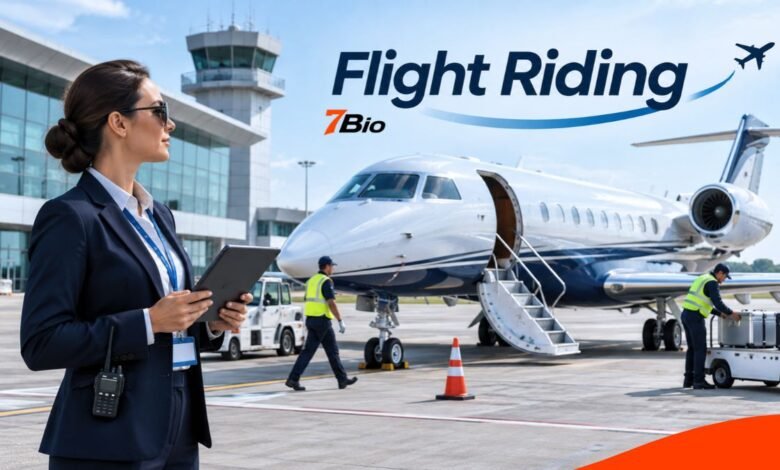
What Is Flight Riding?
Flight riding is a specialized aviation support service in which an operational representative accompanies or directly supervises an aircraft journey, helping coordinate services between flight crews, airport personnel, ground handlers, passengers, and aviation service providers.
It is particularly relevant to charter flights, cargo operations, private aviation, sports-team travel, and other journeys that involve complex arrangements across several airports.
A flight rider acts as a central communication point, helping ensure that essential ground services are organized, operational updates are shared, and unexpected problems are addressed promptly.
Unlike an ordinary airline passenger, a flight rider travels or works alongside an aviation operation in a professional capacity. The role is focused on coordination, supervision, communication, and logistical support, rather than flying the aircraft.
This distinction matters for aviation professionals, charter operators, travel coordinators, and readers interested in specialized careers in the aviation industry.
How Does Flight Riding Work?
The process begins before the aircraft reaches its departure airport. An appointed flight representative reviews the planned journey, establishes communication with operational partners, and confirms which services must be available at each destination.
These arrangements may include passenger handling, cargo coordination, aircraft servicing, catering, ground transportation, and crew accommodation.
The flight rider works with the people responsible for delivering these services. Their job is to monitor progress, identify potential problems, and communicate developments to the appropriate parties.
For a multi-stop charter operation, the same representative may accompany the aircraft throughout the journey. In other arrangements, the representative may supervise activities at specific airports without remaining on board for every flight.
The exact scope depends on the aircraft operator, client requirements, contracted services, and applicable aviation procedures.
Planning Before Departure
Preparation is one of the most valuable parts of the process.
Before departure, a flight representative may confirm airport handling arrangements, review passenger requirements, coordinate transport, and check that relevant service providers understand the flight schedule.
For cargo operations, preparation can involve communicating shipment requirements, verifying that specialist handling has been arranged, and following up on necessary documentation.
Technical work, such as aircraft load control or safety-critical inspections, must remain with appropriately trained and authorized personnel.
Supporting the Aircraft During Its Journey
During the journey, a flight rider maintains communication with relevant operational contacts and prepares for the next airport.
This may involve updating ground handlers on revised arrival times, confirming transport arrangements, or communicating changes in passenger requirements.
The representative can also help coordinate responses when delays or diversions affect the original plan.
Coordinating Services After Landing
Once the aircraft lands, attention moves to ground operations.
The flight rider may oversee passenger disembarkation, baggage arrangements, crew transport, catering, refueling, cleaning, and preparations for the next departure.
Their presence provides a consistent point of contact when several suppliers and organizations need to work together.
Main Responsibilities of a Flight Rider
Although responsibilities differ between operators, the role generally covers several connected activities.
| Operational area | Typical flight rider responsibility |
|---|---|
| Flight preparation | Confirm service arrangements and operational information |
| Passenger handling | Coordinate boarding, transfers, and special requirements |
| Ground handling | Monitor the availability and progress of contracted services |
| Cargo operations | Liaise with authorised cargo and loading personnel |
| Crew support | Coordinate transport, accommodation, and logistical needs |
| Communication | Share updates between aircraft crews, clients, and operations teams |
| Disruptions | Help organise practical responses to delays and diversions |
| Flight completion | Confirm outstanding services and report relevant issues |
A flight rider does not automatically have authority over every operation listed above. Each activity must be performed or approved by the organization and personnel responsible for it.
Why Flight Riding Matters in Charter Aviation
Charter aviation can involve arrangements that differ considerably from scheduled passenger services.
A charter aircraft may transport business executives, professional sports teams, specialist cargo, relief supplies, or passengers traveling to airports with limited ground infrastructure.
Each operation can require different equipment, permissions, suppliers, and scheduling arrangements.
Flight riding provides operational continuity, especially when a journey includes several destinations or multiple organizations.
For example, a sports team traveling on a dedicated charter may need coordinated passenger transfers, equipment handling, catering, and departure arrangements.
A flight rider can monitor whether those arrangements remain aligned with the agreed schedule and communicate quickly when circumstances change.
For cargo flights, the priorities may instead involve specialist ground equipment, shipment documentation, handling arrangements, and turnaround coordination.
The value of the service lies in helping different parties work from the same operational information.
However, having a flight rider does not eliminate weather delays, airport restrictions, technical faults, or other circumstances beyond the representative’s control.
Flight Riding vs Ground Handling: Understanding the Difference
Flight riding and ground handling are closely related, but they are not identical.
Ground handling refers to the services performed around an aircraft at an airport. These can include baggage processing, aircraft servicing, boarding assistance, and certain cargo activities.
Flight riding, by contrast, focuses on coordinating and supervising relevant arrangements on behalf of a client, operator, or charter organization.
A ground handler may provide the equipment and personnel needed to service an aircraft. A flight rider monitors the agreed arrangements, communicates with those responsible, and helps resolve logistical problems.
The role also differs from that of a pilot, cabin crew member, or flight dispatcher.
Pilots retain their assigned aircraft-operating responsibilities. Cabin crew performs passenger-service and onboard safety duties. Dispatch and operations personnel carry out their own defined flight-planning and operational functions.
A flight rider supports coordination between these roles without replacing their professional responsibilities.
What Skills Are Needed to Become a Flight Rider?
Working as a flight representative requires a combination of aviation knowledge, organizational ability, and interpersonal skills.
Communication and Teamwork
A flight rider may interact with airport officials, aircraft crews, handling agents, transport providers, and clients during the same operation.
Clear communication helps prevent misunderstandings about schedules, passenger requirements, and operational changes.
The ability to communicate professionally across different countries and cultures is particularly useful for international assignments.
Aviation Operations Knowledge
Understanding aircraft turnaround procedures, airport operations, passenger handling, and aviation documentation helps a representative recognize when arrangements need attention.
Previous experience in ground operations, charter coordination, airline services, or airport management may provide a useful foundation.
Problem-Solving Under Pressure
A delayed arrival can affect transport bookings, catering arrangements, crew schedules, and subsequent flights.
Flight riders need to recognize these connections and escalate problems to the people authorized to resolve them.
Good judgment includes knowing when an issue requires immediate operational or safety attention rather than attempting to handle it independently.
Flexibility and Attention to Detail
Irregular working hours and changing travel schedules may be part of the job.
Representatives must also manage detailed information accurately, including service confirmations, passenger requirements, contact details, and operational updates.
How to Start a Career in Flight Riding
No single universal career route or qualification automatically authorizes someone to perform every flight rider responsibility.
Employers set role requirements based on the services provided, the locations involved, and the tasks assigned.
A practical career pathway may include the following steps:
- Build aviation knowledge. Learn how airports, aircraft turnaround procedures, charter operations, and ground services work.
- Gain relevant experience. Look for opportunities in airport handling, flight coordination, charter operations, passenger services, or aviation logistics.
- Develop communication skills. Strengthen professional English, reporting ability, and cross-cultural communication.
- Learn operational procedures. Become familiar with the employer’s manuals, escalation procedures, and relevant safety requirements.
- Apply for representative roles. Search for positions described as flight representative, charter operations representative, flight rider, or related aviation coordination roles.
Some positions may require specific training, security clearances, airside access permissions, or experience with particular aircraft operations.
Candidates should review individual job descriptions rather than assume that one course or certificate qualifies them for all assignments.
What Happens When a Flight Is Delayed or Diverted?
Unexpected changes are among the situations in which operational coordination becomes particularly valuable.
Imagine a charter aircraft traveling between three airports. At the second destination, severe weather prevents the planned landing, and the aircraft diverts to another airport.
The flight crew and airline operations team manage the aviation decisions within their respective responsibilities.
The flight rider can support the resulting ground arrangements.
That may mean contacting the new airport’s handling provider, communicating updated arrival information, checking transport availability, and coordinating accommodation requirements where necessary.
Passenger entry requirements, crew duty limitations, and other regulated matters must be assessed by the appropriate authorities and responsible professionals.
The representative’s contribution is to organize information, facilitate communication, and help implement approved arrangements.
This example illustrates why preparation and reliable operational contacts matter.
Which Flights Benefit Most From Flight Riding?
Not every aircraft journey requires a dedicated flight rider.
The service can be particularly useful where operational complexity makes additional coordination worthwhile.
Examples include:
- Private and executive charters: Journeys with detailed passenger, ground transport, or service arrangements.
- Sports-team charters: Flights involving large groups, specialist equipment, and coordinated schedules.
- Cargo aircraft: Operations requiring communication between cargo handlers, aircraft crews, and logistical partners.
- Multi-destination journeys: Flights where consistent supervision across several airports is valuable.
- Relief and specialist operations: Journeys with unusual handling requirements or challenging airport arrangements.
The decision to appoint a representative should reflect the actual operational needs rather than treating flight riding as essential for every charter.
Common Challenges in Flight Riding Operations
Flight representatives work in an environment where several services must often be completed within a limited period.
One common challenge is incomplete information. A passenger requirement or cargo-handling detail that is not communicated early can create difficulties at the airport.
Another issue is reliance on several independent providers. Transport, catering, airport handling, and aircraft servicing may be organized through different companies, each with its own operational limitations.
Changing schedules can add further pressure.
Good coordination therefore depends on clear responsibilities, accurate information, realistic contingency planning, and prompt communication.
Safety procedures must always take priority over commercial schedules or passenger convenience.
How Should an Operator Choose a Flight Riding Service?
A charter company or client considering this service should assess more than whether a representative can travel.
Useful questions include whether the provider has relevant experience with the aircraft operation, understands the destination airports, and can communicate effectively with ground-handling partners.
The service agreement should identify which activities the representative will supervise, which responsibilities remain with the operator, and how urgent issues will be escalated.
It is also sensible to clarify whether the representative will accompany every flight sector or provide support only at selected airports.
Pricing may depend on the number of travel days, destinations, staffing requirements, and agreed responsibilities. No reliable universal price applies to every operation.
FAQs
1. Is flight riding the same as being a passenger?
No. In an aviation operations context, flight riding refers to professional coordination and supervision associated with an aircraft journey. It is different from traveling as an ordinary passenger.
2. Does a flight rider travel on the aircraft?
Often, yes, particularly on multi-leg charter assignments. However, some flight representatives work at designated airports without accompanying every flight sector.
3. Can someone become a flight rider without being a pilot?
Yes. A pilot license is not required for flight representative roles. Relevant aviation operations knowledge, experience, and employer-specific qualifications are more directly associated with the work.
4. Is flight riding only used for private jets?
No. It can also support cargo aircraft, commercial charter operations, sports-team travel, specialist transport, and other complex aviation assignments.
5. What is the biggest benefit of a flight rider?
The main benefit is a dedicated operational contact who coordinates services, communicates changes, and maintains continuity among the people and organizations involved in a journey.
Final Takeaway
Flight riding is an important specialist function within aviation logistics and charter flight support. It brings together operational supervision, passenger coordination, ground-service monitoring, and clear communication across different stages of an aircraft journey.
Its value becomes particularly apparent when flights involve multiple destinations, specialized requirements, or unexpected changes.
A successful flight rider must understand the role’s boundaries, respect established aviation safety procedures, and work effectively with professionals responsible for aircraft operations.
For anyone considering a career in aviation coordination, flight riding also shows how much work happens beyond the cockpit to support an organized, professionally managed journey.