Cristher Lighting: A Practical Guide to Modern Outdoor Illumination
Discover how this Spanish architectural lighting brand combines functional performance, contemporary design and flexible solutions for outdoor spaces.

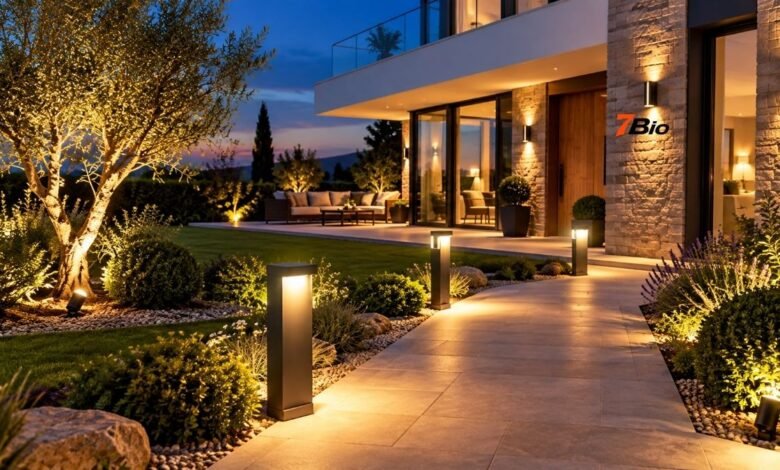
Cristher is a Spanish lighting brand associated with Novolux Lighting, specializing in architectural outdoor illumination. Its product range includes fixtures intended for gardens, building exteriors, pathways, terraces and professionally designed landscapes. Rather than treating lighting as a purely decorative addition, the brand combines visual appearance with technical performance and installation flexibility.
Outdoor lighting affects how a property looks, how easily people move through it after dark, and how comfortably they can use its exterior spaces. Selecting the right fixture involves considerably more than choosing an attractive design. Brightness, beam direction, weather protection, color temperature, and maintenance requirements can all influence the result.
For homeowners, architects, and property managers, understanding these details makes it easier to choose the right equipment and avoid costly installation mistakes.
What Is Cristher Lighting?
Cristher is an architectural lighting brand within Novolux Lighting’s wider portfolio, a Spanish company headquartered in the Barcelona area. Novolux has a history in the lighting industry dating back to 1981 and provides solutions for both indoor and outdoor applications.
The brand concentrates on exterior luminaires intended to complement contemporary buildings and landscaped environments. Its portfolio includes wall-mounted fixtures, recessed lights, bollards, spotlights, underwater fittings and decorative outdoor products.
One distinguishing characteristic is its emphasis on technical selection. Depending on the product, specifiers can consider optical distribution, color temperature, output, dimming compatibility, and resistance to environmental conditions.
This approach makes the range relevant to projects in which lighting must achieve a specific visual effect while meeting practical operating requirements.
The Background of Cristher and Novolux Lighting
Understanding the relationship between the brand and its parent organization helps explain its market position.
Novolux Lighting operates a portfolio of brands serving different applications, including Dopo, Exo, Indeluz and Cristher. Its wider product offering covers residential exterior illumination, decorative indoor fittings, professional technical lighting and specialist architectural applications.
The company’s Spanish headquarters and international distributor network support lighting projects in several regions. According to its corporate information, Novolux operates through partners and distributors in more than 40 countries.
Within this structure, Cristher focuses on higher-end residential and architectural exterior lighting. The emphasis is on products that integrate into a building’s design rather than simply attaching them wherever additional brightness is needed.
This distinction matters because a well-planned exterior lighting scheme must consider surfaces, materials, movement, and surrounding buildings alongside the fixtures themselves.
Main Types of Cristher Outdoor Lighting
The brand’s catalog covers several product categories. Each serves a different purpose, and choosing the right category is often more important than selecting a specific finish or visual style.
1. Bollards and Pathway Lighting
Bollards are upright lighting fixtures commonly installed beside pathways, driveways, gardens, and outdoor circulation routes. They help define walking areas and can provide gentle illumination without relying entirely on overhead lights.
A carefully positioned series of bollards can guide visitors from an entrance gate to a building while preserving the appearance of the surrounding landscape.
Fixture height, light distribution, and spacing all affect the final result. Choosing a model that limits uncomfortable glare can be particularly valuable along paths used regularly after dark.
2. Wall-Mounted and Surface Lighting
Surface-mounted fixtures attach directly to walls, ceilings, or other suitable structures. They work well around entrances, covered terraces, external corridors, and architectural façades.
Some designs direct light downward, while others distribute illumination in multiple directions. This can create contrasting patterns across brickwork, render or stone.
The choice should depend on the space’s purpose. An entrance might need clear visibility, whereas a decorative wall may benefit from softer lighting.
3. Recessed Outdoor Lighting
Recessed fixtures are installed into prepared openings, allowing much of the luminaire to remain concealed within a floor, wall, or other suitable surface.
They are often considered when a minimalist appearance is important. The light becomes part of the architecture rather than a separate decorative object.
However, recessed installations require careful planning. Before work begins, check drainage, mounting depth, electrical connections, and the structural properties of the installation surface.
Products intended for pedestrian surfaces should not automatically be assumed suitable for vehicle loading.
4. Architectural Spotlights
Spotlights provide controlled, directional illumination and can highlight individual features such as trees, columns, sculptures and building façades.
Cristher offers spotlight ranges with different mounting arrangements and optical options. Some products can be adjusted to change the direction of illumination, giving designers more control over the final appearance.
The appropriate beam angle depends on the size and distance of the object being illuminated. A narrow beam can highlight a specific feature, while a wider beam may suit larger surfaces.
Careful aiming also helps reduce light spill into neighboring properties.
5. Underwater and Decorative Lighting
The manufacturer’s portfolio also includes lighting categories intended for suitable underwater applications, as well as decorative exterior fittings.
Underwater lighting requires particular attention to electrical protection, installation conditions, and the manufacturer’s exact specifications. A standard weather-resistant garden light is not a substitute for a fitting approved for underwater use.
Decorative lights serve a different purpose. They can help create a relaxed setting around outdoor seating areas, hospitality terraces, and landscaped courtyards.
Key Technical Features to Understand
A major advantage of reviewing architectural lighting specifications is that buyers can compare fixtures using measurable characteristics rather than judging them solely by appearance.
LED Technology and Light Output
Many products in the current Cristher catalog use LED technology. LED luminaires are available in different power ratings, outputs, and beam distributions, allowing you to select the lighting scheme for the intended application.
Two figures deserve particular attention: watts and lumens.
Watts describe electrical power consumption, while lumens describe the quantity of visible light emitted. A higher wattage does not automatically mean a fixture is better suited to the task.
For example, a bright spotlight may be inappropriate beside an outdoor dining table if its direction creates uncomfortable glare. A lower-output fitting with better optical control may produce a more pleasant result.
Colour Temperature and Atmosphere
Color temperature is expressed in kelvin (K) and describes whether white light appears relatively warm or cool.
For outdoor spaces, common options include:
- 2700K: A warm appearance often suited to relaxed seating areas.
- 3000K: Warm-white illumination suitable for many residential settings.
- 4000K: A more neutral-white appearance that may suit selected functional applications.
These values describe color appearance, not brightness. The actual options depend on the fixture and product reference.
Weather Resistance and IP Ratings
Select exterior lighting for the conditions it will experience.
An IP rating indicates the protection an enclosure provides against solid particles and water ingress. For instance, IP65 describes dust-tight protection and resistance to water jets under specified test conditions.
An IP rating should never be interpreted as proof that a fixture is suitable for every weather condition or for permanent immersion.
Consider the installation location, exposure to water, and the manufacturer’s instructions. Impact resistance, corrosion protection and material suitability may also matter in exposed environments.
Controls and Dimming
Some architectural luminaires support dimming or more advanced lighting-control arrangements.
These capabilities can reduce brightness during quieter periods, coordinate groups of lights, or create different settings for the same space.
However, control compatibility varies between products. The fitting, driver and chosen control system must be compatible with one another.
Examples from the Manufacturer’s Product Range
Looking at actual product families helps explain how technical features translate into practical choices.
Turret Bollards
Novolux has presented the Turret family as a minimalist exterior bollard solution.
The manufacturer’s product information describes variants in different heights and color temperatures, with an IP65 enclosure rating.
The design shows how simple forms can fit into contemporary residential landscapes.
Disc Spotlights
The Disc family illustrates a more flexible approach to directional lighting.
Manufacturer documentation describes mounting options for wall, floor, and ceiling installations, along with alternative beam angles and color temperatures.
This makes the product family relevant when a project requires focused illumination across several exterior features.
These examples are not universal specifications for the entire range. Plan every installation around the exact model and its current technical documentation.
How to Choose the Right Cristher Lighting for a Property
Selecting exterior illumination is easier when you start with the intended use rather than the product catalog.
Step 1: Identify the Main Purpose
Decide whether the priority is safe movement, architectural appearance, general visibility, or atmospheric lighting.
A pathway and a decorative garden wall have different requirements. Trying to achieve both objectives with a single unsuitable fitting often forces compromises.
Step 2: Study the Installation Environment
Consider the space dimensions, exposure to rain, mounting surfaces, nearby windows, and likely viewing angles.
For UK properties, regular rainfall, damp conditions and seasonal temperature changes make appropriate outdoor protection especially important.
Step 3: Match the Light Distribution to the Task
Compare lumen output, beam angle and mounting position.
A professional lighting plan can be valuable for larger gardens, complex façades or projects containing several interconnected lighting zones.
Step 4: Check Installation Requirements
Confirm the available electrical supply, mounting provisions, driver compatibility and any necessary groundwork.
Suitably competent professionals should assess and complete fixed outdoor electrical installations in accordance with applicable requirements.
Step 5: Plan for Maintenance
Consider how the fixture will be accessed, cleaned and repaired.
Check whether the manufacturer provides replacement components and whether the light source or driver can be serviced independently.
A fitting that looks attractive on installation day may become inconvenient if access is difficult.
Practical Example: Lighting a Residential Garden
Imagine a medium-sized residential garden containing a paved entrance path, a seating terrace and two mature trees.
Instead of installing identical bright fixtures throughout the space, the owner could divide the lighting into three separate functions.
The entrance path might use low-glare bollards to guide movement. Wall-mounted fittings near the terrace could provide general illumination without shining directly into people’s eyes. Adjustable spotlights could then highlight the two trees, creating visual depth.
The overall scheme would benefit from coordinated color temperatures and controls that allow different areas to operate independently.
This is an illustrative design example rather than a tested Cristher installation. The final number, positioning, and fixture specifications would depend on the actual site.
Cristher vs Dopo: Understanding the Difference
Both brands belong to Novolux Lighting, but the manufacturer’s positioning distinguishes their primary applications.
| Comparison | Cristher | Dopo |
|---|---|---|
| Main positioning | Higher-end architectural exterior lighting | Residential outdoor lighting |
| Typical design priority | Architectural integration and technical flexibility | Functional residential applications |
| Common applications | Building exteriors, landscape projects, design-led properties | Gardens, entrances, terraces |
| Product selection | Based on project requirements and fixture specifications | Based on residential requirements and fixture specifications |
Neither brand is automatically the correct choice for every property. A relatively straightforward garden entrance may need a different solution from a complex architectural façade.
The deciding factors should be required performance, installation conditions, and budget.
Benefits and Limitations of Architectural Outdoor Lighting
Well-planned exterior lighting can improve visibility, extend the usability of outdoor spaces after sunset, and highlight architectural details that might otherwise disappear in darkness.
Design-led fittings can also create a more unified visual appearance by coordinating fixtures with a building’s materials and proportions.
Nevertheless, there are limitations.
Specialist lighting often requires more detailed planning than standard domestic fittings. Recessed products may require structural preparation, directional spotlights need careful aiming, and sophisticated control systems can add installation considerations.
There is also a risk of excessive illumination. More light is not always better. Overly bright or poorly directed fixtures can create glare, increase unwanted spill, and disturb neighboring spaces.
The most successful designs usually balance useful illumination with restraint.
Common Mistakes to Avoid
A frequent mistake is choosing an exterior light mainly because its photographs look impressive. Product images can’t show whether its brightness, optics, or mounting arrangement will work in a particular location.
Another problem is treating all weather-resistant fittings as interchangeable. A sheltered wall, an exposed driveway and a permanently submerged installation have different environmental requirements.
Buyers should also avoid assuming that every LED luminaire is dimmable. This depends on the specific driver and control arrangement.
Finally, ordering before checking dimensions and electrical compatibility can cause unnecessary installation delays.
Carefully reviewing current manufacturer documentation reduces these risks considerably.
Where to Find Cristher Products and Technical Information
The most reliable place to start when researching Cristher products is the manufacturer’s current catalog and product documentation.
Novolux provides information covering product families, mounting arrangements and technical characteristics. Its wider distribution network serves several international markets.
For UK customers, confirm local supply, pricing, delivery arrangements, electrical compatibility, and warranty support before placing an order.
Do not assume availability merely because a model appears in an international catalog.
For substantial installations, consult a lighting designer or qualified electrical contractor to identify suitable equipment and prevent costly specification errors.
FAQs
1. What is Cristher best known for?
The brand is best known for architectural outdoor lighting, including wall fixtures, recessed luminaires, bollards, and spotlights designed for residential and professional exterior applications.
2. Is Cristher part of Novolux Lighting?
Yes. It is one of the lighting brands within the Novolux Lighting portfolio, which also includes Dopo, Exo and Indeluz.
3. Are Cristher lights suitable for outdoor use in the UK?
Products designed for exterior installation may be suitable, provided their specifications, environmental protection and electrical requirements match the intended UK installation. Suitability must be checked for the exact model.
4. Are all products in the range LED-based?
Do not assume every product is LED-based. The manufacturer lists LED options alongside other lighting-source classifications. Buyers should inspect the current specification for each reference.
5. Can the lighting be used for commercial properties?
Yes. The brand’s architectural positioning makes relevant products suitable for commercial exterior projects, including landscaped areas, building façades, and hospitality settings.
6. What should buyers check before ordering?
Key considerations include lumens, beam distribution, color temperature, IP rating, mounting requirements, power supply, control compatibility, maintenance, and warranty arrangements.
Final Takeaway
Cristher occupies a specialized position within the Novolux Lighting portfolio, combining architectural exterior design with technically configurable lighting products.
Its varied range lets designers and property owners consider different solutions for pathways, walls, landscape features, and outdoor living spaces.
The key lesson is that successful lighting depends less on the number of fixtures installed and more on selecting the right type, output, and placement for each purpose.