
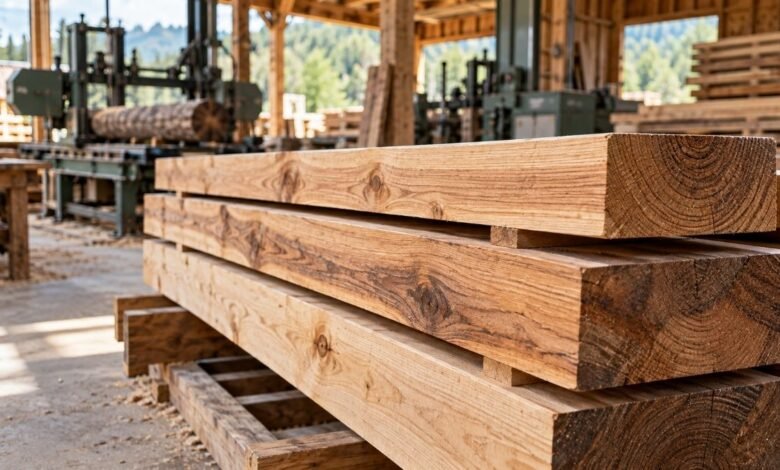
The word plangud can be confusing if you come across it in an English-language search. Some websites describe it as a planning or productivity concept, while others use it as a brand or website name. Meanwhile, reliable Estonian sources connect the word to wooden planks or thick boards. Because of these different uses, search results can make this fairly ordinary foreign word seem more mysterious than it actually is.
The best way to understand plangud is to consult reliable language sources rather than guessing based on its spelling. In Estonian, plangud is the plural form of “plank” when talking about wood. Its specific meaning depends on the situation. You might see it in discussions about timber, construction, wooden structures, flooring, fences, boats, or other uses for thick wooden boards. Sometimes, Plangud with a capital letter is also used online as a name for websites or digital projects.
What Does Plangud Mean?
In its clearest documented linguistic use, plangud means “multiple planks” or “thick wooden boards” in Estonian. The Estonian Language Institute’s Sõnaveeb lists the wood-related noun plank with the forms plangud. The accompanying definition describes the underlying object as a relatively thick board cut from a large tree trunk.
This gives the word a much clearer meaning than many recent English-language explanations suggest. Plangud is not a new productivity method, software feature, or internet term. It is already a part of the established Estonian vocabulary.
However, not every online use of the word refers to timber. Websites, businesses, projects, and digital products can use any name, no matter what it means in the dictionary. The important thing is to distinguish between the regular Estonian word and newer uses of Plangud as a brand or name.
Plangud in the Estonian Language
Knowing a bit about Estonian grammar helps make the term easier to understand. In Estonian, word forms change based on grammar and number, so a word can look different depending on how it is used.
For the wood-related meaning, the base form is plank, while plangud is the plural form. In simple English terms, this relationship is similar to “plank” → “planks”.
Estonian dictionaries also show examples in which related word forms are used for stacks of thick boards, plank floors, wooden fences, benches, and boatbuilding. This proves the term is a natural part of timber and woodworking vocabulary, not a new invention.
For English speakers, the unusual ending might make the word seem like a brand name. In Estonian, though, it is just a normal part of the language’s grammar.
What Does a Plank Mean in This Context?
The underlying Estonian noun refers to a substantial wooden board. Traditional dictionary descriptions distinguish it from very thin sheet material by describing a plank as a relatively thick board made by sawing timber.
In practice, wooden planks can vary widely in size, wood type, moisture content, finish, and purpose. A rough board from a sawmill is very different from a carefully dried and finished board for furniture. So, just seeing the word plangud does not tell you everything about the wood.
Key details usually include the type of wood, thickness, width, length, moisture level, surface treatment, and how the wood will be used. These features are much more important than the word itself when choosing timber for a project.
Common Uses of Plangud
Because plangud refers broadly to planks, the word can appear across several wood-related settings.
Construction and Structural Woodwork
Thick boards have long been used in building and carpentry. Depending on their dimensions and grade, wooden planks may be used as parts of floors, platforms, temporary structures, walls, outdoor projects, and other construction elements.
But just calling a piece of wood a plank does not mean it is safe for building. Structural uses need the right material, grading, size, and building methods. Builders need more details than just the name before deciding if it is safe to use.
Flooring and Interior Projects
Planks are also strongly associated with wooden flooring. Wide boards can create a distinctive appearance, particularly when the natural grain remains visible.
This does not mean every product called a plank is ready for use as flooring. Raw timber usually needs more work before it can become a finished floor. Drying, cutting, edge preparation, surface finishing, and installation all affect the final result.
If you are buying Estonian timber, it is best to translate the entire product description rather than assume that plangud means ready-to-use floorboards.
Fences and Outdoor Structures
Traditional wooden fences are another context in which the word family appears. Thick boards can be positioned vertically or horizontally to create boundaries, screens or enclosed spaces.
Outdoor wood is exposed to moisture, sunlight, and changing temperatures, so the type of wood, how it is treated, and how it is cared for are very important. A plank that works for indoor furniture is not always the right choice for an outdoor fence.
Boats and Traditional Woodworking
Dictionary examples also connect plank-related forms with boats and ships. Historically, wooden boatbuilding relies on carefully shaped planking to form exterior surfaces and other components.
This is a more specialized application because timber used around water needs suitable physical characteristics and skilled preparation. The presence of plangud in such a context therefore tells the reader that multiple wooden boards are being discussed, but not that ordinary construction timber can automatically be substituted for marine-grade material.
Why Are There Different Meanings of Plangud Online?
A lot of the confusion comes from how words are used online today. A unique word can quickly become a website name, project label, marketing term, or digital brand, even if it already has a meaning in another language.
Current search results provide a good example. A website using the Plangud name describes itself in digital planning language. It emphasizes collaboration, insights, and planning, and its visible content includes articles across categories such as technology, health, and business.
Elsewhere, some recent articles describe Plangud more broadly. Some also describe Plangud as a planning idea or productivity system. However, there is no strong evidence in the language that “plangud” is a standard English term for a planning method or a brand. A writer may also choose to define a concept using that name. Neither automatically changes the established Estonian meaning of the word.
Is Plangud a Planning System?
Right now, there is not enough solid evidence to call plangud a widely recognized planning method. Unlike well-known project management terms, it lacks official definitions, standards, or a clear history. Some online material associates the name with productivity, goals, tasks, teamwork, and flexible planning. Those ideas are ordinary and useful planning practices, but attributing them to a formal Plangud methodology requires evidence of a clearly defined system.
So, readers should look at phrases like “Plangud method,” “Plangud framework,” or “Plangud productivity system” based on who uses them, rather than assuming they are part of a well-known system.
This helps avoid a situation in which websites repeat each other’s unsupported definitions until the claim seems true simply because it is often repeated.
How to Identify the Intended Meaning
Usually, the context makes the meaning clear.
If plangud appears alongside terms such as timber, boards, sawmill, wood species, thickness, construction, flooring or fencing, it probably refers to wooden planks.
If Plangud appears alongside terms such as tasks, goals, teamwork, digital tools or productivity, the writer is probably using it as a brand or modern planning-related concept.
If the word appears as the title of a website, company or online service, it should generally be interpreted as a proper name unless the surrounding material indicates otherwise.
This way of looking at context is especially helpful when a foreign word is also used as a digital name.
Choosing Wooden Planks for a Project
When plangud is used to refer to timber, buyers should look beyond the name and check the material’s actual details.
Wood species affects appearance, density, durability, and workability. Moisture content can influence movement after installation. Dimensions determine whether the material suits the planned structure, while surface preparation affects whether the boards are appropriate for rough construction or visible finished work.
Other considerations may include knots, grain direction, warping, splitting, treatment and storage conditions.
For important structural or outdoor projects, it is best to rely on professional specifications rather than general terms such as plank, board, or timber.
Why Accurate Interpretation Matters
Plangud shows a bigger problem with online search results: just because an explanation is repeated often does not mean it is the original or correct meaning of a word.
Foreign words, brand names, and new internet terms can overlap. When many pages give different explanations, it can be hard for readers to know which meaning came first or which one is well documented.
Looking at linguistic evidence provides a stronger basis for understanding. Here, trusted Estonian sources clearly show plangud as a form of the wood-related word plank. Modern websites might use the name differently, but these uses should be kept separate rather hanrather than mixed.
Conclusion
Plangud is primarily an Estonian plural form of “plank”. It is used in contexts like timber, thick boards, flooring, fences, woodworking, and other wooden structures.
The term has also picked up new online uses across websites, planning, and productivity topics. These modern uses might be valid names or ideas, but they should not be mixed up with the main, widely accepted meaning. In context, context is the deciding factor. Timber-related language usually points to the Estonian meaning, while digital or productivity language may indicate a website, brand, or separately defined concept. Recognizing that distinction provides a clearer and more reliable understanding of this unusual-looking keyword.
FAQs
What does plangud mean?
Plangud is an Estonian plural word form associated with planks or substantial wooden boards. Its precise meaning in a sentence depends on context.
Is plangud an English word?
No. Plangud is documented in Estonian vocabulary rather than as a standard English dictionary word. English-language websites may nevertheless use Plangud as a name.
Does plangud refer to a planning platform?
Plangud is currently used as a name in planning-related online content, but this should be distinguished from its established Estonian wood-related meaning. There is not enough authoritative evidence to call it a universally recognized planning methodology.
Can plangud refer to flooring?
It can appear in wood and flooring contexts because it means planks, but the word alone does not guarantee that particular timber is finished or suitable for flooring.
How can I tell what plangud means on a website?
Check the surrounding vocabulary. Wood, timber, construction, and flooring terms suggest wooden planks, while goals, productivity, and collaboration usually indicate a modern brand or planning-related use.