
Chief Technical Examiner: The Critical Role Behind Engineering Inspections and Public Accountability
From reviewing construction contracts to identifying technical irregularities, the Chief Technical Examiner plays a key role in protecting public resources and strengthening engineering oversight.

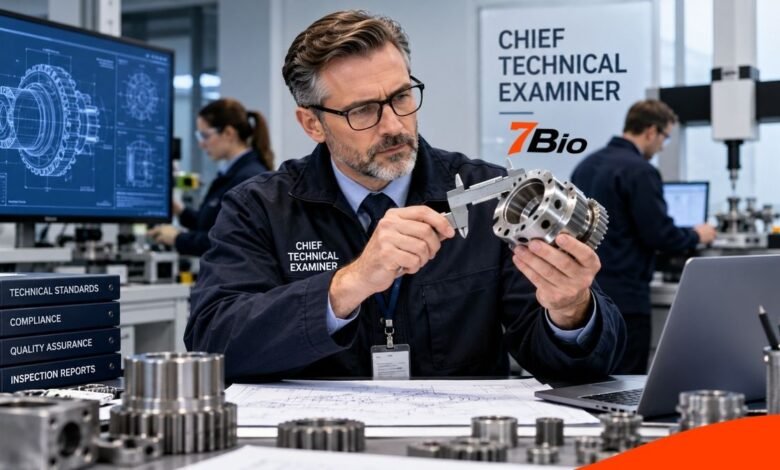
The chief technical examiner is a senior technical oversight official who examines engineering work, assesses compliance, and identifies irregularities in projects and procurement. The title is most commonly associated with the Chief Technical Examiners’ Organization (CTEO) under India’s Central Vigilance Commission (CVC). Rather than describing one particular person, it refers to a professional position within an established system of technical scrutiny.
The role remains relevant because public infrastructure depends on accurate specifications, fair contracting, reliable materials and accountable expenditure. Technical examination provides an additional layer of scrutiny when public authorities commission construction or engineering work.
Understanding the position requires distinguishing technical findings from allegations of misconduct and recognizing the limits of an examiner’s authority.
Quick Facts
- Position: Chief Technical Examiner
- Primary field: Engineering inspection and technical oversight
- Notable institutional context: Central Vigilance Commission, India
- Associated organization: Chief Technical Examiners’ Organization
- Principal activities: Technical examination, contract scrutiny, and quality assessment
- Projects examined: Public works and other technical contracts within the applicable oversight framework
- Main objective: Identify technical deficiencies and support accountability
- Nature of authority: Technical examination and reporting, rather than independent judicial decision-making
- UK comparison: Technical audit, engineering assurance and public-sector contract oversight
What Is a chief technical examiner?
A chief technical examiner is a senior professional who assesses whether engineering projects, procurement arrangements, and technical work comply with relevant contractual requirements, specifications, and standards.
Exact responsibilities depend on the employing organization and the legal framework governing its activities.
In India, the title is specifically associated with the Central Vigilance Commission. Its Chief Technical Examiners’ Organization provides technical examination capabilities within the wider vigilance system.
The distinction matters. A technical examiner does not automatically function as a criminal investigator, court-appointed expert, or disciplinary authority. Technical findings can inform subsequent administrative or vigilance action, but those decisions follow separate procedures.
An examination may identify discrepancies between approved specifications and completed work, weaknesses in procurement documentation, or questions about material quality.
However, an identified discrepancy is not necessarily evidence of fraud. Establishing deliberate wrongdoing requires additional evidence and the appropriate investigative process.
The Chief Technical Examiners’ Organization in India
The most clearly documented institutional use of the title is connected with India’s Central Vigilance Commission.
The CVC operates under the Central Vigilance Commission Act, 2003. Its broader functions include vigilance oversight concerning specified public-sector bodies and officials.
The Chief Technical Examiners’ Organization contributes specialized engineering expertise to this framework.
Why technical expertise is necessary
Government departments and public-sector organizations frequently commission technically complicated work.
A construction project may involve structural specifications, quantity measurements, approved materials, testing requirements, contractual variations and payments linked to completed work.
Administrative scrutiny alone may not establish whether those requirements have been satisfied.
Technical examiners can review relevant records and inspect the work to identify discrepancies that require explanation.
For example, a contract may specify a particular material grade or construction method. An examination can compare the approved requirements with available testing records, site measurements and the work actually completed.
Such findings help responsible authorities determine whether corrective action or further investigation is appropriate.
Technical oversight and institutional independence
A central purpose of technical scrutiny is to introduce specialist review beyond ordinary project administration.
This does not mean every examination is completely independent of institutional processes. Its effectiveness depends on the applicable mandate, access to records, professional competence and appropriate handling of findings.
A chief technical examiner therefore operates within an accountability system rather than above it.
The role matters partly because it produces technically supported observations that other authorities can evaluate.
Core Responsibilities of a chief technical examiner
Although responsibilities vary between organizations, the Indian public-sector model illustrates several important areas of work.
Reviewing engineering contracts
Contract scrutiny can involve examining technical specifications, tender provisions, approved estimates, schedules of work and contractual conditions.
The purpose is to determine whether requirements are sufficiently clear and whether project execution is consistent with them.
A poorly drafted technical specification may create uncertainty about what a contractor is required to deliver. In other cases, documentation may reveal inconsistencies between the approved scope and subsequent execution.
An examiner’s observations can help authorities understand how significant these differences are.
Inspecting construction quality
Technical inspections may involve checking completed or ongoing work against approved drawings, measurements and contractual standards.
The process can include examining material test reports, construction records and site conditions.
Not every inspection involves laboratory testing. The scope depends on the work, available evidence and applicable procedures.
A finding about artistry or materials should be supported by relevant technical evidence rather than assumptions about the contractor’s intentions.
Examining quantities and payments
Engineering contracts often connect payments to measured quantities or defined stages of completion.
Technical examination can therefore involve checking whether quantities recorded in project documents correspond with the work carried out.
Where a discrepancy is identified, the examiner may recommend clarification or further scrutiny.
A difference does not, by itself, establish an unlawful payment. Contractual provisions, measurement methods and supporting documentation must also be considered.
Preparing technical observations
Written reporting is a central part of the examination process.
A report may document the scope of inspection, records examined, technical observations and matters requiring a response from the responsible authority.
The quality of this reporting matters because later decisions may depend on how accurately the technical evidence is recorded.
Clear distinctions between observed defects, documentary inconsistencies, and unresolved questions help prevent overstated findings.
How Technical Examination Supports Public Accountability
The chief technical examiner role sits at the intersection of engineering practice and administrative accountability.
This connection is especially significant in public works because taxpayers fund projects that must meet specified standards.
Poor construction quality can lead to repair costs, operational problems, and safety concerns. Weak contract administration can also make it harder to determine whether public money has been used as intended.
Technical scrutiny provides a way to examine these risks through records, measurements, and professional assessment.
Preventing problems rather than merely identifying them
An inspection may reveal a defect after work has already been completed. Yet technical examination is not limited to retrospective findings.
When responsible organizations use inspection observations to improve specifications, supervision, and record-keeping, the lessons can influence later projects.
This is a potential benefit of technical oversight, not proof that every inspection produces measurable savings.
Published, independently verified financial outcomes would be needed to quantify the effect of a particular examination program.
The importance of evidence
An examiner’s professional judgment must be supported by relevant documentation and appropriate technical methods.
A concern about material quality, for example, may require test results, sampling records or a comparison with contractual standards.
Similarly, a question about payment may require reviewing measurements, bills and approved variations.
This evidence-based approach protects public interests while reducing the risk of unsupported accusations against engineers, contractors or officials.
Qualifications and Professional Skills
No single worldwide qualification automatically makes someone a chief technical examiner.
Eligibility depends on the organization, recruitment rules, grade, and professional responsibilities.
In an engineering oversight environment, relevant expertise may include civil, mechanical, or electrical engineering; construction management; contract administration; and technical inspection.
Senior technical examiners may also need substantial experience interpreting specifications, assessing project records and preparing defensible reports.
Essential professional abilities
Technical competence is only one part of the job.
An examiner must distinguish a genuine non-compliance issue from an acceptable contractual variation. This requires careful document review and an understanding of the circumstances in which the work was performed.
Clear communication is equally important.
Technical reports must explain findings accurately enough for officials who may not have specialist engineering backgrounds.
Professional impartiality is another fundamental requirement. Findings should follow the evidence, irrespective of the organizations or individuals involved.
Specific appointment criteria and salary scales should be checked against current official recruitment or service documents rather than assumed from the job title.
Chief Technical Examiner and Technical Auditor: The Difference
The terms can overlap in everyday discussion, but they are not necessarily interchangeable.
A technical auditor generally examines technical processes, systems, work, or compliance against defined criteria. The precise scope varies by industry.
A chief technical examiner, particularly in the Indian vigilance context, operates within a more specific institutional structure and reporting arrangement.
The distinction is therefore not simply one of seniority.
It concerns the authority under which the examination takes place, the procedures used, and where the findings go.
An organization may employ technical auditors without having a post formally called Chief Technical Examiner.
Relevance to the United Kingdom
The Chief Technical Examiner title should not be confused with a standard UK-wide statutory office.
The United Kingdom has its own arrangements for engineering assurance, public procurement scrutiny and oversight of publicly funded construction.
Bodies such as the National Audit Office examine public expenditure and value for money, while engineering and construction organizations operate under relevant contractual, regulatory, and professional requirements.
These arrangements share broad objectives with technical examination, including accountability and scrutiny of public projects.
However, their powers, institutional structures and responsibilities differ.
It would therefore be misleading to describe a UK technical auditor or building inspector as holding the same office merely because some duties appear similar.
What Is Confirmed and What Is Not
A careful explanation of the Chief Technical Examiner position must separate established institutional facts from unsupported generalizations.
What is confirmed
The Central Vigilance Commission is a statutory Indian institution, and the Chief Technical Examiners’ Organization supports its technical examination work.
Technical examination can involve scrutiny of public works, contractual documentation and engineering quality.
The resulting observations can support vigilance and administrative oversight.
What is not established
The title alone does not identify a particular officeholder, appointment date or individual career history.
No universal salary, qualification requirement, or inspection authority applies to every organization using this designation.
Likewise, we cannot reliably state the financial savings produced by all technical examinations without defined, verified data.
It would also be incorrect to assume that every technical irregularity identified through an inspection constitutes corruption.
Any allegation of misconduct must be assessed through the appropriate procedures and evidence.
FAQs
The following questions explain the chief technical examiner role, its authority, and its professional requirements.
1. What does a chief technical examiner do?
The role involves examining technical work, reviewing engineering records, and identifying potential discrepancies with contractual specifications or applicable standards. In India’s vigilance framework, these activities support wider institutional oversight.
2. Is a Chief Technical Examiner a government officer?
In the context of the Indian Central Vigilance Commission, the designation is associated with a government technical examination function. The status of a similarly titled position elsewhere depends on the employing organization.
3. What qualifications are required for this position?
Requirements depend on official recruitment and service rules. Engineering expertise and relevant technical experience are particularly important, but no single worldwide qualification applies to every post.
4. Can a Chief Technical Examiner punish contractors?
Technical examination and disciplinary or legal enforcement are different functions. An examiner may report irregularities, but penalties or other action depend on the powers and procedures of the responsible authorities.
Conclusion
The chief technical examiner performs a specialized oversight function that connects engineering expertise with institutional accountability. The position is particularly significant within India’s Central Vigilance Commission framework, where technical examination helps identify deficiencies and questions requiring further attention.
Its effectiveness depends on accurate evidence, sound professional judgment, and responsible treatment of findings. Technical scrutiny can expose weaknesses in public works, but it must not be confused with proof of corruption or an independent power to impose penalties.
For readers examining public-sector engineering careers or oversight systems, the chief technical examiner role illustrates why detailed technical knowledge remains essential to accountable project delivery.