
Five-Gallon Pail: Essential Guide to Sizes, Uses and Safety
A practical guide to choosing the right five-gallon bucket for storage, cleaning, DIY projects, and everyday tasks.

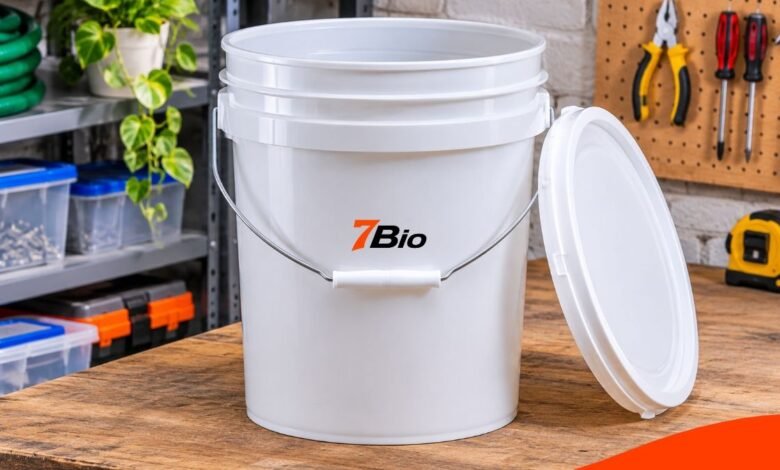
A five-gallon pail is a versatile container that holds about 18.9 litersliters when measured in US gallons. Commonly called a five-gallon bucket, it is widely used to store materials, carry water, organizingorganize supplies,, and handle household or commercial tasks. Its practical shape, carrying handle and available lid options make it suitable for many different applications.
Although these containers may look similar, they are not necessarily interchangeable. The material, wall thickness, sealing system, and intended contents determine whether a particular pail is appropriate for food, water, paint, or industrial products.
Choosing the correct type can help prevent leaks, contamination, and unnecessary replacement costs.
This article explains five-gallon pail dimensions, materials, everyday applications, food-contact considerations, lid options, and essential safety practices to help readers choose confidently.
What Is a Five-Gallon Pail?
A five-gallon pail is a rigid container designed for holding, storing, or transporting materials. Most familiar versions have a cylindrical body, a broad opening, a flat base, and a carrying handle.
The terms pail and bucket are frequently used interchangeably. However, manufacturers often use “pail” when describing packaging containers supplied with specialist lids or closures.
Many models are manufactured from high-density polyethylene (HDPE), a durable plastic used extensively in packaging. Steel versions are also available for applications requiring different strength, resistance, or packaging characteristics.
Pails may be supplied empty, with removable lids or as part of a complete packaging system.
Suitability depends on product specifications rather than appearance alone.
Five-Gallon Pail Capacity and Dimensions
Understanding capacity matters for UK readers because US gallons and imperial gallons are different measurements.
A standard North American five-gallon container generally refers to five US gallons.
| Measurement | Capacity |
|---|---|
| 1 US gallon | Approximately 3.785 litres |
| 5 US gallons | Approximately 18.93 litres |
| 1 imperial gallon | 4.546 litres |
| 5 imperial gallons | Approximately 22.73 litres |
| 5 US gallons of water | Approximately 18.9 kg, excluding the container |
A pail advertised as five gallons usually follows the US measurement, but the manufacturer’s specification should always be checked.
Typical Physical Dimensions
Actual dimensions vary by product design.
Many conventional five-gallon plastic buckets measure approximately:
- Top diameter: 30–31 cm
- Height: 34–38 cm
- Base diameter: 25–27 cm
- Nominal capacity: 18.9 liters
- Construction: Commonly HDPE plastic
These figures are approximate, not universal standards.
A model with a thick rim, gasketed lid, or additional stacking features may have different external measurements.
It is also important to distinguish nominal capacity from maximum brimful capacity. Some pails can physically hold more than their advertised volume, but that extra space may not suit every application.
What Materials Are Five-Gallon Pails Made From?
Material selection affects a storage container’s weight, durability, handling, and compatibility.
High-Density Polyethylene (HDPE)
HDPE is among the most common materials used in plastic pail manufacturing.
It offers a useful combination of strength, relatively low weight, and resistance to many substances.
Its advantages include:
- Lightweight construction compared with steel
- Resistance to moisture
- Durable walls for routine handling
- Easy cleaning when compatible with the contents
- Availability in food-contact-compliant grades
- A wide choice of colors and closure styles
However, HDPE is not automatically suitable for every chemical, temperature or food application.
The complete product specification must be checked.
Steel Pails
Steel containers are commonly used for paints, coatings and certain industrial products.
They may have removable lids secured with crimped closures or locking rings.
Steel offers different mechanical and barrier properties from plastic, but corrosion resistance and chemical compatibility depend on the steel, internal coating and contents.
An unlined steel container may be unsuitable for some liquids.
Other Material Considerations
Handles, gaskets and lids may be manufactured from materials different from the pail body.
For example, a plastic bucket may have a galvanized steel carrying handle and a separate sealing gasket.
Each component matters when selecting a container for food contact, liquid storage, or transport.
Common Uses of a Five-Gallon Pail
Five-gallon containers are popular because they work well in many practical settings.
Household Cleaning
A sturdy bucket can hold cleaning water, cloths, and supplies during routine household maintenance.
Its carrying handle allows users to move materials between rooms without needing several smaller containers.
Use cleaning chemicals only in compatible containers, and never mix different cleaning products indiscriminately.
DIY and Construction Work
Builders, decorators, and home-improvement enthusiasts use large pails to carry tools, collect debris, and handle materials safely.
They can also help organize brushes, protective equipment, and small construction supplies.
For mixing compounds, the container must be strong enough and compatible with the ingredients and mixing equipment.
Food and Dry-Ingredient Storage
A specifically approved food-contact pail may suit storing certain dry ingredients, including flour, rice, or sugar.
The container and lid must be appropriate for the intended food and storage conditions.
A clean-looking industrial bucket should not be assumed safe for food.
Gardening and Outdoor Projects
Buckets can hold soil, compost, gardening tools, or harvested produce.
For planting projects, you need appropriate drainage and growing conditions.
Do not repurpose a container previously used for hazardous chemicals for growing edible crops.
Workshop and Garage Organization
Pails provide convenient storage for hardware, cables, tools, and other workshop accessories.
Clearly labeled containers help prevent confusion between cleaning materials, industrial supplies, and household products.
Five-Gallon Pail Lid Types Explained
The lid is often just as important as the container.
Different closures serve different purposes, and a lid that fits physically may not seal properly.
| Lid type | Main advantage | Typical application |
|---|---|---|
| Standard snap-on lid | Simple closure | General storage |
| Gasketed lid | Improved sealing | Compatible dry goods and liquids |
| Screw-top lid | Repeated opening and closing | Frequently accessed contents |
| Pour-spout lid | Controlled dispensing | Suitable liquid products |
| Tamper-evident lid | Indicates initial opening | Packaged products |
A gasketed lid can offer better protection against leakage or environmental contamination when correctly fitted.
However, descriptions such as “airtight” and “leakproof” should be supported by manufacturer testing, not assumed.
Do not substitute a standard household lid for an approved transport closure when transporting regulated materials.
Are Five-Gallon Pails Food Safe?
Some five-gallon pails are suitable for food contact, but not every plastic bucket qualifies.
Food-contact suitability depends on the complete container, its manufacturing materials, intended conditions, and previous use.
In Great Britain, relevant legal requirements govern food-contact materials to prevent unsafe substances from transferring into food.
For a bucket intended to store food, look for clear manufacturer documentation confirming that it is suitable for the intended food-contact application.
A recycling symbol or HDPE identification mark alone does not establish food safety.
The container’s previous contents also matter.
A bucket that previously held pesticides, solvents, or other hazardous substances should never be reused for drinking water or food, even after washing.
Choosing a Pail for Drinking Water
Drinking water requires particular care because contamination can occur during filling, storage or dispensing.
A purpose-designed food-grade water container with a tightly fitting closure is generally preferable to an ordinary open-top utility bucket.
A narrow opening or dispensing tap can also reduce opportunities for contamination.
Clean and sanitize containers according to appropriate public-health guidance before filling.
Store them away from direct sunlight and hazardous substances, and follow the recommended water replacement or maintenance schedule.
How to Choose the Right Five-Gallon Pail
The best container is not necessarily the thickest or most expensive. It is the one that matches the intended application.
| Intended use | What to check | Why it matters |
|---|---|---|
| Household cleaning | Durable body and handle | Convenient everyday use |
| Dry food storage | Verified food-contact suitability | Reduces contamination risks |
| Drinking water | Approved material and protective closure | Supports hygienic storage |
| Gardening | Material suitability and drainage | Helps match the growing application |
| Industrial liquids | Chemical compatibility | Reduces container failure risks |
| Regulated transport | Applicable UN packaging certification | Supports transport compliance |
| General organisation | Lid fit and stackability | Improves storage convenience |
Before purchasing, establish whether the lid is included, whether the container is reusable, and whether it has a stated load limit.
Also consider the location where it will be stored.
A container intended for repeated outdoor exposure may need different characteristics from one used indoors.
How to Use and Maintain a Five-Gallon Pail
Proper maintenance helps extend the useful life of a storage bucket and reduces the risk of contamination or damage.
1. Identify the intended contents. Choose a container suitable for the material you are storing. Food, water, chemicals, and construction products have different requirements.
2. Inspect the pail before filling. Look for cracked walls, damaged handles, distorted rims, and defective lids. Do not use a damaged container for a load or liquid that could cause injury or contamination.
3. Clean it appropriately. Use a cleaning method compatible with the container and its intended contents. Food and drinking-water applications may require separate sanitizing procedures.
4. Avoid overfilling. Follow the manufacturer’s specified capacity and leave any necessary headspace. Check weight limits before carrying or stacking filled buckets.
5. Secure the correct lid. Make sure the closure is properly fitted. Do not assume that a standard lid will provide the performance of a gasketed or certified closure.
6. Label the container. Identify its contents and, when relevant, the date filled. Keep food-storage and chemical-storage containers clearly separated.
7. Store it correctly. Place filled pails on stable, level surfaces. Protect them from excessive heat, unsuitable chemicals, and environmental conditions outside their specifications.
8. Replace damaged components. A worn gasket, weakened handle, or cracked rim may compromise the entire container.
Important Safety Precautions
A five-gallon pail is a simple product, but improper use can create serious risks.
Prevent Water-Related Accidents
Large buckets containing water can be dangerous to babies and toddlers.
Young children can fall headfirst into a partially filled bucket and may be unable to climb out.
Never leave a bucket containing water accessible to a young child. Empty it promptly after use and store it securely.
Avoid Excessive Lifting Loads
Water weighs about 1 kilogram per literliter.
Consequently, a pail filled with 18.9 liters of water contains nearly 19 kilograms of water before adding the container’s weight.
Other materials may be heavier.
Consider the total load, the handle’s strength, and whether mechanical assistance or a second person is appropriate.
Handle Industrial Contents Carefully
Chemical compatibility must be checked before filling any container.
Where hazardous materials are involved, follow the relevant safety data sheet, supplier instructions and applicable transport regulations.
A UN-rated container is not universally approved for all hazardous substances. Its certified configuration, closure and packaging limits must match the intended use.
Never use an ordinary household bucket as a substitute for a purpose-approved flammable-liquid container.
Prevent Cross-Contamination
Keep containers dedicated to clearly identified purposes.
For example, a workshop pail used for coatings should not later become a household drinking-water container.
Separating food-contact containers from chemical-use containers is a straightforward way to reduce risk.
Five-Gallon Pail vs Smaller and Larger Buckets
Five-gallon containers provide a useful middle ground between smaller household buckets and larger storage vessels.
| Container size | Approximate US capacity | Practical consideration |
|---|---|---|
| 2 gallons | 7.57 litres | Easier to carry when filled |
| 3 gallons | 11.36 litres | Suitable for moderate quantities |
| 5 gallons | 18.93 litres | Higher capacity with portable design |
| 6 gallons | 22.71 litres | Greater volume but potentially heavier |
These comparisons use US gallons.
Smaller buckets can be easier to carry frequently, while larger containers may reduce the number of refills needed.
However, bigger capacity also increases the potential weight.
Choose based on practical handling needs rather than capacity alone.
Common Mistakes to Avoid
Several purchasing and storage mistakes can reduce a pail’s usefulness.
Assuming every bucket is food-grade: Material identification is not a substitute for proof of food-contact suitability.
Buying without checking dimensions: Containers that look identical can have different heights and diameters.
Using incompatible lids: A closure from another manufacturer may fit poorly or fail to seal correctly.
Ignoring total weight: A full container may become difficult or unsafe to carry.
Stacking without checking instructions: Stacking limits depend on container design, contents, and storage conditions.
Reusing chemical containers for food: Cleaning does not reliably make a previously contaminated bucket safe for food or drinking water.
Avoiding these mistakes helps prevent unnecessary expense and unsafe use.
FAQs
1. How many liters does a five-gallon pail hold?
A typical five-gallon pail holds approximately 18.93 liters because most commonly advertised five-gallon buckets use US gallons. Five imperial gallons equal approximately 22.73 liters.
2. Can a five-gallon pail be used for food storage?
Yes, as long as the pail and lid are suitable for the intended food-contact application. Confirm the manufacturer’s specifications and never repurpose containers previously used for hazardous chemicals.
3. How tall is a standard five-gallon bucket?
Many standard models are approximately 34–38 cm tall, although dimensions vary by manufacturer and lid design. Always check the specific product measurements before purchasing.
4. Can a five-gallon bucket store drinking water?
A purpose-designed, food-grade water container can be used when cleaned, sanitized, and stored correctly. Containers with protective closures and controlled dispensing are preferable for reducing contamination.
5. Are five-gallon plastic pails reusable?
Many plastic pails can be reused when they remain in good condition, and their intended application permits it. Reuse depends on previous contents, material compatibility, cleaning requirements, and the condition of the container and lid.
Final Takeaway
A five-gallon pail is a practical storage and handling container used in homes, workshops, gardens and commercial environments.
Its approximate 18.9-liter US capacity makes it useful for transporting materials and organizing supplies, but its suitability depends on more than size.
Material quality, lid design, food-contact requirements, previous use and safe handling all deserve attention.
For ordinary household storage, a durable plastic pail may be sufficient. For food, drinking water, chemicals, or regulated transport, choose a purpose-appropriate container supported by clear manufacturer specifications.
Making that distinction helps ensure the pail performs its intended job safely and effectively.