Cascade Natural Gas: Essential Guide to Services, Bills and Customer Support
Discover how this American natural gas utility operates, where it provides service, how customers manage their bills, and what to know about safety, financial assistance, and energy efficiency.

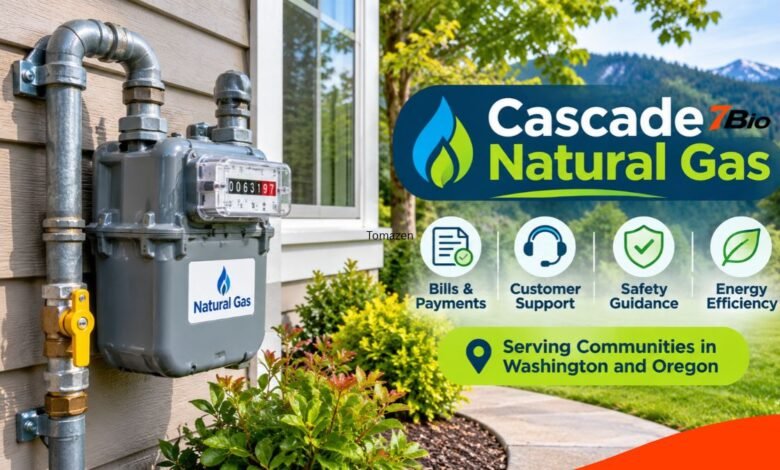
Cascade Natural Gas is an American natural gas distribution company serving residential, commercial, and industrial customers in parts of Washington and Oregon. For households and businesses that depend on gas for heating, hot water and other essential activities, understanding the company’s services can make managing energy costs and utility accounts considerably easier.
The company provides more than gas delivery. Customers can access online account management, different payment arrangements, financial assistance programs, and information about energy conservation. State utility regulation also shapes its operations, influencing customer rates and service requirements.
Whether you are moving into a new property, reviewing an unexpectedly high bill, or investigating local gas suppliers, this guide explains how Cascade Natural Gas operates and what customers should understand before making decisions.
What Is Cascade Natural Gas?
Cascade Natural Gas Corporation is a regulated natural gas distribution utility headquartered in Kennewick, Washington. It supplies natural gas to communities across Washington and Oregon through its distribution infrastructure.
The company was established in 1953 to expand access to natural gas in Pacific Northwest communities that had previously received limited attention from larger energy providers.
Today, it operates as a subsidiary of MDU Resources Group, a US company involved in regulated energy utility operations and related infrastructure.
Unlike an electricity supplier, Cascade’s primary business is natural gas distribution. It delivers gas to eligible residential and commercial properties through pipelines and local distribution systems.
Company Overview
| Detail | Information |
|---|---|
| Official name | Cascade Natural Gas Corporation |
| Established | 1953 |
| Headquarters | Kennewick, Washington, USA |
| Parent company | MDU Resources Group, Inc. |
| Industry | Natural gas distribution |
| Main service states | Washington and Oregon |
| Communities served | 95, according to the company’s published overview |
| Customer service | 888-522-1130 |
| Official website | cngc.com |
| State regulators | Washington UTC and Oregon PUC |
These details help distinguish the company from other American natural gas suppliers with similar services or geographical coverage.
Where Does Cascade Natural Gas Provide Service?
Cascade Natural Gas concentrates its operations in western and central Washington, as well as central and eastern Oregon.
Its service territory includes larger population centers, smaller towns and communities where natural gas infrastructure supports everyday residential and commercial needs.
Washington Service Areas
The company’s published service territory includes communities such as Bellingham, Mount Vernon, Anacortes, Bremerton, Kennewick, Richland, Walla Walla, Yakima and Wenatchee.
Service is also available in several surrounding communities.
Oregon Service Areas
In Oregon, the company’s listed communities include Bend, Redmond, Prineville, Pendleton, Hermiston, Baker City and Ontario.
However, living in one of these cities does not automatically guarantee natural gas service at every address.
Local pipeline coverage, existing connections, property requirements, and other infrastructure considerations determine whether service can be established.
Practical advice: Before buying or renting a property, confirm gas availability using its precise address rather than relying solely on the city’s inclusion in the service territory.
How Cascade Natural Gas Works
Natural gas utilities connect energy supply infrastructure with end users through transportation and distribution networks.
Gas is transported over long distances through transmission pipelines before entering local distribution networks. Utility infrastructure then delivers the gas to individual buildings.
A meter records consumption, allowing the company to calculate charges according to the applicable tariff.
Residential Gas Services
Households may use natural gas for space heating, water heating, cooking, and certain other approved appliances.
The exact applications depend on the property’s equipment and existing connections.
A home with a gas furnace may have substantially different seasonal consumption than one that uses gas only for cooking or water heating.
Commercial and Industrial Services
Businesses may require natural gas for heating, hot-water production, manufacturing processes, food preparation and other operational uses.
Commercial service arrangements can differ from residential accounts because consumption levels, equipment requirements and tariff classifications vary.
Businesses considering a new connection should discuss their needs directly with the utility rather than assuming residential connection procedures will apply.
How to Start, Stop or Transfer Gas Service
Moving home is one of the most common reasons customers contact Cascade Natural Gas.
The company offers options to establish service at a new property, end an existing account, and transfer service within its territory.
Starting a New Account
New customers are directed to contact the company’s customer service center to arrange service.
Before calling, prepare your property address, intended service date and contact details. We may request further information depending on the circumstances.
For newly constructed buildings, additional installation and inspection requirements may apply.
Transferring Existing Service
Existing customers can use the company’s online account services to request a transfer between eligible addresses.
They should confirm both the date service must end at the former property and the date it should begin at the new one.
Ending Service
Customers leaving a property should request disconnection or account closure through the approved service channels.
Closing an account helps avoid confusion over charges arising after the customer’s intended departure date.
Important: Customers who require service within the next two business days, or whose gas was disconnected for nonpayment, should telephone customer service rather than use online request forms.
Cascade Natural Gas Login and Online Account Management
Cascade Natural Gas offers online account services designed to simplify common utility management tasks.
Customers can access account information through the official customer portal rather than relying entirely on telephone support.
Available functions include viewing statements, checking account history, making payments, reviewing usage, and requesting certain service changes.
Main Online Account Features
| Feature | What Customers Can Do |
|---|---|
| Account overview | Review account details and balances |
| Billing history | Access previous statements and charges |
| Gas consumption | Compare current and historical usage |
| Online payments | Make eligible bill payments |
| Automatic payment | Arrange recurring payments |
| Budget payment | Request more predictable monthly billing |
| Service requests | Submit eligible start, stop or transfer requests |
| Profile settings | Update contact and account information |
Customers should access these functions through the company’s official website and avoid entering account credentials into unfamiliar third-party websites.
Understanding Your Cascade Natural Gas Bill
A natural gas bill reflects more than the quantity of gas consumed. It can include service charges, delivery costs, gas supply costs, and applicable regulatory adjustments.
Understanding these components helps customers identify whether a higher payment results from increased consumption, rate changes, or other charges.
Basic Service Charges
A basic service charge helps recover certain fixed costs associated with providing utility service.
Because these costs are not entirely dependent on consumption, a customer may still receive a bill during a period of relatively low gas usage.
Gas Delivery and Supply Charges
Delivery charges relate to transporting gas through the distribution system to customers.
Gas supply charges reflect the cost of the natural gas itself and associated supply arrangements.
The precise billing structure depends on the customer’s state, service classification, and applicable tariff.
What Is a Therm?
A therm is a unit of heat energy commonly used in American natural gas billing.
One therm equals 100,000 British thermal units, or BTUs.
Customers can use the number of therms shown on their statements to compare consumption between billing periods.
However, changes in total cost should not automatically be attributed to usage alone. Applicable rates and fixed charges also affect the amount due.
Why Might Your Bill Increase?
Colder weather can increase heating demand, particularly in homes that use natural gas as their primary heating source.
Other possible explanations include changes in household occupancy, inefficient equipment, altered thermostat settings, longer billing periods, or approved tariff adjustments.
Comparing usage with the corresponding period in the previous year is generally more informative than comparing winter consumption with summer consumption.
Cascade Natural Gas Payment Options
Cascade Natural Gas offers different payment methods to accommodate customer preferences.
These include online payments, automatic withdrawals, approved third-party payment channels and payments by post.
The company also offers a budget payment arrangement to reduce seasonal variation in monthly bills.
Automatic and Online Payments
Automatic payment allows customers to authorize recurring withdrawals from an eligible financial account.
Other electronic payment services may support cards and electronic bank transfers, although certain third-party transactions can carry additional fees.
Customers should review the selected payment method before confirming a transaction.
Budget Payment
The budget payment option spreads estimated annual energy expenditure into more consistent monthly amounts.
This can make budgeting easier for households whose natural gas consumption rises sharply during colder months.
It does not eliminate the underlying cost of the energy consumed, and account adjustments may still be necessary.
Financial Assistance and Customer Protection Programs
Energy affordability is an important concern for households with limited income.
Cascade Natural Gas provides information about bill discounts, payment arrangements, and assistance programs in its service states.
Program requirements differ between Washington and Oregon, so customers should check the rules applicable to their residence.
Assistance in Washington
Eligible Washington customers may qualify for support through the Cascade Arrearage Relief Energy Savings program, commonly known as CARES.
Support can include monthly bill discounts and assistance with qualifying overdue balances.
Additional customer protections may apply in circumstances involving medical needs or winter heating.
Assistance in Oregon
Income-qualified Oregon customers may receive support through the company’s Energy Discount Program.
The company also describes options involving arrearage relief, payment arrangements, and protections during certain severe weather events.
Eligibility depends on the relevant rules and household circumstances.
What If You Cannot Pay Your Bill?
Customers experiencing financial difficulties should contact the utility before a payment problem worsens.
Explain the situation and ask whether a payment arrangement, bill discount, or community assistance program is available.
Ignoring account notices may reduce the time available to resolve an outstanding balance.
Natural Gas Safety: Essential Customer Guidance
Natural gas requires appropriate handling, maintained equipment and prompt action when a possible leak is detected.
Although gas infrastructure is designed and operated under safety requirements, leaks and equipment faults can create serious hazards.
What Should You Do If You Smell Gas?
Natural gas is given a distinctive odor, often compared with rotten eggs, to help people recognize potential leaks.
If you suspect a gas leak:
- Leave the building or affected area immediately, taking others with you.
- Avoid operating electrical switches, phones, or appliances near the suspected leak.
- Do not smoke or create sparks or flames.
- From a safe location, contact the gas utility’s emergency service.
- Follow emergency responders’ instructions and do not re-enter until authorized.
Cascade Natural Gas lists 888-522-1130 as its 24-hour emergency contact number. Call 911 where emergency response is required.
Do not attempt to locate or repair a suspected gas leak yourself.
Carbon Monoxide and Appliance Safety
Carbon monoxide is an invisible, odorless, and potentially fatal gas that can result from incomplete fuel combustion.
Homes with fuel-burning appliances should have suitable carbon monoxide alarms installed and maintained according to applicable safety guidance.
Gas appliances, ventilation systems and exhaust components should also receive appropriate professional attention.
A carbon monoxide alarm does not replace regular maintenance or a dedicated gas-leak response.
Energy Efficiency and Lower Gas Consumption
Reducing unnecessary energy consumption can help households control expenditure.
The best measures depend on the property’s condition, heating equipment, and available budget.
Improve Insulation and Reduce Heat Loss
Poor insulation can allow heat to escape through roofs, walls, floors, and other parts of a building.
Air sealing and insulation improvements may reduce the amount of heating required to maintain comfortable indoor temperatures.
Maintain Heating Equipment
Appropriate professional maintenance can help heating systems operate as intended.
Replacing filters where applicable and addressing equipment faults can also help prevent unnecessary energy use.
Check Available Rebates
Cascade Natural Gas publishes information about qualifying energy-efficiency incentives, including eligible equipment and home improvements.
For Washington residential rebates, the company identifies specific rate-schedule and heating-source requirements.
Customers should check current program rules, contractor requirements, and application deadlines before committing to a project.
Income-qualified households may also access weatherization assistance through participating community organizations.
Regulation, Rates and Recent Developments
Natural gas utilities are regulated businesses, and customer rates are subject to applicable state oversight.
In Washington, the Washington Utilities and Transportation Commission regulates Cascade’s rates and services.
In Oregon, the Oregon Public Utility Commission performs the corresponding regulatory role.
These regulators review relevant filings and utility obligations under their respective legal frameworks.
Washington Rate Proposal for 2027 and 2028
On November 2, 2026, Cascade Natural Gas announced a public hearing concerning its proposed multi-year Washington rate plan.
The company had filed its proposal in May 2026, requesting changes that would take effect in 2027 and 2028 if approved.
A public comment hearing was scheduled for January 12, 2027 under docket UG-260127.
As of November 23, 2026, the proposed future changes should not be treated as final approved rates. The Washington regulator retains authority to determine the outcome.
Customers seeking the amount currently applicable to their account should consult the effective tariff for their service classification.
Renewable Natural Gas Developments
Renewable natural gas can be produced by processing suitable biogas from sources such as landfills and organic waste facilities.
However, individual projects depend on technical feasibility, financing, regulation, and environmental considerations.
In October 2026, the company announced that it would not proceed with its proposed renewable natural gas development at Knott Landfill in Oregon, citing higher projected development costs and changed circumstances.
This decision should not be confused with a cancellation of all renewable natural gas activity across the company.
FAQs
Is Cascade Natural Gas an electricity company?
No. Cascade Natural Gas primarily operates as a natural gas distribution utility. Customers may receive electricity from a separate provider depending on their address.
How can I contact Cascade Natural Gas customer service?
The company’s published customer service number is 888-522-1130. Its standard telephone service hours are Monday to Friday, 7:30 am to 6:30 pm, while the emergency line operates around the clock.
Can I pay my Cascade Natural Gas bill online?
Yes. Eligible customers can use the company’s online account services and available electronic payment options. Some third-party payment methods may involve transaction fees.
Does Cascade Natural Gas provide financial assistance?
The company describes qualifying bill discounts, overdue-balance assistance, payment arrangements, and other protections. Eligibility and program terms differ between Washington and Oregon.
Why is my gas bill higher during winter?
Gas heating systems often consume more fuel in colder weather. A higher bill may also reflect changes in tariff rates, billing periods or household energy usage.
How do I know whether my property can receive natural gas?
Contact the company with the property’s precise address. Service depends on local infrastructure, connection arrangements, and applicable requirements.
Final Takeaway
Cascade Natural Gas is an established American utility serving communities across Washington and Oregon. Its role extends beyond delivering fuel to include billing management, customer support, assistance programs, safety education, and energy-efficiency initiatives.
For customers, the most useful approach is to understand the applicable service arrangements, regularly review gas consumption, check eligibility for available assistance, and act promptly on any safety concern.
Rates, rebates, and customer protection rules can change, so official account information and current regulatory guidance are especially important.
With a clear understanding of how the utility operates, customers can make more informed decisions about service connections, payments and household energy use.