
alignment close to me: A Helpful UK Guide to Wheel Alignment, Costs and Trusted Garages
Learn how to find a reliable wheel alignment service nearby, recognize warning signs, compare prices, and protect your vehicle's tires.

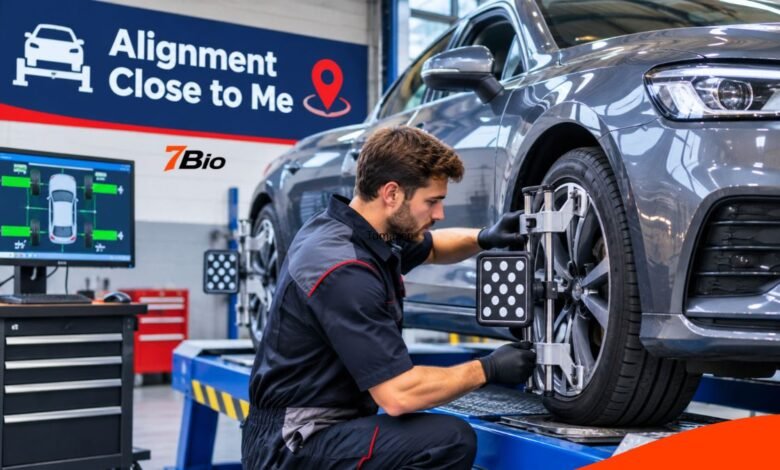
Searching for alignment close to me usually means you want a trustworthy garage that can check and correct your car’s wheel alignment without unnecessary expense. Whether your steering wheel feels off-center, your vehicle pulls to one side, or your tires are wearing unevenly, a professional alignment check can help identify the cause.
Wheel alignment is an important part of vehicle maintenance because it affects how the tires meet the road. Incorrect settings can contribute to uneven tire wear, poor handling, and avoidable running costs.
However, choosing the nearest garage is not always the best decision—equipment quality, the technician’s experience, and what the quoted price includes all matter.
This guide explains how wheel alignment works, when to arrange an inspection, typical UK costs, and how to choose a suitable local provider.
What Does Alignment Close to Me Mean?
Drivers often use the phrase “alignment close to me” when searching online for nearby car wheel alignment or tracking services.
Wheel alignment involves measuring and, where possible, adjusting the wheel angles relative to the vehicle’s suspension and the road. These angles are compared with the vehicle manufacturer’s specifications.
Correct alignment helps the tires maintain appropriate contact with the road and supports predictable steering.
Understanding the Three Main Alignment Angles
Toe: Describes whether the front edges of the wheels point slightly toward or away from one another when viewed from above. Incorrect toe can cause tire scrubbing and rapid wear.
Camber: Refers to the inward or outward tilt of a wheel when viewed from the front of the vehicle. Excessive camber can contribute to wear on one side of a tire.
Caster: Describes the steering-axis angle when viewed from the side. It affects steering stability and the steering wheel’s tendency to return to the center.
Not every vehicle allows all these angles to be adjusted. A technician should explain which settings can be corrected on your particular model.
Signs Your Car May Need Wheel Alignment
Recognizing potential alignment problems early can help prevent additional tire wear and identify steering or suspension faults.
Your Car Pulls to One Side
If your vehicle consistently drifts left or right on a reasonably level road, incorrect alignment is one possible explanation.
However, uneven tire pressures, worn suspension components, brake problems, and road camber can produce similar symptoms.
A professional inspection is more reliable than assuming tracking is the only cause.
Uneven or Rapid Tire Wear
One of the most noticeable warning signs is unusual wear on a tire’s inside or outside edge.
Poor alignment can cause a tire to scrub against the road instead of rolling in its intended direction.
Check all four tires regularly, including their less visible inner shoulders.
An Off-Centre Steering Wheel
When traveling straight, the steering wheel should normally sit close to its intended central position.
If you need to hold it noticeably to one side, the vehicle may need an alignment assessment.
Vibrations or Unusual Steering Behaviour
Steering vibrations can sometimes accompany alignment problems, but they are often linked to wheel imbalance, tire damage, or other mechanical faults.
A garage should investigate the actual cause instead of automatically recommending alignment.
How to Find Reliable Wheel Alignment Services Near You
Finding a suitable garage requires more than entering a search phrase and selecting the first result.
Search by Your Town or Postcode
Start by searching for wheel alignment services using your town, postcode, or neighborhood.
Useful search terms include “wheel alignment near me”, “car tracking near me” and “four-wheel alignment near me”.
Location-based searches can help you find tire centers, independent garages, and vehicle servicing businesses within a convenient distance.
Check the address and travel requirements before booking, particularly if the vehicle is showing steering problems.
Compare Garage Reviews Carefully
Customer reviews can provide useful insight into how a business handles appointments, communicates findings, and resolves complaints.
Look for detailed feedback describing actual alignment work rather than relying entirely on star ratings.
Recent reviews are especially useful, though no review can guarantee technical quality on its own.
Ask About the Equipment
A suitable garage should have equipment that can measure the alignment settings your vehicle requires.
Modern computerized systems can compare wheel angles with manufacturer specifications and may produce a report showing measurements before and after adjustment.
Equipment quality matters, but an experienced technician and proper procedures matter just as much.
Confirm the Total Price
Before booking, ask whether the quoted amount includes both measurement and adjustment.
Some businesses advertise an initial check separately from the corrective work.
Also confirm whether additional charges apply if worn steering or suspension parts need attention.
How Much Does Wheel Alignment Cost in the UK?
Prices vary by vehicle, garage, location, and service required.
The following figures are indicative UK budget ranges reported during 2026, not guaranteed prices.
| Alignment service | Indicative UK cost |
|---|---|
| Two-wheel front alignment | £30–£65 |
| Four-wheel alignment | £50–£120 |
| Specialist or complex alignment | £100 or more |
Comparing published prices is useful, but the cheapest advertised service may not cover everything your vehicle needs.
Some garages offer an initial alignment measurement at no charge. This doesn’t necessarily mean adjustments or further repairs are free.
Always request a vehicle-specific quotation before authorizing work.
Two-Wheel Alignment vs Four-Wheel Alignment
Understanding the difference between these services can help you avoid booking the wrong option.
Two-Wheel Alignment
Front-wheel alignment, sometimes called front tracking, focuses on the front axle.
It is often less expensive than a comprehensive four-wheel service.
However, a front-only adjustment may not identify problems involving the rear-wheel geometry.
Four-Wheel Alignment
Four-wheel alignment measures the relationship between the front and rear wheels and checks the vehicle’s overall geometry.
It can be particularly useful where rear alignment influences steering direction or when the vehicle has experienced significant suspension or impact-related problems.
Some cars have limited rear-wheel adjustment, so what’s possible depends on the manufacturer’s design.
A reputable garage should recommend a service based on the vehicle, not simply promote the more expensive option.
What Happens During a Professional Wheel Alignment?
A typical appointment begins with an assessment of the vehicle’s tires, steering, and suspension.
The technician may check tire pressures and look for worn or damaged components that could affect the results.
Next, the technician attaches measuring equipment to the wheels or uses it to record their positions. The system compares the readings with the manufacturer’s specified values.
Where adjustment is possible and necessary, the technician makes the relevant changes and checks the measurements again.
For a comprehensive service, you can request a before-and-after alignment report. It can help you understand which measurements were outside specification and which were corrected.
If the vehicle has damaged suspension components, alignment alone may not resolve the problem. Mechanical repairs may need to come first.
Wheel Alignment vs Wheel Balancing
Although these services are often mentioned together, they address different problems.
| Wheel alignment | Wheel balancing |
|---|---|
| Corrects wheel geometry | Corrects uneven weight distribution |
| Involves steering and suspension angles | Involves the wheel and tyre assembly |
| Can address misalignment-related tyre wear | Can reduce imbalance-related vibrations |
| Requires alignment measuring equipment | Requires balancing equipment and weights |
For example, a car that consistently pulls to one side may need its alignment checked. A car that vibrates noticeably at certain speeds may have an imbalance or another tire-related fault.
Neither symptom is a guaranteed diagnosis.
When Should You Arrange an Alignment Check?
No single interval suits every vehicle.
An inspection is particularly sensible after a significant pothole or curb impact, following steering or suspension repairs, or when uneven tire wear appears.
You may also wish to have the alignment assessed when fitting replacement tires if previous wear patterns suggest a problem.
Can You Check Wheel Alignment at Home?
You can inspect tires for uneven wear and check pressures against the vehicle manufacturer’s recommendations.
However, accurately measuring wheel geometry requires specialist equipment.
TyreSafe recommends regular checks of tire air pressure, condition and tread depth, including wear patterns.
For UK cars, the legal minimum tread depth is generally 1.6 mm across the central three-quarters of the tread and around its circumference.
An MOT pass does not confirm that the vehicle’s wheel alignment is correct, because routine MOT testing does not directly measure wheel geometry.
If steering becomes unpredictable, the vehicle pulls severely, or you suspect damaged tires or suspension, arrange a safety assessment promptly rather than continuing normal driving.
How to Avoid Paying for Unnecessary Work
When looking for alignment close to me, describe the symptoms clearly rather than asking a garage to perform a specific repair right away.
Explain whether the car pulls during ordinary driving, whether the steering wheel appears crooked, and whether you recently struck a pothole.
Ask for the initial measurements and an explanation of any recommended adjustment.
If a garage finds a worn component, ask for a separate breakdown of the repair cost.
Correct alignment should be based on measured findings, not assumptions.
A clear invoice and alignment report can also help if the symptoms continue after the appointment.
FAQs
Is wheel alignment the same as tracking?
The terms are often used interchangeably. However, tracking usually refers to front-wheel toe adjustment, while a full wheel alignment can involve measuring the geometry of all four wheels.
How long does wheel alignment take?
The duration depends on the vehicle, the equipment, and whether adjustments or additional inspections are needed. Ask the garage for an appointment estimate, especially if you need the vehicle back the same day.
Can incorrect alignment damage tires?
Yes. Incorrect geometry can contribute to uneven or accelerated tire wear, potentially reducing usable tire life.
Is wheel alignment included in an MOT?
No. Wheel alignment is not directly measured during a standard UK MOT. Passing the test does not guarantee that the wheels are correctly aligned.
Should I get wheel alignment after replacing tires?
Not every tire replacement requires alignment. However, a check is sensible when the old tires show abnormal wear, or the vehicle has steering symptoms.
Is the nearest alignment garage always the best choice?
Not necessarily. A slightly farther garage with suitable equipment, transparent pricing, and experienced technicians may provide better service than an unverified local option.
Final Takeaway
Searching for alignment close to me is a useful starting point when your vehicle needs a wheel geometry inspection.
The best choice is not necessarily the nearest or cheapest garage. Look for a provider that checks your vehicle’s condition, uses suitable measuring equipment, explains the findings, and provides clear pricing before making adjustments.
Paying attention to steering changes and tire wear can help you spot problems early, protect your tires, and drive more safely.


