welib Explained: Free Online Library, Copyright Risks and Safer Alternatives
An informative guide to the online book platform, its claimed resources, key legal developments in 2026, and responsible ways to access digital reading material.

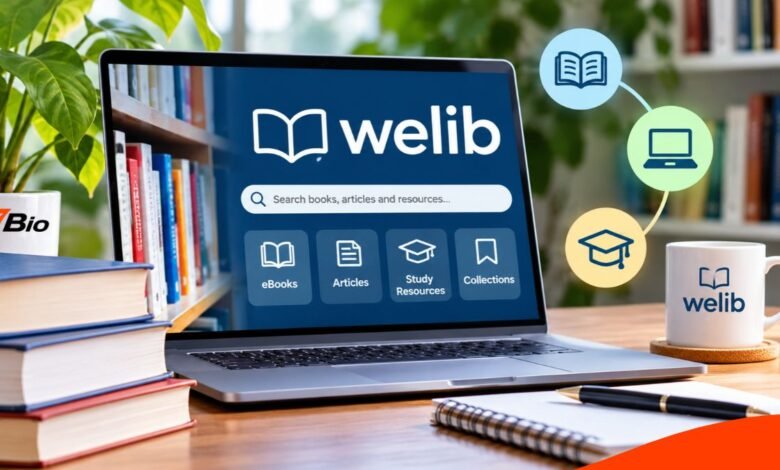
Welib is an online platform for searching digital books, academic papers, and other reading materials. Its extensive catalog and free-access model have attracted people seeking educational resources, fiction, and research publications without conventional subscription fees.
However, the story goes beyond the number of titles advertised. The service has faced significant legal challenges concerning copyright infringement, including a US federal court judgment issued in November 2026.
For students, researchers, and everyday readers, the key questions are how the platform works, whether its material is authorized for distribution, and what dependable alternatives are available.
This guide explains the platform’s publicly described features, separates verified information from marketing claims, and examines the practical, legal, and security considerations readers should understand.
What Is welib?
welib is commonly described as a free digital library, or shadow-library platform, that helps users discover books, research papers, magazines, and other publications through an online catalog.
Unlike a conventional public library, where access to digital books is generally arranged through authorized lending agreements, a shadow library may distribute copyrighted material without permission from the relevant rights holders.
The service advertises access to approximately 43 million books and 98 million academic papers. These numbers are platform claims rather than independently audited measurements of available, complete and legally distributable publications.
Its appeal is straightforward: readers can search across a very large collection without first purchasing individual books from traditional retailers.
Nevertheless, finding a title in an online catalog does not establish that its digital copy has been licensed for public access.
What Types of Material Are Listed?
The catalog is organized around different reading and research interests. Its publicly displayed categories include literature, biography, history, science, technology, business, education and other academic subjects.
The service also advertises magazine and comic collections.
For researchers, the inclusion of academic publications is particularly relevant because scholarly material is frequently distributed across many different publishers, institutional repositories and specialist databases.
A searchable collection can make discovering titles easier, but the accuracy of its metadata, availability of individual files, and copyright status must be considered separately.
How Does the Online Library Work?
The publicly displayed interface of welib follows a familiar digital-library model. Readers can search for particular publications using identifying information rather than manually browsing many categories.
Search fields may accept a book title, author, ISBN, or other bibliographic identifier. The academic search facility also supports research-specific identifiers.
Results are designed to connect the reader with matching catalog records and available reading formats.
Searching for Books and Research Papers
A specific title is generally more useful than a broad search when identifying an exact edition. For example, two books may have similar names but different authors, publication dates, or subject matter.
For academic publications, a Digital Object Identifier (DOI) can help distinguish the intended paper from other studies with similar titles.
A search result should be checked against the publisher’s information before being treated as an authoritative version of a publication.
This distinction matters because catalog databases can include duplicate records, alternative editions, incomplete bibliographic information, and material with unclear distribution rights.
Reading Formats and Accessibility
The platform advertises browser-based reading and support for familiar digital formats, including PDF and EPUB.
PDF files are often useful when the original page layout, illustrations, equations, or pagination must remain consistent. EPUB is generally better suited to reflowable reading on devices with different screen sizes.
Some promotional descriptions also mention audio playback, reading lists and AI-assisted summaries. These descriptions do not establish that every feature works for every title, account, or domain.
In particular, an AI-generated summary should not be treated as a substitute for reading a publication or verifying its original research.
Understanding the Large Catalog Claims
The collection size associated with welib is one of its most prominent selling points.
Yet catalog size is not the same as access to millions of verified, legally available, and accurately labeled works.
A database may contain several editions of the same publication, multiple formats, duplicate entries, or records for material that cannot currently be retrieved.
The quality of a digital library therefore depends on more than its total number of listings.
Readers should consider whether a record identifies the correct author, publisher, edition, publication year and source. For scholarly work, the distinction between a preprint, an accepted manuscript and the final published article can be particularly significant.
A large database can help with discovery. It does not, by itself, guarantee reliable documents or lawful distribution.
What Happened to welib in November 2026?
A major development affecting the platform occurred on 9 November 2026, when the United States District Court for the Southern District of New York entered a default judgment in a copyright infringement case brought by 13 publishers.
The lawsuit had been filed on 16 June 2026. The publishers alleged that the website distributed copyrighted books and academic publications without authorization.
The defendants did not respond to or defend the proceedings by the required deadlines, and the publishers obtained judgment in their favor.
The $19.5 Million Copyright Judgment
US District Judge Victor Marrero ordered statutory damages totaling $19.5 million.
The amount reflected $150,000 for each of 130 copyrighted works identified in the litigation, with ten works attributed to each of the 13 publishers.
The plaintiffs included major educational, academic and trade publishers, among them Penguin Random House, HarperCollins, Elsevier and Simon & Schuster.
The ruling also included measures intended to stop the unauthorized distribution of copyrighted works.
What the Court Ordered
The judgment directed relevant domain registries, registrars and hosting providers to restrict access to the platform’s domains and restrict their transfer.
It also required the defendants to cease specified infringing activities and destroy unauthorized copies of protected works covered by the order.
Because the ruling was a default judgment, the case did not proceed through a fully contested trial in which both sides presented their arguments.
Nevertheless, it is an actual court judgment, not merely an allegation or an informal complaint.
Does the Judgment Mean the Website Is Permanently Offline?
Not necessarily.
A court order directing domain providers to restrict access is different from confirmation that every domain has already stopped operating.
Reports following the judgment indicated that some associated addresses remained reachable. Their future accessibility depends on enforcement actions and the infrastructure involved.
Consequently, the availability of any particular domain should not be assumed from an older article, search result, or screenshot.
The legal ruling is established; the continuing operational status of individual web addresses may change.
Is welib Legal to Use?
The legal question requires distinguishing a searchable website from the copyright status of the material distributed through it.
A book may be legally available for free because its copyright has expired, the rights holder has granted permission, or the publisher has released it under an appropriate open-access license.
That does not mean every free copy of a copyrighted publication is authorized.
In the United Kingdom, copyright law generally restricts copying and distributing protected works without permission, subject to specific statutory exceptions.
Personal study does not automatically create a right to download an unauthorized copy of an entire copyrighted book.
The November 2026 US judgment directly concerned the conduct of the platform’s defendants. It should not be presented as a separate court ruling against every individual reader.
For someone looking for books, the most dependable approach is to use authorized lending services, public-domain collections, and publisher-approved open-access repositories.
Privacy and Security Considerations
Readers investigating welib should also consider the ordinary security risks associated with unfamiliar websites and downloadable files.
These concerns become particularly relevant when a service changes domains or when unrelated websites imitate a recognized name.
Checking Website Identity
A similar-looking domain is not necessarily operated by the same organization.
Search advertisements, unofficial directories and social media posts can direct readers to unrelated services using familiar branding.
Avoid entering sensitive personal information simply because a page claims to provide free digital books.
A professional-looking design, HTTPS connection, or prominent search result does not, by itself, establish that an operator is trustworthy.
Understanding Download Risks
Documents from unverified sources may be incomplete, mislabeled, or different from what the accompanying description suggests.
Some files may also present technical security risks. This is a general precaution, not evidence that a specific file from the platform contains malware.
Keep devices updated, use reputable security software, and avoid installing unknown applications or browser extensions to access ordinary reading material.
Readers should be especially cautious of unexpected payment requests, executable downloads, or instructions to turn off security settings.
Protecting Research Accuracy
For academic use, document authenticity matters as much as device security.
Check the DOI, author list, journal title, publication year, and version against a recognized publisher or institutional repository.
An unofficial PDF should not be relied upon as the definitive version of a research paper simply because its title looks correct.
Is It the Same as Axiell’s WeLib?
No. A key distinction is that Axiell also offers a product called WeLib, a school-library and educational-resource management system.
Axiell’s platform is designed to help schools bring physical collections, digital materials and educational resources into a searchable environment.
It supports collaboration among librarians, teachers, and students, along with features for organizing resources and educational activities.
This school-library product should not be confused with the free-book website involved in the US copyright litigation.
The shared name can confuse search results, especially for teachers, parents, and librarians researching educational technology.
When evaluating information about either service, identify its operator and purpose before applying claims about one to the other.
Reliable Alternatives for Free Digital Books
People interested in welib often have a simple underlying goal: finding affordable, convenient access to useful books and research.
Several established services address that need through public lending, open licenses, or public-domain collections.
| Service | Best For | Access Model |
|---|---|---|
| Project Gutenberg | Classic literature and historical texts | Primarily works in the US public domain |
| Libby | Public-library ebooks and audiobooks | Library-supported digital lending |
| BorrowBox | Borrowing ebooks and audiobooks from participating libraries | Authorised library lending |
| OAPEN Library | Academic books and scholarly monographs | Open-access publishing |
| Directory of Open Access Journals | Finding scholarly articles and journals | Open-access research discovery |
| Unpaywall | Locating legally available research articles | Publisher and authorised repository copies |
For Readers in the UK
Many UK public libraries provide digital borrowing through Libby or BorrowBox.
The available catalog, membership requirements and lending arrangements depend on the participating library authority.
Readers can check their local council’s library service to find out which digital platforms are supported.
This route is particularly useful for contemporary books that remain protected by copyright.
For Students and Researchers
OAPEN provides access to scholarly books through an open-access collection developed with publishers.
The Directory of Open Access Journals helps researchers discover journals and articles published under open-access arrangements.
Unpaywall can identify legally available versions of scholarly papers, including copies deposited in institutional repositories.
These services do not guarantee access to every publication, but they provide clearer routes to authorized material.
For Classic Literature
Project Gutenberg is a recognized resource for older books, including novels, essays, and historical writing.
Its public-domain assessments are primarily based on United States copyright law.
Readers outside the US should remember that copyright status can differ between countries, particularly when reusing or redistributing material.
How to Choose a Trustworthy Digital Library
The best alternative to welib depends on the reader’s purpose, not the advertised size of a catalog.
A student seeking an academic article has different requirements from someone borrowing a contemporary novel or downloading a classic work.
A practical decision process begins with accurately identifying the publication.
Step 1: Confirm the Correct Publication
Record the title, author, and edition. Where available, use an ISBN for books or a DOI for scholarly articles.
Step 2: Check an Authorized Source
Search the publisher’s catalog, an institutional repository, or a recognized public-library service.
This helps establish whether the title is available through a legitimate distribution channel.
Step 3: Review Access Conditions
Check whether the publication is open access, in the public domain, available through a time-limited loan, or restricted to subscribers.
Free access and permission to redistribute are not the same thing.
Step 4: Assess the File and Website
Avoid unnecessary software installations, verify the website’s identity,, and confirm the downloaded document matches the expected publication.
Step 5: Keep Accurate Research Details
Save the correct bibliographic information, including the edition or research version.
For academic work, cite the publication itself rather than relying only on a file-sharing page.
These steps encourage responsible reading while reducing confusion about copyright, source authenticity, and document quality.
FAQs
1. Is welib completely free?
The online platform advertises free access to a large catalog of books and research materials. However, advertised access conditions may change, and free availability does not establish that every publication is authorized for distribution.
2. Why was the website involved in a copyright lawsuit?
Thirteen publishers brought a US lawsuit alleging unauthorized distribution of copyrighted works. On 9 November 2026, the court entered a default judgment awarding $19.5 million in damages and ordering measures against the website’s domains and infringing activities.
3. Can a Digital Library Contain Both Legal and Unauthorized Books?
Yes. Different publications can have different copyright and licensing conditions. A work may be in the public domain, openly licensed, distributed with permission, or protected against unauthorized copying. The status must be assessed for the particular work.
4. Can Students Find Free Academic Papers Legally?
Yes. Open-access journals, university repositories, institutional subscriptions, and authorized manuscript repositories provide legitimate access to many research publications. The Directory of Open Access Journals and Unpaywall are useful discovery tools.
5. What Should I Do if a Digital Library Website Stops Working?
First, verify whether the service has issued an official notice. Avoid automatically trusting unfamiliar replacement domains. For immediate reading needs, check a public library, publisher website, or recognized open-access service instead.
Final Takeaway
welib illustrates both the appeal and the difficulties of large online collections offering free access to books and academic research.
Its advertised catalog may interest readers, but the copyright litigation and November 2026 judgment are essential context when evaluating the service.
The most useful lesson is that the number of available titles should not outweigh source reliability, lawful access, document authenticity and personal security.
For UK readers, students and researchers, public-library lending and authorized open-access platforms offer practical ways to discover digital books without relying on uncertain distribution arrangements.