Breakout EDU: How Educational Escape Games Make Classroom Learning More Engaging
Discover how digital puzzles, physical breakout kits, and collaborative challenges can support teaching, critical thinking, and meaningful participation in the classroom.

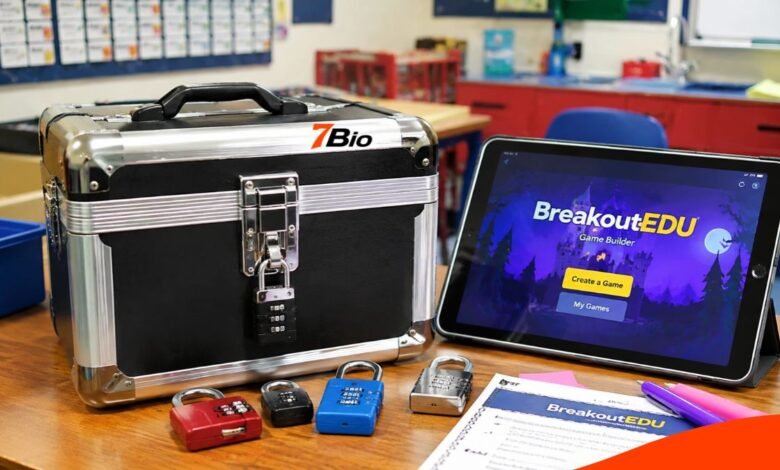
Breakout EDU is an educational game-based learning platform that turns traditional classroom activities into interactive puzzle-solving experiences. Instead of relying entirely on textbooks, worksheets, or conventional quizzes, teachers can introduce challenges that encourage students to apply their knowledge, communicate with classmates, and solve problems.
The platform combines digital escape-room games with physical classroom kits. Students follow clues, answer curriculum-related questions, and unlock a sequence of puzzles to complete a challenge. These activities can reinforce academic topics while creating opportunities for teamwork and logical reasoning.
For teachers looking to make revision sessions more interactive, Breakout EDU offers a different way to approach familiar subjects. Its resources include ready-made games, short daily puzzles, and tools for creating original learning activities.
The most important consideration is choosing games that serve a genuine educational purpose rather than treating puzzle completion as the only goal.
What Is Breakout EDU?
Breakout EDU is a classroom learning platform inspired by escape rooms. In a typical escape room, participants search for clues, solve puzzles, and complete challenges to achieve a shared objective. The educational version uses a similar structure, but connects the puzzles to academic knowledge and classroom skills.
A teacher might select a mathematics activity that requires pupils to calculate answers before opening virtual locks. Another challenge could involve interpreting historical evidence, recognizing scientific concepts, or identifying features of a written passage.
The learning task becomes part of a larger problem-solving experience.
Unlike an ordinary online quiz, students may need to combine several pieces of information before discovering an answer. This encourages them to explain ideas, test possibilities, and reconsider their reasoning.
The platform offers both independent and collaborative activities, allowing teachers to choose a format suited to their lesson objectives.
How Does Breakout EDU Work?
The basic process involves selecting an educational challenge, introducing its storyline, and asking students to solve interconnected puzzles.
Teachers can choose games according to the subject, grade level, and relevant educational standards. Teachers can assign digital activities through the platform, while physical games require classroom materials and a prepared breakout kit.
Digital Escape-Room Games
Digital games use online puzzles and virtual locks rather than physical equipment.
Students may be asked to interpret information, recognize patterns, complete calculations or connect clues to discover a code.
Students can complete a digital game independently or through group discussion, depending on how the teacher organizes the activity.
The online format is particularly useful for short revision activities, classroom stations and situations where physical game equipment is unavailable.
Physical Breakout EDU Kits
Physical games use actual lockboxes, combination locks, clue cards and other puzzle materials.
Students work together to find answers that let them open the locks. Different clues may require mathematical calculations, reading comprehension, observation, or logical reasoning.
The practical nature of these activities can make them appealing for lessons where discussion, movement and hands-on participation are helpful.
However, teachers must prepare the materials and ensure that every lock and clue works correctly before students begin.
Lock of the Day
Lock of the Day is a short digital puzzle designed to be completed in approximately five minutes or less.
Teachers can use it as a lesson starter, a brief thinking activity, or an end-of-class exercise.
Its compact format is useful when you don’t have time for a longer escape-room challenge.
Breakout+ Adventures
Breakout+ provides more immersive, point-and-click digital escape-room experiences.
Students explore virtual environments, investigate clues, and solve challenges within a story-driven setting.
These games offer a different experience from straightforward virtual-lock activities, although access depends on the subscription package.
Game Design Studio
The Game Design Studio enables teachers and students to create digital breakout games.
Rather than only solving existing puzzles, learners can construct their own stories, develop clues, and design challenges for other students.
This changes the activity from answering questions to demonstrating knowledge through content creation.
For example, students studying a science topic could build a sequence of puzzles around the concepts they have recently learned.
How to Use Breakout EDU in the Classroom
Successful classroom implementation begins with a clear learning objective.
Step 1: Identify the Educational Goal
Before choosing a game, decide what students should learn or practice.
The goal might involve revising fractions, understanding scientific vocabulary, analyzing a text, or developing communication skills.
A suitable activity should require students to use knowledge connected to that objective.
Step 2: Select an Appropriate Game
Search the available games by subject, grade level or standard.
Review the content before assigning it. A game designed around unfamiliar terminology may need additional explanation.
UK teachers should pay particular attention to curriculum differences because many published activities reference US educational standards.
Step 3: Prepare Student Access
For digital games, teachers can create a class, enroll students using a class code, or use supported roster-import methods.
Students can then access assigned activities through their accounts.
For kit-based challenges, preparation includes arranging the locks, printing clues, and checking that every solution works.
Step 4: Explain the Rules
Introduce the storyline, the time available, and the intended learning outcome.
Students should understand whether they are permitted to ask for hints, how they should record answers, and what successful completion requires.
Step 5: Encourage Collaboration
When using group activities, consider assigning rotating responsibilities.
One student might read the clues, another record possible solutions, and another check calculations.
Keep these roles flexible so everyone has a chance to contribute.
Step 6: Observe Learning
While students work, observe their reasoning rather than focusing solely on who finishes first.
Notice which concepts cause difficulty and whether students can explain how they reached their answers.
The platform also provides progress information for assigned digital activities.
Step 7: Review the Experience
After the challenge, discuss the solutions.
Ask students which clues were difficult, what knowledge they used, and how they corrected mistakes.
This reflection is essential because completing a puzzle does not automatically demonstrate lasting understanding.
Practical Breakout EDU Activity Ideas
Escape-room learning can be adapted across a wide variety of classroom subjects.
The following examples are illustrative lesson ideas, not claims about specific games available in the platform library.
Mathematics: The Missing Code
Students receive clues containing fractions, percentages, and number patterns.
Each correct calculation reveals part of a code needed to complete the challenge.
The teacher can introduce increasingly complex clues as the class progresses.
This format provides opportunities to practice calculation methods while explaining mathematical reasoning.
English: The Hidden Message
An English lesson could involve a fictional letter containing punctuation errors, vocabulary clues, and comprehension questions.
Students must analyze the text to identify the hidden message.
Teachers can adapt the difficulty according to reading ability and use the activity to support language analysis.
Science: The Laboratory Mystery
In a science-based activity, learners might investigate a fictional laboratory problem.
Clues could ask them to identify scientific equipment, interpret simple data, or apply previously taught concepts.
The storyline provides a reason to use subject knowledge while solving the challenge.
History: The Lost Document
Students could examine historical dates, maps and short source extracts to discover the location of a missing document.
The activity could encourage chronological understanding and evidence interpretation.
Teachers should ensure that fictional story elements are clearly distinguished from historical facts.
Digital Games vs Physical Breakout Kits
Both formats can support active learning, but their practical requirements differ.
| Feature | Digital Games | Physical Kits |
|---|---|---|
| Main format | Online puzzles and virtual locks | Tangible locks, boxes and printed clues |
| Equipment | Compatible digital devices | Physical kit and prepared materials |
| Preparation | Select and assign a game | Arrange materials and reset locks |
| Collaboration | Independent or group-based | Usually group-oriented |
| Classroom flexibility | Suitable for short or longer tasks | Best with planned classroom time |
| Main consideration | Device access and digital accessibility | Equipment, space and setup |
Neither approach is automatically better.
Digital games may be convenient when teachers want straightforward assignment and progress tracking. Physical kits provide tactile experiences that some classroom activities benefit from.
The choice should depend on the learning objective, accessibility needs, available resources, and lesson time.
Educational Benefits of Breakout EDU
Encouraging Active Participation
Puzzle-based learning gives students a specific task to complete.
Instead of only receiving information, learners must interpret clues and decide how to use the knowledge they already possess.
This can encourage participation when the challenge is appropriately pitched.
Supporting Critical Thinking
Many activities require students to examine clues, identify relationships and consider alternative explanations.
If an attempted solution fails, students may need to revisit their assumptions.
These processes create opportunities to practice reasoning, although the educational value depends on each task’s design.
Developing Communication Skills
Collaborative games give students reasons to share information and explain their ideas.
Group members may disagree about a solution, compare interpretations and decide what evidence supports a particular answer.
Teachers can use these situations to encourage constructive discussion.
Making Revision More Interactive
Repeating previously taught material can become monotonous.
A puzzle-based exercise provides a different format for practicing familiar knowledge.
For instance, pupils revising multiplication might solve calculations as part of a mystery rather than on a conventional worksheet.
Offering Formative Assessment Opportunities
Teachers can see which questions students answer confidently and where they need help.
Digital progress reports may provide additional information about attempts and puzzle completion.
However, game results should be interpreted alongside classroom discussion and other assessment methods.
A student might solve a puzzle through guessing, while another may understand the concept but struggle with the game’s interface.
Limitations and Common Classroom Challenges
Despite its flexibility, Breakout EDU is not appropriate for every lesson.
Preparation time: Physical challenges require setup, testing, and resetting equipment. Even ready-made digital games need reviewing to confirm curriculum relevance.
Unequal participation: In group settings, confident students may dominate while quieter classmates contribute less. Thoughtful grouping and role rotation can help.
Time pressure: Timed challenges may create unnecessary stress for some learners. Teachers should consider flexible time limits and additional support.
Accessibility: Visual, reading, hearing, motor, or processing needs can affect how students engage with particular puzzles. Teachers should review activities and offer suitable alternatives.
Educational alignment: An entertaining puzzle is not necessarily a strong learning activity. The teacher must identify the knowledge or skill being developed.
The platform works best as a teaching resource that complements clear instruction, discussion, and assessment.
Is Breakout EDU Suitable for UK Schools?
Breakout EDU can be considered by UK educators, but curriculum alignment requires attention.
Many of the platform’s published games and standards filters refer to American educational frameworks. Teachers in England, Scotland, Wales and Northern Ireland should therefore check whether an activity matches the relevant curriculum and pupils’ learning stage.
A mathematics challenge may still be useful even when it was originally designed for a different education system. However, differences in terminology, methods and expected knowledge should be reviewed.
Schools should also check student-data protection arrangements before introducing any account-based learning service.
The provider describes compliance with US student-privacy requirements, including FERPA and COPPA. That does not, by itself, establish compliance with UK GDPR or the Data Protection Act 2018.
School leaders should review the provider’s data-processing information, accessibility arrangements and safeguarding policies before approving use.
Breakout EDU Pricing and Free Access
Breakout EDU offers paid subscriptions for individual classrooms and larger educational organizations.
As listed on its US pricing pages in November 2026:
- Single Classroom: Starting at $99 per year, with access for one educator and an initial allocation of 60 student seats.
- School or District: Starting at $1,499 per year, with broader access and administration features.
- Breakout+: Additional premium experiences are available through eligible subscription options.
The company also advertises a 14-day trial.
These are advertised starting prices, not guaranteed quotations for every institution. Package contents, regional purchasing arrangements and pricing may change.
UK schools should confirm their own quotation, applicable taxes, renewal terms and any currency-related charges before subscribing.
Tips for Making Classroom Escape Games More Effective
Teachers can improve the educational value of breakout activities by treating the puzzle as part of the lesson rather than the lesson’s entire purpose.
Begin with a manageable challenge so students can understand how the format works. Longer and more demanding games are easier to introduce once pupils are familiar with interpreting clues and collaborating.
Use questions that genuinely require application of the subject being taught. Avoid puzzles that depend mainly on obscure trivia or misleading instructions.
Consider providing hint cards or teacher guidance for students who become stuck. Hints can preserve engagement without revealing the whole solution.
Finally, reserve time for a short review of the answers. Students should leave knowing not only how they completed the challenge but also what the activity helped them practice.
FAQs
1. Is Breakout EDU free to use?
Breakout EDU advertises a 14-day trial, but continued access to its broader digital library and subscription features generally requires payment. Teachers should review current trial conditions and available plans before registering.
2. Can Breakout EDU be used without a physical breakout box?
Yes. Digital Breakout EDU games use online puzzles and virtual locks, so teachers can run activities without purchasing a physical lockbox kit.
3. What age group is Breakout EDU designed for?
The platform includes activities covering different school ages and educational levels. Teachers should choose games based on students’ knowledge, reading ability, and developmental needs rather than relying only on age labels.
4. Do students need individual computers?
Not for every activity. Teachers can organize some digital challenges through a shared classroom display or group device, depending on the game. Physical kit activities do not generally require each student to have an individual computer.
5. Can teachers create their own Breakout EDU games?
Yes. The Game Design Studio lets educators and students develop digital games with original stories, clues, and puzzles. It can be used for revision tasks, creative projects and student-designed learning challenges.
Final Takeaway
Breakout EDU provides a structured way to introduce escape-room-style activities into teaching. Its combination of digital puzzles, physical kits, short daily challenges and game-design tools gives educators several options for making learning more participatory.
Its greatest potential lies in connecting engaging challenges with clear academic objectives. A well-chosen game can help students revisit knowledge, practice reasoning, and explain ideas to classmates.
However, schools must also consider accessibility, preparation time, curriculum alignment, subscription costs and student privacy.
For educators interested in game-based learning, Breakout EDU is a resource worth evaluating, particularly when puzzle-solving is followed by reflection and meaningful teaching