Ausbrella: Strong Wind-Rated Outdoor Umbrellas, Features and Buying Guide
A practical look at Australian-made outdoor umbrellas, their wind resistance, engineering, available models, and suitability for different spaces.

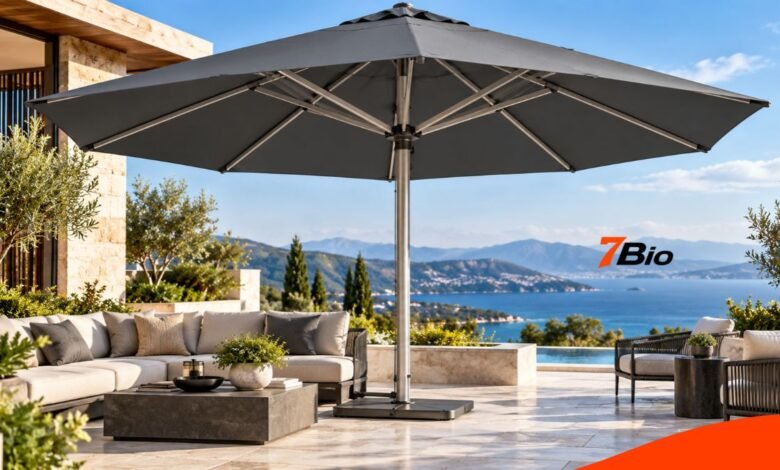
Ausbrella is an Australian-made range of premium outdoor market umbrellas developed by Awnet, a Melbourne-based manufacturer of commercial shade products. Designed for demanding outdoor environments, these umbrellas combine reinforced aluminum construction, secure canopy attachments, and engineered mounting systems to deliver substantial shade with proven wind performance.
Unlike ordinary handheld umbrellas or lightweight garden parasols, this range is designed for commercial spaces, resorts, public areas, and residential properties that require stronger outdoor shade equipment.
The manufacturer currently presents two principal models, Storm 135 and Hurricane 160+, with different wind-performance specifications. Understanding those differences matters because the best umbrella depends not only on its advertised strength but also on the installation location, anchoring arrangements, and intended use.
This article explains Ausbrella’s design, available models, wind resistance, practical benefits, limitations, and essential buying considerations for commercial and residential outdoor spaces.
What Is Ausbrella?
Ausbrella is a range of heavy-duty folding market umbrellas created to address the structural demands of outdoor shade installations.
Chris Pierias, founder of Awnet, developed the product after identifying a need for stronger, safer market umbrellas. Rather than focusing only on fabric appearance or canopy size, the development approach focused on the entire structure.
That includes the central support pole, radial arms, canopy attachment, opening mechanism, and ground connection.
Awnet designs and manufactures the range in Australia and positions it primarily for locations where outdoor umbrellas may face substantial wind exposure.
Common applications include hospitality terraces, hotel grounds, swimming pool areas, council-managed spaces and premium residential courtyards.
The important distinction is that these products are large outdoor shade structures, not portable rain umbrellas or electronic weather-protection devices.
Why Is Its Construction Different?
The main engineering feature is a specially developed twin-skin aluminum center pole.
A conventional market umbrella generally relies on a central mast to support its canopy and frame. Ausbrella uses a reinforced pole design intended to improve structural strength without depending entirely on a heavier solid support.
Its construction incorporates several connected features.
Twin-skin pole technology: The reinforced center pole is designed to improve the strength of the umbrella’s supporting structure.
Interlocking radial arms: The supporting frame incorporates eight radial arms and an interlocking component system described in Awnet’s product specifications.
Bolted fabric attachment: The canopy is fastened to the structure rather than relying solely on a loose fabric connection.
Rope-free opening: The opening mechanism does not require the conventional ropes and pulleys found on some large umbrellas.
Stainless-steel ground socket: A matching in-ground socket forms part of the manufacturer’s mounting approach.
These components work together as part of an engineered shade system. However, construction quality alone cannot guarantee performance in every location. Appropriate installation remains essential.
Ausbrella Storm 135: A High-Wind Shade Option
The Storm 135 is the more general-purpose model within the manufacturer’s current range.
Its dedicated product page specifies a wind rating of 135 km/h, supported by the manufacturer’s account of testing at the Monash University wind tunnel facility.
The umbrella includes the twin-skin center pole, reinforced frame, bolted canopy attachment, rope-free opening system and matching stainless-steel socket.
Awnet describes this model as suitable for many Australian regions, provided it is installed and meets site requirements.
Buyers should note one specification detail: the manufacturer’s broader range page also lists 140 km/h for the Storm range. However, the dedicated Storm 135 product page lists 135 km/h.
For purchase or engineering decisions, buyers should request the current model-specific certificate rather than rely on a general promotional figure.
The Storm 135 may be worth considering for outdoor hospitality areas, residential courtyards and other sites where a conventional lightweight umbrella does not meet the intended requirements.
Hurricane 160+: Designed for More Demanding Conditions
The Hurricane 160+ is the higher wind-performance model.
Awnet reports that it was tested at wind speeds exceeding 160 km/h, and the manufacturer’s wind-tunnel description identifies approximately 161 km/h as the facility’s test speed.
This model uses a double twin-skin center pole, providing a different structural arrangement from the standard Storm design.
It also incorporates engineered radial arms, a secured canopy and the manufacturer’s rope-free opening mechanism.
Awnet positions the Hurricane for particularly demanding environments, including locations within Australian wind Region C.
A wind-tunnel result does not guarantee an umbrella can safely remain open during every severe-weather event.
Wind direction, gust behavior, canopy configuration, terrain, anchoring, and maintenance can all influence an installation’s actual performance.
Anyone considering the Hurricane for an exposed site should obtain the relevant engineering documentation and confirm the intended mounting arrangement.
Storm 135 vs Hurricane 160+: Main Differences
| Feature | Storm 135 | Hurricane 160+ |
|---|---|---|
| Published performance | 135 km/h on dedicated model page | Tested above 160 km/h |
| Centre pole | Twin-skin design | Double twin-skin design |
| Construction | Engineered folding frame | Higher wind-performance engineered frame |
| Canopy attachment | Bolted fabric | Bolted fabric |
| Opening mechanism | No ropes or pulleys | No ropes or pulleys |
| Published warranty | Five years | Five years |
| Intended application | General high-wind locations | More demanding wind-exposed locations |
The comparison illustrates why choosing the model with the highest number is not automatically necessary.
An appropriate installation begins with an assessment of actual site conditions rather than a headline performance claim.
Where Can These Umbrellas Be Used?
Ausbrella products are designed to provide shade in a range of outdoor settings.
In restaurants and cafés, larger umbrellas can create shaded seating areas while allowing venues to use outdoor space more effectively.
Hotels and resorts may use them around outdoor dining areas, landscaped courtyards and swimming pools.
For council-managed spaces, considerations extend beyond appearance to include mounting arrangements, public access, and ongoing maintenance responsibilities.
Residential owners may also consider this premium umbrella for patios, gardens, and poolside entertaining spaces.
However, an expensive commercial-grade system may be unnecessary for a small, sheltered garden where a simpler shade arrangement can meet the requirements.
The most useful question isn’t whether an umbrella is exceptionally strong, but whether its specifications match the location.
Understanding Wind Ratings and Real-World Safety
Wind resistance is one of the range’s strongest selling points, but published performance figures require careful interpretation.
Awnet references engineering certification and wind-tunnel testing conducted at Monash University. It also states that the relevant engineering certification and test reports are available upon request.
Those documents are more useful for a technical purchasing decision than a promotional description alone.
A buyer should confirm which canopy size was tested, which mounting conditions apply, and whether the proposed installation meets the model’s engineering requirements.
For example, an exposed coastal terrace may create different demands from a sheltered courtyard surrounded by buildings.
The condition of fasteners, frame components and fabric can also affect ongoing suitability.
A high published wind rating must never replace the manufacturer’s operating instructions or site-specific safety assessment.
When dangerous weather is forecast, users should follow the manufacturer’s instructions and applicable professional guidance rather than assuming the umbrella is safe because of its test result.
Materials, Canvas and Outdoor Durability
The manufacturer identifies aluminum as a major material in its umbrella frame.
Aluminum provides a practical material for engineered outdoor structures because it combines relatively low weight with useful structural properties.
Awnet also uses stainless-steel components and acrylic canvas across its market umbrella products.
The Storm and Hurricane pages advertise a five-year warranty covering the frame and acrylic canvas cover.
Acrylic outdoor fabrics can be selected for properties including resistance to sunlight exposure, fading and environmental wear. Actual performance depends on the fabric specification, installation and maintenance.
Customers should confirm the available canopy colors, finishes, and material options when requesting a quotation.
Commercial buyers may also need to consider fabric replacement and component availability when comparing long-term ownership costs.
Installation and Mounting Considerations
Even a strongly engineered umbrella can perform poorly if it is mounted incorrectly.
Ausbrella product specifications describe a matching in-ground stainless-steel socket. Buyers should confirm how this connection is incorporated into the proposed installation.
A suitable mounting assessment may need to consider the ground structure, surrounding environment, intended canopy configuration and manufacturer’s engineering requirements.
There are also practical design questions.
Will the open canopy obstruct doors, walkways or essential access routes? Does the umbrella provide useful shade when customers are actually in the space? Can staff operate it safely?
Shade moves during the day as the sun changes position. A canopy that covers a dining table at midday may provide less effective shade later in the afternoon.
Checking these details before ordering can prevent you from buying an umbrella that is strong but poorly suited to the location.
Where structural or public-safety requirements apply, an appropriately qualified professional should review the installation.
How Much Does Ausbrella Cost?
Awnet’s public model pages do not provide a single fixed retail price for the range.
A quotation is therefore the responsible starting point.
Potential pricing factors include the selected model, canopy dimensions, fabric choices, branding requirements, delivery and installation arrangements.
Customers should request a clearly itemized quotation identifying what is included.
For example, the cost of an umbrella should not automatically be assumed to include all required groundwork, mounting hardware or professional installation services.
Commercial buyers can compare the total proposed cost with expected maintenance responsibilities and the availability of replacement components.
A lower initial purchase price does not necessarily mean a lower long-term cost, but a higher price alone does not prove better suitability either.
Warranty and Maintenance
Awnet currently advertises a five-year warranty on the frame and acrylic canvas cover for its Ausbrella models.
The manufacturer has separate terms covering some printed canvas finishes, so customers should check the current warranty documentation before purchasing a customized product.
Routine care is also important.
Owners should inspect accessible frame connections, check the canopy’s condition, and monitor the mounting arrangement for visible problems.
Clean according to the manufacturer’s fabric-care guidance. Harsh cleaning products or unsuitable maintenance methods may damage outdoor materials.
If structural movement, damaged attachments, or significant fabric deterioration becomes apparent, the umbrella should be assessed before continued use.
Commercial operators should also establish who is responsible for inspections, operating procedures and maintenance records.
What Should Buyers Check Before Ordering?
A practical buying decision should start with the location, not the product brochure.
Consider these points:
- Site exposure: Identify whether the space is sheltered, elevated, coastal, or otherwise exposed to strong winds.
- Canopy coverage: Check the seating layout, clearance requirements, and how sunlight shifts.
- Model documentation: Obtain the current specifications and engineering information for the exact model.
- Installation requirements: Confirm the approved mounting arrangement and any necessary professional work.
- Warranty terms: Request the full terms, including exclusions and custom-fabric provisions.
- Total costs: Compare the price of the umbrella, delivery, mounting and installation.
- Maintenance arrangements: Establish how the product will be inspected, cleaned and serviced.
This approach is especially useful for businesses planning a permanent or long-term outdoor installation.
FAQs
1. What is Ausbrella?
Ausbrella is an Australian-made range of heavy-duty folding outdoor umbrellas developed by Awnet for commercial, public and premium residential shade applications.
2. Who created Ausbrella?
Awnet identifies its founder, Chris Pierias, as the creator of the umbrella range and its reinforced design concept.
3. What wind ratings are available?
The dedicated Storm 135 product page specifies 135 km/h. The Hurricane 160+ has manufacturer-reported wind-tunnel testing above 160 km/h. Actual installation suitability depends on engineering and site conditions.
4. Is Ausbrella suitable for residential gardens?
Yes. Homeowners can use these umbrellas on patios, courtyards, and poolside areas, provided the chosen model and mounting arrangement suit the property.
5. Does Ausbrella include a warranty?
Awnet currently advertises five years of warranty coverage for the frame and acrylic canvas cover on its Storm and Hurricane ranges, subject to the applicable terms.
Final Takeaway
Ausbrella offers a specialized approach to outdoor shade by combining reinforced structural design with manufacturer-reported wind testing and engineering documentation.
Its Storm 135 and Hurricane 160+ models serve different levels of wind exposure, making site conditions and installation requirements central to the purchasing decision.
The range is most relevant to buyers who need substantial outdoor shade and are prepared to assess engineering specifications, mounting arrangements, maintenance, and total ownership costs.
For an informed decision, obtain the current model documentation, confirm warranty terms, and choose a professionally appropriate installation rather than relying solely on advertised wind resistance.