
Step PE: Excellent Strategies for Inclusive Physical Education
Understand Space, Task, Equipment, and People, with practical ways to adapt PE lessons, support different abilities, and maintain meaningful learning.

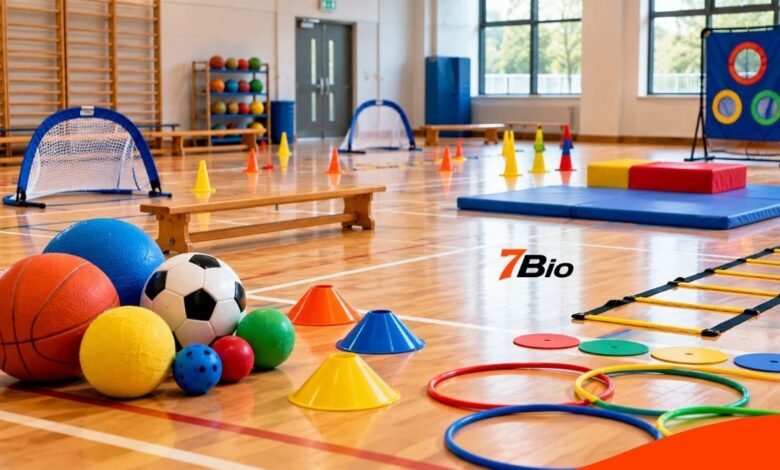
A successful physical education lesson should give every pupil a meaningful opportunity to learn, practice and improve. Yet a single activity can present very different challenges to children with different levels of movement ability, confidence, experience and support needs. Step PE gives teachers a practical way to respond to those differences without abandoning the lesson’s purpose.
The approach uses four elements—Space, Task, Equipment and People—to adapt sports and movement activities. Teachers can change the playing area, adjust an exercise, select alternative equipment or reorganize participants to make learning more accessible and appropriately challenging.
Associated with the Youth Sport Trust, the STEP framework is used in inclusive physical education and wider sports participation. Its value lies in helping teachers identify exactly which part of an activity needs changing.
Understanding the approach also requires recognizing its limitations. Adaptation works best when teachers keep learning goals clear, provide enough practice, and respond to individual needs rather than assuming one modification suits everyone.
What Is Step PE?
Step PE applies the STEP framework in physical education. It is an activity-adaptation tool built around four changeable conditions: Space, Task, Equipment and People.
The framework is associated with the Youth Sport Trust and dates to 2002. It is also promoted through resources from Activity Alliance, a UK organization working to improve disabled people’s participation in sport and physical activity.
The approach helps teachers make practical decisions when planning and delivering lessons. For example, a pupil struggling to catch a small ball may benefit from a larger or softer ball, a shorter throwing distance or additional time to respond.
An experienced pupil practicing the same skill might need a smaller target, greater distance or a moving partner to increase the challenge.
Both pupils can keep developing their catching and receiving skills, even though the conditions differ.
This distinction is central to inclusive teaching. Fairness does not always mean giving everyone an identical task. It means providing suitable opportunities to develop the knowledge and skills that the lesson intends to teach.
Understanding the Four Elements of the STEP Framework
The four elements provide a straightforward checklist for changing an activity. Teachers can adjust them independently or combine them when needed, but they should avoid introducing so many modifications that the intended learning becomes unclear.
Space — Changing the Learning Environment
Space concerns the physical area in which an activity happens. Teachers can enlarge or reduce playing areas, change distances between participants, introduce zones, or reposition targets.
A larger playing area may offer participants more room to move and make decisions. A smaller area may increase interaction frequency or reduce the distance pupils need to travel.
Neither choice is automatically easier. The effect depends on the activity and the pupil’s needs.
For instance, reducing the distance between a thrower and a target may help a beginner practice accuracy. However, expanding the space between opponents in a team game may provide more time to receive and control the ball.
Task — Adjusting What Pupils Are Asked to Do
Task refers to the actions, instructions, rules and success criteria involved in an activity.
A teacher might replace an overhead throw with an underarm delivery, let a ball bounce before catching it, or break a complex movement into smaller stages.
These adaptations should preserve the essential purpose of the learning. If the objective is to develop controlled passing, pupils might practice stationary passes before attempting them while moving.
As competence develops, the teacher can introduce more demanding decisions, movement patterns, or opposition.
Equipment — Selecting Suitable Resources
Equipment includes balls, bats, rackets, targets, nets, cones and other resources used during physical activity.
Changing equipment can remove unnecessary barriers. A larger ball may be easier to track or receive, while a lighter object may make a particular movement more manageable.
A visually contrasting target can also help some pupils identify where to direct an object. Other activities may require specialist or individually adapted equipment.
However, teachers should not assume that a softer or lighter object is always safer or more appropriate. Equipment selection must account for the specific activity, environment and participants.
People — Organizing Participants Effectively
People concerns who participates, how groups are formed and how individuals interact.
Teachers may change team sizes, introduce partners, adjust the number of defenders or assign meaningful roles within a group.
In a passing activity, two pupils might initially work together without opposition. Later, they could practice against one defender before progressing into a small-sided game.
Group organization also influences confidence and participation. Some pupils benefit from working with familiar partners, while others need opportunities to develop independence and cooperation with a wider range of classmates.
Why Step PE Matters in Modern Physical Education
Step PE is particularly useful because participation and learning are not always the same thing.
A pupil might technically be included in a football game yet receive the ball only once or twice. Another might remain physically active throughout the session without developing the movement technique being taught.
Inclusive PE therefore requires more than ensuring pupils are present or moving. Teachers must consider whether everyone can practice relevant skills, receive feedback and make progress.
Ofsted’s September 2023 physical education subject report highlighted the importance of clear curriculum objectives, purposeful practice and appropriate support for pupils with special educational needs and disabilities.
The report also recognized adjustments to space, tasks, equipment, and people as one approach teachers can use to support pupils in achieving intended outcomes.
This gives the framework an important educational purpose. Adaptations should help pupils build motor competence, understand rules and tactics, and know how to participate safely, rather than merely making activities easier to complete.
Practical Examples of Step PE in School Sports
The model’s usefulness becomes clearer when applied to familiar activities.
In football, a teacher might create smaller groups so each pupil receives more opportunities to control, pass and move with the ball. A larger playing area could give beginners more time to make decisions, while a smaller area might challenge more experienced players to react quickly.
In basketball, pupils who find a standard shooting task difficult could start with a closer target or an adjusted basket. As accuracy and control improve, the teacher can gradually increase the difficulty.
Athletics offers different possibilities. A throwing lesson might include a selection of suitable objects and target distances, allowing pupils to work on controlled movement while facing an achievable challenge. The teacher would still need to supervise throwing directions, equipment handling and safe spacing.
Gymnastics requires particular attention to the learning objective. If the intended skill is balance, pupils might demonstrate controlled positions using different support arrangements or movement variations. Any activity involving raised equipment, inversions or additional physical risk requires appropriate supervision and safety planning.
These examples show that the model is not limited to traditional team games. Its principles can inform dance, movement development, athletics, racket sports and other physical activities.
How to Apply Step PE in a Lesson
An effective Step PE lesson begins with the knowledge or skill pupils are expected to develop, not with a collection of entertaining activities.
Consider a primary school lesson focused on receiving and passing a ball accurately.
The teacher first establishes a simple starting activity in which pupils pass a suitable ball to a partner. By observing their attempts, the teacher identifies whether pupils can control the ball, direct it towards a target, and receive it consistently.
Some pupils may struggle because the distance is too great. Others may find the object difficult to handle. A few might show enough control to start practicing while moving.
The teacher then adapts the relevant conditions:
- Identify the learning objective: Develop accurate passing and controlled receiving.
- Observe the difficulty: Determine whether the barrier involves distance, technique, equipment or interaction.
- Change one relevant element: Adjust the distance, object, task, or grouping.
- Provide purposeful practice: Allow repeated attempts with clear feedback.
- Review and progress: Increase or reduce support according to demonstrated learning.
The essential question is whether the adjustment improves the pupil’s opportunity to practice the intended skill.
Teachers should also revisit their decisions during the lesson. An adaptation that was useful at the beginning may become unnecessary once a pupil gains confidence and competence.
Supporting Pupils With SEND Through Adaptive PE
Children with special educational needs and disabilities (SEND) may face different barriers in physical education, including challenges with mobility, coordination, communication, sensory processing, or the demands of a particular activity.
The STEP framework helps teachers examine these barriers without automatically removing pupils from shared learning experiences.
For example, a pupil with a physical disability might participate in a target-based activity using alternative equipment or an adjusted delivery method. A pupil who finds busy environments difficult may benefit from clearly defined activity zones, predictable instructions and carefully organized groups.
These decisions must be individual. Two children with similar identified needs may require very different adaptations.
Dorset Council’s accessibility guidance also reflects the importance of choice, suitable equipment, clear rules, friendship groups and listening to children about their experiences.
Where appropriate, teachers should work with pupils, families, special educational needs coordinators and relevant specialists to understand what adaptations are suitable.
Meaningful inclusion requires pupil involvement, not simply decisions made about pupils without their input.
Adapting Activities Without Lowering Expectations
One common misconception is that inclusive PE means reducing every challenge until all pupils can complete an activity immediately.
That approach can restrict learning.
Instead, Step PE aims to establish a suitable level of challenge. Pupils need opportunities to succeed, but they also need meaningful practice that helps them improve.
For a beginner, reducing task complexity may create the conditions needed to develop a new movement. For a confident pupil, adding a defender or a more precise target may provide a suitable next step.
Keep the central learning intention visible.
A useful progression might begin with an isolated movement, develop into a partner activity and eventually involve applying the skill under more demanding conditions.
Teachers can also allow pupils to make informed choices about suitable equipment or starting distances. Such choices may encourage reflection and greater ownership of learning, provided the teacher checks that pupils continue working towards the intended outcomes.
Common Mistakes When Using the STEP Framework
Although the model is straightforward, its effectiveness depends on professional judgment.
A frequent mistake is changing too many elements at once. If the playing area, equipment, rules and team arrangements all change together, it becomes difficult to determine which adaptation actually helped.
Another problem arises when teachers focus exclusively on keeping pupils busy. High activity levels do not prove that pupils are improving their movement skills or understanding.
Overly simplified activities can also create unnecessary separation. Giving one pupil a completely unrelated task may reduce opportunities to interact with classmates and participate in shared learning.
The opposite mistake is assuming that identical tasks are always inclusive. A uniform activity can disadvantage pupils whose starting points or access needs differ.
Finally, teachers should avoid using adaptations as permanent labels. A pupil who needs additional support today may be ready for a more complex task after suitable instruction and practice.
The strongest approach is therefore responsive, evidence-informed and regularly reviewed.
How Teachers Can Evaluate Whether Adaptations Are Working
Evaluating an adapted lesson requires more than asking whether pupils enjoyed the session.
Enjoyment matters, but teachers should also look for signs of purposeful learning.
For a lesson on throwing accuracy, this could include observing whether pupils demonstrate increasingly controlled movements, select appropriate force and direction, and make better decisions about target distance.
Teachers might compare performance over repeated attempts, provide precise feedback or ask pupils to explain which adaptation helped them practice successfully.
Participation should also be examined. If one group regularly waits, gets fewer opportunities, or is excluded from meaningful roles, the activity may need further adjustment.
The framework is most valuable when teachers use these observations to decide what to change next.
Benefits and Limitations of Step PE
Step PE offers several practical advantages. It gives teachers a memorable structure for adapting activities, supports flexible planning, and can help pupils with different starting points participate in shared lessons.
Teachers can make many adjustments using existing school resources. For example, changing a playing area or reorganizing a group may require little additional equipment.
However, the framework is not a complete teaching program. It does not replace a carefully sequenced curriculum, expert instruction, assessment or appropriate safety procedures.
It also does not guarantee that a pupil will feel included or achieve a particular outcome.
Some barriers require specialist support, more detailed assessment or changes beyond the four elements. Teachers must remain alert to accessibility, supervision, safeguarding and individual circumstances.
Used appropriately, STEP is a decision-making aid, not a substitute for professional knowledge.
Conclusion
STEP PE provides a practical approach to making physical education more accessible, challenging and purposeful for pupils with different abilities and experiences.
By adapting Space, Task, Equipment and People, teachers can respond to barriers while maintaining clear learning goals. Its greatest strength is the way it turns a broad commitment to inclusion into specific decisions about how an activity is organized and taught.
The framework works best alongside skilled instruction, meaningful practice, regular assessment and conversations with pupils about what they need.
When these elements come together, inclusive physical education becomes more than participation alone. It gives pupils better opportunities to develop movement competence, confidence, and the knowledge they need to stay involved in physical activity.
(FAQs)
1. What does Step PE stand for?
STEP stands for Space, Task, Equipment, and People. These four elements can be adjusted to make physical education activities more accessible and appropriately challenging for different participants.
2. Who developed the STEP framework in physical education?
The framework is associated with the Youth Sport Trust and dates back to 2002. It is also supported through inclusive physical activity resources published by organizations such as Activity Alliance.
3. Is Step PE only for children with disabilities?
No. The framework can be used with pupils of different abilities, experiences and confidence levels. It supports both pupils who need additional access and those who require greater challenge.
4. Can Step PE be used in primary and secondary schools?
Yes. Teachers can apply its principles across different school stages and sports activities. Specific adjustments should reflect pupils’ development, the curriculum, and the skills being taught.
5. Does Step PE require specialist or expensive equipment?
Not necessarily. Many adaptations involve changing distances, rules, grouping, or using existing resources. However, some pupils and activities may require specialist equipment or individual support to ensure safe, meaningful participation.