
ROK Asia: A Complete Guide to ROK Cup Asia Karting
How the regional championship works, where it races, what its classes mean and how it connects to the wider ROK Cup system.

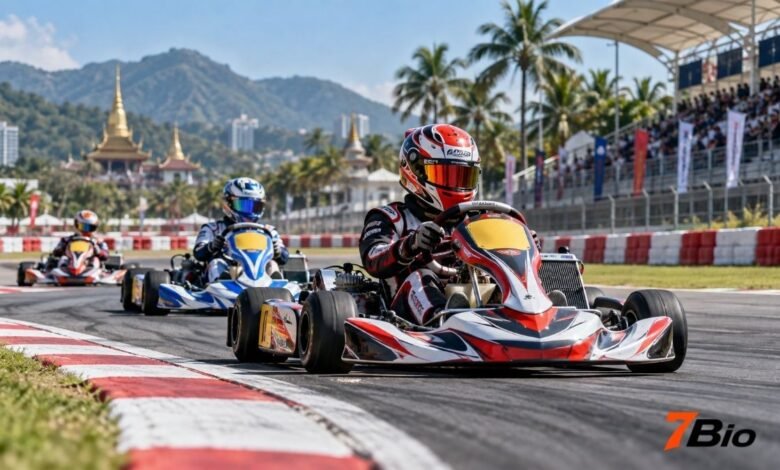
ROK Asia is the shorthand many motorsport searchers use for ROK Cup Asia, a regional karting championship within the wider ROK Cup racing system. It is not a single event, and it is not a South Korea-related competition. The series centers on regulated ROK categories and brings drivers together across several Asian circuits during a multi-round season.
For readers discovering the championship, the key distinction is between the regional series, national ROK competitions that may share race weekends, and the international ROK Cup Superfinal in Italy. The Asian championship provides a regional test across different circuits, teams, and conditions.
Quick Answer: ROK Asia generally means ROK Cup Asia. It is a regional one-make karting championship using the ROK competition platform, with multiple rounds and class-specific rules. Always check the precise categories, eligibility requirements, technical regulations, and weekend format against the current organizer documents. Official ROK material recognizes ROK Cup Asia as part of its worldwide championship network.
What Is ROK Asia?
ROK Asia is part of the worldwide ROK Cup network associated with Vortex and OTK Kart Group. Official ROK material lists ROK Cup Asia alongside other national and regional championships and describes the Superfinal as the international meeting point for ROK drivers worldwide.
The championship is often described as a one-make series. That does not mean every kart is identical. The ROK format controls key engine and class elements, but setup, tires, mechanical preparation, and driver technique still matter within the rules. ROK’s own championship material has described the Asian competition as a one-make series.
How the ROK Cup System Fits Together
The ROK Cup is a karting framework built around Vortex ROK engines. National and regional championships operate under the wider ROK banner, while the Superfinal provides a major international event at the end of the season.
For a driver, ROK Asia can provide broader competition than a purely domestic championship. Competitors may face unfamiliar circuits, teams from different countries, and changing track conditions. The series can also connect drivers with the wider ROK ecosystem, although participation in a regional round does not automatically guarantee a place at the Superfinal.
The official 2026 Superfinal information places that event at South Garda Karting in Lonato, Italy, from 13 to 17 October 2026. The organizer says the event brings together drivers from more than 20 ROK championships worldwide and has historically attracted more than 400 participants from over 35 countries. Qualification, reserved places and wild-card admission remain subject to the applicable rules and available capacity.
What Happened in the 2026 ROK Asia Season?
The 2026 ROK Asia season was run as a six-round championship across four countries, according to published timing and competitor records. Time Service Asia confirms Malaysian rounds on 2 May, 6 June and 29 August, while regional records also show rounds in Indonesia and Singapore. The final listed round was held at LYL International Karting Circuit in Malaysia on 29–30 August.
A useful verified snapshot is:
| 2026 round reference | Date | Venue or country |
|---|---|---|
| Round 2 | 2–3 May | LYL International Karting Circuit, Malaysia |
| Round 3 | 6–7 June | LYL International Karting Circuit, Malaysia |
| Round 4 | Late June | Sentul, Indonesia |
| Round 5 | 11–12 July | KF1 Karting Circuit, Singapore |
| Round 6 | 29–30 August | LYL International Karting Circuit, Malaysia |
The Malaysian dates are documented in the professional timing archive, while regional race reporting confirms the Sentul event and team records confirm the Singapore round.
Calendars can change, so do not treat an older poster, article, or provisional schedule as final evidence for a future event.
How a ROK Asia Race Weekend Works
A ROK Asia meeting is normally divided into several competitive stages. Published 2026 timing documents include official practice, qualifying, heat races, and finals. The exact sequence can vary by event and class, but the principle remains the same: a driver needs more than one fast lap to produce a strong weekend.
Practice and Setup
Practice lets a team assess track grip, gearing (where permitted), tire behavior, and chassis balance. For regional competitors, this can be especially valuable at unfamiliar venues.
Qualifying
Qualifying establishes outright pace and influences starting position for later sessions. In close karting fields, a small lap-time difference can move a driver several places on the grid.
Heats and Intermediate Races
Heat racing rewards racecraft as well as speed. Starts, overtaking, defensive driving, and avoiding contact can all affect the route to the final. Timing documents may also show penalties, so the first on-track finishing order should not automatically be treated as the official classification.
Final
The final produces the main race result for the class at that meeting. Championship standings, however, depend on the season’s scoring rules. Teams should therefore use the current sporting regulations rather than assume that every session or finishing position carries the same weight.
Which Classes Compete?
Classes in ROK Asia can vary by season and event. 2026 timing records include Mini and combined Senior/Expert competition, but the wider ROK system contains more categories than those visible in a single Asian round.
The 2026 ROK Cup Superfinal lists Mini ROK U10, Mini ROK, Junior ROK, Senior ROK, Expert ROK, Expert ROK Plus, Super ROK and Shifter ROK, with VLR categories also appearing under specific arrangements. That international list should not simply be copied onto every regional event. A championship organizer may offer fewer classes, combine grids or apply different local sporting arrangements.
ROK Asia categories therefore need to be checked from the current event regulations. Age limits, license requirements, engine rules, minimum weights and technical specifications can change by class or season. For parents and new drivers, this is one of the most important practical checks before paying an entry fee or arranging travel.
Why ROK Asia Is Different From Local Karting
The biggest difference is regional scope. ROK Asia adds travel, unfamiliar circuits, and competition from several motorsport markets to the normal demands of kart racing. A driver who knows every braking point and curb at a home track may lose that advantage when the series moves to another venue.
Regional competition also tests team logistics. Karts, engines, spares, tools, and race personnel may need to move between countries. Limited testing time makes accurate driver feedback and efficient setup work more important.
That does not make a regional series automatically superior to national racing. Local championships are often where drivers develop basic racecraft and gain track time. The regional championship simply asks a wider set of questions: can the driver adapt quickly, manage pressure, and remain competitive across different circuits?
Why the One-Make Structure Matters
In ROK Asia, the regulated ROK engine platform reduces some of the variation that would exist in a completely open engine formula. This puts more emphasis on preparation, setup, and driving within a defined technical framework.
One-make should still not be read as “no technical differences”. Permitted setup choices, tire management, kart condition and mechanical execution still matter, as does driver technique. Controlled equipment narrows part of the performance equation; it does not remove strategy or skill.
Skills Drivers Need
Competing in ROK Asia demands qualifying speed, consistency, racecraft and adaptability. Drivers also need to communicate clearly with mechanics because a kart that feels balanced at one track may need a different approach at another.
Physical preparation and mental control matter too. Repeated sessions, heat, braking loads, penalties, or mechanical issues can change a weekend quickly. Reliability matters just as much: a fast driver with repeated non-finishes can lose ground to a consistent rival.
Connection With the ROK Cup Superfinal
The ROK Cup Superfinal is the global end-of-season event for the ROK community. Official 2026 information says entries include qualified drivers and eligible wild-card applicants, with limited places and organizer approval applying.
For ROK Asia drivers, the connection matters because the Asian championship sits within the recognized ROK network. However, racing in Asia does not automatically grant Superfinal admission. Drivers should confirm whether their championship position includes a reserved place or other award, then check the international event’s registration rules.
The Superfinal also has its own sporting and technical documentation. A driver moving from a regional event to Italy should recheck category eligibility, license requirements, engine specifications, and any event-specific procedures rather than assuming Asian regulations transfer unchanged.
What New Drivers Should Check Before Entering
Before entering ROK Asia, verify the correct category, age eligibility, race license, entry deadline, permitted engine, tires, minimum weight, safety equipment, and sporting format. Then confirm practical issues such as kart transport, accommodation, testing, mechanical support, and any cross-border travel requirements.
Base your budget on an itemized quotation rather than a generic online estimate. Regional karting can include entry fees, tires, engine support, repairs, transport, accommodation, testing, and team services, and costs can differ substantially by country and program.
Recent official timing is also useful. It can show class size, lap-time spread, and which teams are active.
Common Misunderstandings
The first common mistake is reading “ROK” as Republic of Korea. In this motorsport context, it refers to the ROK karting brand and competition system associated with Vortex and OTK Kart Group.
The second is assuming that every ROK event held in Asia belongs to the same championship. National ROK races, the regional series, and the Superfinal are related but separate competitions.
The third is relying on an old rulebook. Class rules can change between seasons, so current organizer documents should take priority.
How to Follow Results Reliably
The best hierarchy is official championship information first, professional timing services second, and team or driver channels for extra context. This matters because timing documents may be labeled provisional or official, and post-race penalties can change the order. Published 2026 ROK timing sheets show both provisional and official classifications as well as recorded penalties.
Social posts are useful for photos, driver comments and team updates, but they should not be the sole evidence for a championship position or official result. When reporting a race, check the final classification status and the event date.
FAQs
Is ROK Asia the same as ROK Cup Asia?
Yes. In karting searches, ROK Asia is commonly used as a shortened name for ROK Cup Asia, the regional championship within the ROK racing system.
Is the championship connected with South Korea?
Not in this context. “ROK” can stand for Republic of Korea elsewhere, but here it refers to the ROK karting brand and competition system.
Is ROK Cup Asia only for children?
No. The wider ROK system includes youth and adult categories. The classes offered in Asia depend on the current championship and event regulations. The international ROK structure itself includes both younger-driver and adult categories.
Does every Asian-series driver qualify for the Superfinal?
No. Qualification, reserved places and wild cards depend on the current rules, championship awards and available entries.
Where did the 2026 championship race?
Public records confirm 2026 rounds in Malaysia, Indonesia and Singapore, while competitor material describes the six-round season as taking place across four countries. The final round was held at LYL International Karting Circuit in Malaysia on 29–30 August.
Final Takeaway
ROK Asia is best understood as a regional ROK Cup karting championship that gives drivers multi-round competition across Asian circuits while connecting to a much larger international ROK structure. Its value lies in the combination of controlled class rules, changing venues, strong racecraft demands, and a pathway into a wider karting community.
For anyone planning to race or report on the series, the practical rule is simple: verify the current calendar, class regulations, official timing and qualification conditions before relying on an older article. That keeps information accurate and avoids one of the most common problems in motorsport coverage—treating last season’s rules as if they still apply.
7bio.co.uk
