
CH Lights Explained: A Clear Guide to Coming Home Car Lighting
What CH lights do, how they differ from Leaving Home lights, why they may not switch on, and what owners should check before changing vehicle settings.

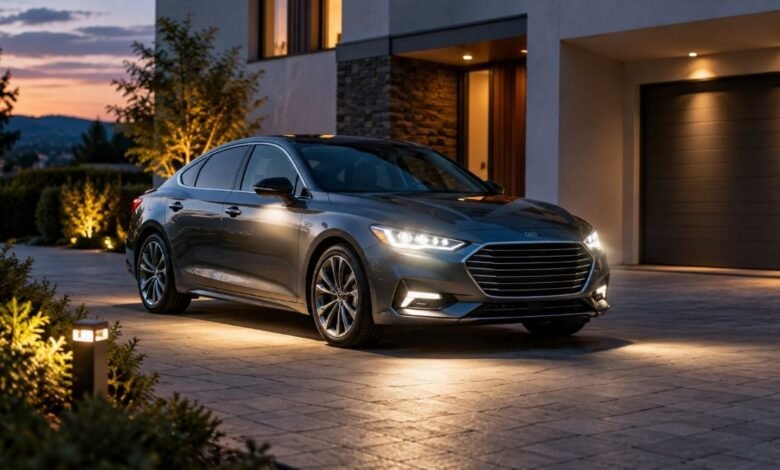
If you have seen CH lights in a vehicle-coding app, infotainment setting, or online discussion, the abbreviation usually refers to Coming Home lights. This convenience-lighting feature illuminates the area around a parked vehicle for a short period after the driver switches off the ignition and exits. It is commonly paired with Leaving Home lighting, which can illuminate the vehicle surroundings when the car is unlocked in darkness. Volkswagen describes these functions as entry and exit lighting or Coming/Leaving Home lighting.
The exact behavior varies by vehicle. Some cars activate Coming Home lighting automatically in the dark, while older or differently equipped models may require the driver to operate the headlight flasher. Available lamps, timing controls, and light-sensor requirements can also vary by model, equipment level, and software configuration.
Quick Answer
CH lights normally mean Coming Home lights in automotive settings. They temporarily illuminate the area around a vehicle after you park and leave it. When you see CH/LH, LH normally means Leaving Home, which performs a similar function when you unlock the vehicle.
What Are CH Lights?
CH lights are not a separate physical lamp fitted to the vehicle. The term normally describes a lighting function that uses selected exterior lights already installed on the car.
Depending on the model, these may include dipped-beam headlights, parking or position lights, rear lights, license-plate lighting, exterior mirror courtesy lights, fog lamps or daytime running lights. Volkswagen notes that the exact lights used can vary by model.
The main purpose is simple: when somebody parks in a dark driveway, garage area or street, the car continues illuminating the surroundings long enough for the person to walk away more comfortably.
This is why manufacturer documentation may describe the same feature as orientation lighting, exit lighting, or Coming Home lighting.
What Does CH/LH Mean?
When both abbreviations appear together, CH/LH lights normally means:
| Abbreviation | Meaning | Typical action |
|---|---|---|
| CH | Coming Home | Lights remain on briefly after parking and exiting |
| LH | Leaving Home | Lights illuminate when the vehicle is unlocked |
| CH/LH | Coming Home/Leaving Home | Combined entry and exit lighting settings |
Current diagnostic and customisation platforms continue to use the CH/LH abbreviation for Volkswagen, Audi, Škoda and SEAT/CUPRA applications.
The two functions therefore perform related but opposite jobs. Coming Home helps when you are leaving the car; Leaving Home helps when you are approaching it.
How CH Lights Work
Modern implementations commonly rely on several vehicle conditions rather than simply turning on the headlights every time the engine stops.
In current Volkswagen documentation, exit lighting operates when darkness is detected, the exterior-lighting control is set appropriately, and the ignition is switched off. Entry lighting can operate when the vehicle is unlocked, and the required low-light conditions are met.
Automatic CH Lights
With an automatic system, the car’s light sensor determines whether it needs additional illumination.
A typical sequence is:
- The vehicle detects darkness.
- The ignition is switched off.
- The driver exits and closes the vehicle.
- Selected exterior lights remain illuminated.
- They switch off after the configured delay.
The timer may be adjustable through the infotainment system on compatible vehicles.
Manual Coming Home Lighting
Some vehicles use manual activation instead.
Volkswagen manuals for certain generations instruct the driver to switch off the ignition and operate the headlight flasher. The Coming Home function then starts when the driver’s door is opened, with the switch-off delay beginning after the doors or tailgate are closed.
This distinction explains why two owners with visually similar cars may experience completely different behavior.
Coming Home vs Leaving Home Lights
It is easy to confuse the two features because both illuminate a stationary vehicle.
Coming Home
Coming Home lighting works after a journey. Its purpose is to provide temporary illumination while the occupants walk away from the vehicle.
Leaving Home
Leaving Home lighting operates before a journey, normally when the driver unlocks the vehicle in darkness.
Volkswagen’s current guidance describes entry lighting as switching on when it detects darkness and the vehicle is unlocked, while exit lighting operates after the ignition is turned off.
This distinction is especially useful when troubleshooting. If Leaving Home works but Coming Home does not, the lamps themselves are not necessarily the problem; the two functions can have different activation conditions or settings.
How to Activate CH Lights
There is no universal activation sequence for every car, so the owner’s manual for the exact model and year should remain the primary reference.
On vehicles with infotainment-based controls, the setting may appear under menus such as Vehicle, Lights, Exterior Lighting, Entry/Exit Lights, or Coming/Leaving Home.
Volkswagen’s current Jetta guidance, for example, places its duration controls under the vehicle’s lighting settings and lets you adjust Coming Home and Leaving Home separately.
Older models may instead require manual activation using the lighting stalk.
Before Changing Any Coding
Check the normal vehicle menu first.
Coding tools can expose additional settings such as:
- CH/LH lamp selection
- Coming Home duration
- Leaving Home duration
- automatic or manual activation
- Use of daytime running lights
- different lighting variants
OBDeleven’s current catalog shows these options remain model-specific, not a single universal setting.
Changing control-module adaptations without confirming compatibility can produce unwanted behavior or faults, so manufacturer-approved settings are the safer starting point.
Why Are My CH Lights Not Working?
A non-working feature doesn’t automatically mean a bulb, LED unit, or control module has failed.
The Vehicle Is Not Detecting Darkness
Automatic versions may depend on a light or rain/light sensor. If the surroundings are bright enough, the system may correctly decide that Coming Home illumination is unnecessary.
The Light Switch Is in the Wrong Position
Many implementations require the exterior lighting control to be in AUTO.
Volkswagen and Audi documentation repeatedly associate automatic Coming Home/Leaving Home operation with the AUTO setting.
Manual Activation Is Required
On some older Volkswagen systems, simply turning off the engine is insufficient. The driver needs to operate the headlight flasher after switching off the ignition.
The Feature Has Been Disabled
Check whether Coming Home or entry/exit lighting is switched off in the vehicle menu.
A duration set to zero may effectively turn off the function on systems that support a zero-second option.
The Vehicle Does Not Support the Same Configuration
Equipment packages, headlamp technology, body-control software and market specification can influence which lighting functions are available.
Two cars from the same manufacturer may therefore expose different CH light settings.
A Sensor or Vehicle Fault May Be Involved
If automatic headlights, rain/light sensing, or related electrical functions are also behaving unusually, the issue may require proper fault diagnosis rather than repeated coding changes.
Can You Change Which Lamps CH Lights Use?
On certain compatible vehicles, yes.
Diagnostic/customisation platforms currently list variations involving CH/LH lights, DRLs, and different lamp configurations. This shows that some vehicles permit more flexibility than the standard infotainment menu provides.
That does not mean every combination works safely on every car.
The vehicle’s electrical architecture, lamp type, and software control lighting output. A setting intended for one headlamp configuration should not automatically be copied to another vehicle simply because both belong to the same brand.
Are CH Lights the Same as Daytime Running Lights?
No.
Daytime running lights, or DRLs, are designed primarily to increase vehicle conspicuity while driving. CH lights are temporary convenience or orientation lighting associated with entering or leaving a parked vehicle.
Some vehicles can be coded to use DRLs as part of the Coming Home/Leaving Home sequence, which is probably why the terms become mixed in enthusiast discussions. OBDeleven currently lists separate CH/LH-via-DRL customizations for compatible models.
The functions themselves remain different.
Common CH Lights Mistakes
The biggest mistake is assuming that one internet coding procedure works across every Volkswagen Group model.
Model year, platform, lighting hardware, control-module software, and market configuration matter. Another common mistake is confusing Coming Home with Leaving Home and troubleshooting the wrong event.
Owners should therefore check four things before making changes: whether the problem happens when locking or unlocking, whether the headlights are in the required mode, whether darkness is being detected, and whether the vehicle uses manual or automatic Coming Home activation.
That simple distinction can prevent unnecessary coding changes.
What to Check Before Changing the System
Before using a diagnostic app or requesting workshop coding:
- Confirm your exact model and model year.
- Read the lighting section of the owner’s manual.
- Check the AUTO light-switch setting where applicable.
- Test the function in genuinely dark conditions.
- Look for Coming Home/Leaving Home settings in the infotainment menu.
- Determine whether your model uses manual or automatic activation.
- Avoid copying adaptation values from a different vehicle.
- Seek qualified diagnosis if several lighting or sensor functions fail together.
This approach is safer than treating CH lights as a single feature that behaves identically across all vehicles.
FAQs
What does CH lights mean in a car?
In Volkswagen Group coding and lighting discussions, CH lights generally means Coming Home lights. The system temporarily illuminates the area surrounding the vehicle after parking.
What does CH/LH lights mean?
CH/LH means Coming Home/Leaving Home lights. Coming Home operates as you leave the parked car, while Leaving Home illuminates the surroundings as you approach or unlock it.
Why do my CH lights only work at night?
Many automatic systems use a light sensor and activate only when the vehicle determines that conditions are dark enough. This is normal behavior on vehicles designed that way.
Do CH lights need the headlight switch on AUTO?
Many automatic Volkswagen and Audi implementations require the lighting switch to be in AUTO, although requirements vary by model and year.
Can I adjust how long Coming Home lights stay on?
Many equipped vehicles let you change the duration through the infotainment system or supported diagnostic settings. The available range varies by vehicle.
Are CH lights available on every car?
No. Availability and operation depend on manufacturer, model, equipment, and software configuration. The abbreviation is especially common in Volkswagen Group customization and diagnostic contexts.
Final Takeaway
CH lights are best understood as Coming Home lights when the term appears in automotive settings, particularly on Volkswagen, Audi, Škoda and SEAT/CUPRA vehicles. They provide short-term exterior illumination after you park, while Leaving Home lighting performs a similar job when you unlock the vehicle.
The most important point is that operation varies. Some cars activate the system automatically, some require a headlight-flasher action, and some provide extensive timing or lamp-selection settings. Check the exact owner’s manual and factory menu before attempting coding or assuming the system is faulty.