UK Supermarket Fruit Salmonella Recall: Full List of Affected Products and Safety Advice
Why six major British retailers recalled selected prepared-fruit packs, what testing revealed, and what shoppers need to know.

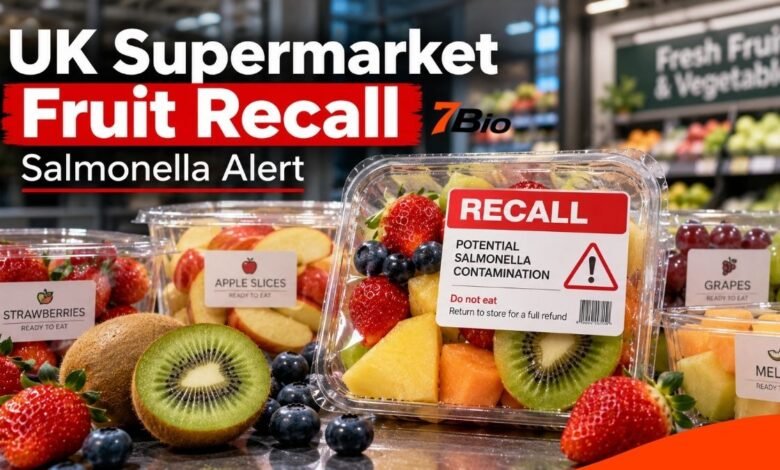
The UK supermarket fruit salmonella recall concerns 13 prepared-fruit products sold by six major British retailers after food supplier Prepworld detected Salmonella in apple and kiwi ingredients. The Food Standards Agency (FSA) announced the recall on June 23, 2026, and identified specific products sold at Tesco, Asda, Morrisons, Sainsbury’s, Waitrose and Marks & Spencer.
The alert applied to particular packs carrying use-by dates of 23 and 24 June 2026. It did not affect every fruit product sold by those supermarkets.
As of 23 October 2026, this is a historical June recall, not evidence of a newly announced October fruit recall.
Quick Facts
- Incident: Prepared-fruit recall involving possible Salmonella contamination
- Country: United Kingdom
- Announcement date: 23 June 2026
- Supplier issuing recall: Prepworld
- Regulatory authority: Food Standards Agency
- Retailers: Asda, Morrisons, Tesco, Waitrose, Marks & Spencer and Sainsbury’s
- Products listed: 13
- Affected use-by dates: 23 and 24 June 2026
- Reason: Salmonella detected in apple and kiwi ingredients
- Consumer advice: Do not eat affected products; return them for a refund
- Official reference: FSA-PRIN-29-2026
UK Supermarket Fruit Salmonella Recall: What Happened?
The incident was announced after testing identified Salmonella in apples and kiwis used in packaged fruit products supplied by Prepworld.
The Food Standards Agency published a product recall information notice naming 13 products across six major supermarket chains.
The affected items included combinations of apples, kiwis, strawberries, melon, grapes, oranges, mango and blueberries. However, the official notice specifically identified apple and kiwi as the ingredients in which Salmonella had been found.
The distinction is significant.
Detecting bacteria in specific ingredients does not mean every individual pack was independently tested and found contaminated. The finished products were recalled because of the potential health risk.
This also explains why products with different names and fruit combinations appeared in the same announcement.
The public alert raised contamination concerns and identified affected products. It did not definitively explain where the original contamination entered the supply chain.
Complete List of Recalled Fruit Products
The following table reproduces the product descriptions, weights and use-by dates from the FSA announcement.
| Supermarket | Recalled product | Pack size | Use-by date |
|---|---|---|---|
| Asda | Pink Lady Apple, Mango, Strawberry & Blueberry | 220g | 23 and 24 June 2026 |
| Morrisons | Kiwi, Melon & Strawberries | 220g | 24 June 2026 |
| Tesco | Melon, Kiwi & Strawberry | 250g | 24 June 2026 |
| Tesco | Kiwi Fruit Pot | 100g | 23 June 2026 |
| Waitrose | Pink Lady Apple and Grapes | 115g | 23 June 2026 |
| M&S | Café Pink Lady Apple | 90g | 24 June 2026 |
| M&S | Pink Lady Apple (FTG) | 90g | 24 June 2026 |
| M&S | Pink Lady Apple Slices | 225g | 24 June 2026 |
| Sainsbury’s | Melon, Kiwi & Strawberry | 220g | 23 June 2026 |
| Sainsbury’s | Orange & Kiwi | 240g | 23 June 2026 |
| Sainsbury’s | Pink Lady Apple & Grape | 240g | 23 June 2026 |
| Tesco | Fruit Kebabs | 290g | 23 June 2026 |
| Tesco | Melon, Kiwi & Strawberry | 125g | 23 and 24 June 2026 |
Source: Food Standards Agency, 23 June 2026.
The pack size and use-by date were essential identifying details. For example, Tesco’s Melon, Kiwi & Strawberry appeared in two different pack sizes with different date specifications.
Consumers were therefore advised to identify the exact product rather than assume that every similar-looking fruit pot had been recalled.
Why Were Six Major Supermarkets Affected?
A common supplier was central to the incident.
Prepworld supplied prepared-fruit products sold under several different supermarket labels. When the relevant ingredients were identified as a contamination risk, multiple retail products were included in the same recall.
The Importance of Shared Supply Chains
External suppliers can produce or prepare supermarket own-label products.
This arrangement lets retailers offer a variety of ready-to-eat foods, but it also means a shared-ingredient problem can affect products sold by competing chains.
The June announcement illustrates that connection clearly: different fruit combinations, retail brands and packaging formats were linked through the supplier named in the recall.
However, it would be inaccurate to conclude from the notice that all six supermarkets separately experienced contamination during their own handling operations.
The alert did not establish such a finding.
Why Prepared Fruit Requires Particular Attention
Prepared-fruit packs are generally intended to be eaten without further cooking.
Unlike whole produce that customers may wash, peel, or cut themselves, these packs have already been processed before purchase.
Food safety therefore depends on appropriate controls throughout preparation, handling, packaging and distribution.
The recall shows the importance of ingredient testing and traceability, especially when ready-to-eat products with shared ingredients are distributed to different retailers.
What Is Salmonella and Why Is It Dangerous?
Salmonella is a group of bacteria that can cause foodborne illness.
According to the Food Standards Agency, typical symptoms associated with Salmonella infection include:
- Diarrhoea
- Fever
- Abdominal cramps
An infection can vary in severity. Some people recover without specialist treatment, while others may become more seriously unwell.
Dehydration is an important concern when diarrhea or vomiting prevents the body from retaining enough fluid.
Young children, older adults and people with weakened immune systems may be more vulnerable to complications.
What Should Someone Do If They Become Unwell?
NHS guidance recommends drinking enough fluids and resting when you have diarrhea or vomiting.
Anyone who cannot keep fluids down, experiences bloody diarrhea or develops signs of dehydration should seek medical advice. NHS 111 can help determine whether urgent assessment is needed.
The FSA also advises people experiencing Salmonella-related symptoms to stay away from work, school or nursery until they have been symptom-free for at least 48 hours.
This helps reduce the risk of infection spreading to others.
Severe symptoms, such as sudden intense abdominal pain, confusion or serious difficulty breathing, require emergency medical assessment.
What Should Consumers Do With Recalled Fruit?
The Food Standards Agency’s guidance was straightforward: people who had purchased one of the affected products should not eat it.
Instead, customers were instructed to return the product to the retailer where it was purchased for a full refund.
This recommendation applied even if the fruit appeared fresh and showed no obvious signs of deterioration.
Can Washing the Fruit Make It Safe?
Washing ordinary fresh produce is an important food-hygiene practice, but it should not be treated as an alternative to following a recall notice.
The FSA specifically instructed customers not to consume the identified prepared-fruit products.
Washing the fruit does not change that instruction.
What If the Product Was Already Eaten?
Eating a recalled product does not automatically establish that an individual has become infected.
However, anyone who develops symptoms consistent with food poisoning should follow NHS advice and seek medical support when necessary.
People should not diagnose Salmonella infection solely from symptoms, as several illnesses can produce similar gastrointestinal problems.
The February 2026 Tesco Fruit Recall
The June incident was not the only Salmonella-related prepared-fruit recall recorded in Britain during 2026.
On 16 February 2026, the FSA announced a separate recall involving Tesco Grape & Berry Medley.
The affected product was a 230g pack with use-by dates of 16 and 17 February 2026.
In that earlier announcement, the regulator stated that Salmonella had been found in the product.
Tesco instructed affected customers not to eat the fruit and to return it to a store for a refund.
These were two distinct recall notices, issued months apart.
The publicly available notices do not establish that the February Tesco recall and the June Prepworld recall shared a contamination source. They should not be presented as a single incident.
Why Food Recalls Matter to Public Safety
Food recalls are intended to prevent potentially unsafe products from being consumed.
Under the Food Standards Agency’s incident guidance, a product withdrawal removes food from the supply chain, while a recall also involves advising consumers to take action.
That distinction explains the prominence of supermarket notices, product descriptions and expiry information.
When an affected item has already reached customers, removing remaining stock from shelves is not enough. Consumers also need to know whether to return something at home or discard it.
What the June Incident Reveals
Three observations emerge from the documented facts.
First, a single supplier issue can trigger recalls across multiple retail brands.
Second, accurate product identification helps distinguish affected items from similar goods that were not named in the warning.
Third, testing can prompt precautionary action before the public notice establishes whether a recalled product caused a particular illness.
These are observations about the recall mechanism, not evidence of broader wrongdoing by the retailers or supplier.
What Is Confirmed and What Is Not
Confirmed Facts
The official Food Standards Agency notice establishes that:
- Prepworld recalled 13 prepared-fruit products.
- The products were sold under six major supermarket names.
- Salmonella had been identified in apple and kiwi ingredients.
- The affected use-by dates were 23 and 24 June 2026.
- Consumers were instructed not to eat the products.
- Customers were advised to return affected packs for full refunds.
Information Not Established by the Public Notice
The June FSA announcement did not establish:
- How many consumers, if any, became ill because of these specific products.
- Whether every recalled pack contained Salmonella.
- The exact point at which contamination first occurred.
- A confirmed connection with the separate February Tesco incident.
- That all fresh apples, kiwis or other fruit sold by the six retailers were unsafe.
A recall indicates an identified food-safety concern. It should not be automatically interpreted as proof of a confirmed illness outbreak or a completed investigation into responsibility.
FAQs
The UK supermarket fruit salmonella recall has raised questions about affected retailers, product safety and the difference between the original announcement and later reporting.
1. Which supermarkets recalled fruit because of Salmonella?
The June 2026 Prepworld recall covered selected prepared-fruit products sold at Asda, Morrisons, Tesco, Waitrose, Marks & Spencer and Sainsbury’s. Only the products and use-by dates specified in the official notice were included.
2. What fruit was affected by the Salmonella recall?
The recalled packs contained combinations of apples, kiwis, melon, strawberries, grapes, mango, blueberries and oranges. The FSA identified Salmonella in apple and kiwi ingredients used in those products.
3. When did the UK fruit recall happen?
The Food Standards Agency issued the Prepworld announcement on 23 June 2026. The affected products carried use-by dates of 23 or 24 June 2026.
4. Can customers get a refund for recalled fruit?
Yes. The FSA instructed consumers who purchased the affected products to return them to the retailer where they were bought for a full refund.
Conclusion
The UK supermarket fruit salmonella recall was a significant food-safety announcement involving six British supermarket chains and 13 prepared-fruit products.
Its importance lies in the connection between a shared food supplier, specific contaminated ingredients, and the need to notify customers across several retailers.
The official record also places clear limits on what can be concluded. The June 2026 warning identified a potential risk in named finished products, but it did not establish that every pack was contaminated or that a particular number of consumers became ill.
For shoppers, the lasting lesson is practical: when a food recall is announced, check the exact product name, weight, and use-by date, and follow the regulator’s instructions rather than relying on appearance or assumptions about safety.