
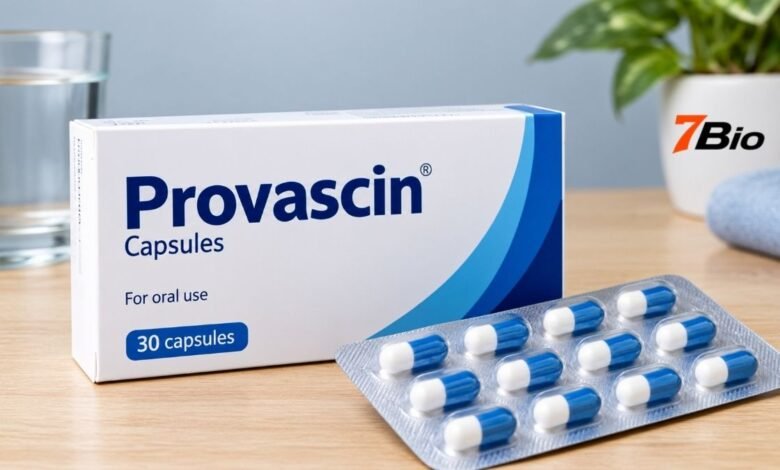
Provascin is best documented as a multi-ingredient dietary or natural-health supplement associated with PURICA and The Nutraceutical Medicine Company Inc., not as a prescription cardiovascular drug. Historical retailer listings describe a capsule formula containing L-carnitine, alpha-ketoglutaric acid, Chaga, Coenzyme Q10, betaine hydrochloride, alpha-lipoic acid, grape seed extract, and green tea extract. Trademark records also classify the name as a dietary supplement. The key point is that readers should not confuse historical marketing claims about cardiovascular support with proof that the finished formula prevents or treats heart disease.
As of September 2026, the original PURICA product appears to be discontinued or at least no longer part of the company’s current product range. PURICA’s current product collections do not show the old formula, while Vitamart labels its listing as discontinued and National Nutrition says it no longer carries the 240-capsule version. That makes label verification especially important if you encounter an old bottle or an unfamiliar seller using the same name.
Quick Answer
Provascin was a PURICA supplement marketed for cardiovascular and metabolic support. Its individual ingredients have varying levels of research behind them. Still, the available evidence does not establish the complete formula as a proven treatment for high blood pressure, high cholesterol, heart disease, or other cardiovascular conditions.
What Is Provascin?
The strongest documentation identifies Provascin as a supplement product rather than a medicine. A Canadian trademark publication from 2003 listed the name as a dietary supplement, while later U.S. trademark records also describe the goods as dietary supplements. Historical Canadian retail pages show that PURICA sold the formula in 120- and 240-capsule formats.
This distinction matters because some recent web pages blur the line between a supplement and a pharmaceutical treatment. A product name that sounds medical does not make it a prescription medicine. Consumers should identify any health product by its exact manufacturer, ingredient list, regulatory information, and package label, not by name alone.
What Did the Historical Formula Contain?
Older retailer listings consistently describe the following ingredients per capsule:
| Ingredient | Historical amount per capsule |
|---|---|
| L-carnitine | 188 mg |
| Alpha-ketoglutaric acid | 125 mg |
| Certified organic micronized Chaga | 125 mg |
| Coenzyme Q10 | 38 mg |
| Betaine hydrochloride | 31 mg |
| DL-alpha-lipoic acid | 13 mg |
| Grape seed extract | 9 mg |
| Green tea extract | 9 mg |
The same listings also named microcrystalline cellulose, hypromellose, and plant-source magnesium stearate as non-medicinal ingredients. Treat these figures as historical product information. They do not prove that every bottle or listing currently using the Provascin name contains the same formula.
What Was Provascin Marketed For?
Historical sales material positioned the supplement around cardiovascular support, circulation, healthy cholesterol function, glucose metabolism, antioxidant activity, and general metabolic support. Those descriptions reflect how the product was marketed at the time; they are not evidence that the full formula can diagnose, prevent, treat,, or cure cardiovascular disease.
That distinction is especially important for readers with high blood pressure, high cholesterol, diabetes, coronary artery disease, or other diagnosed conditions. Dietary supplements are not substitutes for prescribed treatment, monitoring, or professional medical advice. The FDA specifically warns against substituting supplements for medicines and notes that supplements can interact with prescription and over-the-counter drugs.
What Does Research Say About Its Main Ingredients?
The ingredient list includes compounds that have been studied individually, but ingredient-level research doesn’t automatically transfer to a multi-ingredient product.
Coenzyme Q10
CoQ10 occurs naturally in the body and is also sold as a supplement. The U.S. National Center for Complementary and Integrative Health says research on CoQ10 for preventing heart disease is limited and inconclusive, and evidence for heart failure is also not definitive. It also notes possible interactions with warfarin and insulin.
L-carnitine
L-carnitine is involved in fatty-acid transport and energy metabolism. The NIH Office of Dietary Supplements reports mixed findings for cardiovascular outcomes. Some studies suggest benefits in particular clinical settings, while other research raises questions about long-term cardiovascular effects. The overall picture is not strong enough to treat L-carnitine as a proven general heart-disease therapy.
Grape Seed Extract
Grape seed extract has been studied for possible effects on blood pressure and blood lipids. NCCIH notes that some reviews suggest effects on LDL cholesterol, triglycerides, or diastolic blood pressure, but also stresses that conclusions are not definitive because studies differ in size, formulation, and design.
Green Tea Extract
Green tea and concentrated green tea extracts are not identical from a safety perspective. NCCIH reports that green tea extract supplements can cause gastrointestinal side effects and, rarely, liver injury. They may also interact with medicines including nadolol and atorvastatin.
Does Provascin Have Proven Cardiovascular Benefits?
A major evidence gap remains: research on an individual ingredient is not the same as a high-quality clinical trial of the complete Provascin formula. The public evidence located for this review does not establish the historical finished product as a clinically proven treatment for cardiovascular disease.
That does not mean every ingredient is ineffective or that no biological effect is possible. It means the strength of a health claim should match the strength of the evidence. For a multi-ingredient supplement, a reliable claim about the finished product ideally requires research on that exact formulation, dose, and intended population.
Evidence surrounding some individual ingredients is also mixed. NCCIH describes CoQ10 findings for heart disease as inconclusive, while the NIH Office of Dietary Supplements reports mixed cardiovascular findings for carnitine. Those ingredient studies cannot demonstrate the clinical effectiveness of the complete historical blend.
Is Provascin FDA Approved?
Dietary supplements in the United States are not approved by the FDA for safety and effectiveness before marketing, as new prescription drugs are. The FDA says manufacturers and distributors bear initial responsibility for ensuring their supplements comply with safety and labeling requirements, while the agency carries out regulatory oversight and post-market enforcement.
Therefore, calling Provascin “FDA-approved” as a cardiovascular treatment would be misleading. Similarly, a supplement not being FDA-approved does not, by itself, mean it is illegal; dietary supplements operate under a different regulatory framework than prescription medicines.
Is Provascin Still Available in 2026?
The original PURICA product appears difficult to obtain through established channels. PURICA’s current product collections do not list the older formula; Vitamart labels its listing as discontinued, and National Nutrition says it no longer carries the historical 240-capsule product.
That matters because a discontinued product creates extra purchasing risks. An online listing may represent old stock, an expired bottle, an outdated label, a different formulation, or a seller using a familiar name. Availability on a marketplace should never be treated as proof of authenticity or freshness.
The evidence reviewed here also contains no verified official discontinuation date. It is therefore safer to describe the original formulation as apparently discontinued or no longer routinely available rather than inventing a precise withdrawal date.
Why Online Descriptions Can Be Confusing
Search results for Provascin do not always describe the same thing with the same level of care. Some pages repeat old retailer language as though it were current medical evidence, while others describe the name as if it were a prescription drug. The more reliable documentary trail points instead to the historical PURICA supplement and to marketing material that should be read as product claims, not as proof of disease treatment.
This is why source quality matters. A retailer can help confirm an old ingredient panel or package size, but it is not the best authority for deciding whether a cardiovascular claim is clinically proven. For that question, regulatory guidance and independent scientific sources are more appropriate. When researching Provascin, readers should separate three layers: what the historical label contained, what the manufacturer or retailers claimed, and what independent evidence actually shows about the complete formula.
Safety, Interactions and Who Should Be Cautious
Historical retailer warnings for the formula advised consulting a healthcare professional in situations including pregnancy or breastfeeding, liver or kidney disease, diabetes, seizure disorders, autoimmune conditions, iron deficiency, and use of blood-pressure medicines, blood thinners, or immunosuppressants.
Modern general guidance supports this cautious approach. The FDA warns that supplements can alter the absorption, metabolism, or excretion of medicines and may change how strongly a medicine works. This is especially relevant to a multi-ingredient product because several components may have independent effects or interactions.
Anyone considering Provascin should avoid using it to replace prescribed cardiovascular treatment. Sudden persistent chest pain, severe breathing difficulty, fainting, or symptoms suggestive of a heart attack require urgent medical assessment rather than treatment with a supplement.
How to Evaluate a Bottle or Online Listing
If you find Provascin for sale, verify the exact manufacturer before buying. Compare the full ingredient panel with documented historical information, check the expiry date and tamper seal, and look for a batch or lot number. Avoid sellers that make dramatic claims such as “reverses heart disease”, “cleans arteries instantly” or “guarantees normal blood pressure”.
For a natural health product, consumers should also check whether the package carries appropriate current regulatory information for the market in which it is being sold. A seller using an old image or copied product description is not enough to establish that a bottle is genuine, current, or suitable for use.
Where a product is old or discontinued, storage history matters as well. A sealed appearance does not establish that a supplement was stored under suitable temperature and humidity conditions throughout its life.
What Are Better Ways to Judge a Heart-Health Supplement?
Start with the goal, not the marketing. If the concern is high cholesterol, high blood pressure, blood sugar control, or a diagnosed cardiovascular condition, the first question should be what evidence-based management is appropriate for that specific problem.
A useful supplement checklist is:
- Confirm the exact ingredient and dose.
- Look for evidence on the finished product, not just its ingredients.
- Check whether the claimed outcome was actually measured in human trials.
- Review medicine interactions with a pharmacist or clinician.
- Avoid replacing prescribed treatment with a supplement.
- Reassess whether the purchase makes sense when the original product has been discontinued.
This approach is more reliable than choosing a product because its name sounds medical or because several websites repeat the same claims. FDA guidance similarly recommends discussing dietary supplements with a doctor, pharmacist, or other healthcare professional, particularly where medicines are involved.
FAQs
Is Provascin a prescription medicine?
No reliable evidence reviewed for this guide identifies the established PURICA product as a prescription medicine. Trademark and historical retail records describe it as a dietary or natural-health supplement.
What ingredients were in Provascin?
The historical PURICA formula included L-carnitine, alpha-ketoglutaric acid, Chaga, CoQ10, betaine hydrochloride, alpha-lipoic acid, grape seed extract, and green tea extract. Historical listings also provide per-capsule quantities for these ingredients.
Can Provascin treat high blood pressure or high cholesterol?
The available evidence does not establish the complete formula as a proven treatment for hypertension or high cholesterol. People with these conditions should follow professional medical guidance rather than replace prescribed care with a supplement.
Is the original product discontinued?
Current evidence strongly suggests that the older PURICA formula is discontinued or no longer routinely sold through established retailers. PURICA’s current product range does not list it, and major Canadian retailers mark old listings as unavailable or discontinued.
Are there side effects or interactions?
Potential risks depend on the ingredients, dose, other medicines, and the individual. CoQ10, green tea extract, and other supplement ingredients can interact with medicines or cause side effects. A pharmacist or healthcare professional can review an individual’s medication list.
Should I buy old stock if I find it online?
Caution is warranted. Check the manufacturer, expiry date, seal, batch information, ingredient panel, and storage history. Do not use expired or damaged products, and be skeptical of sellers making unsupported disease-treatment claims.
Final Takeaway
Provascin is best understood as a historical PURICA dietary supplement that combined several nutrients, plant extracts and other compounds associated with cardiovascular or metabolic support. Its ingredient list is documented, but the evidence located does not establish the complete formula as a proven treatment for heart disease, high blood pressure, or high cholesterol.
The most useful approach in 2026 is verification, not hype. Because the original product appears to be discontinued, anyone encountering Provascin today should confirm exactly what is being sold, review the label carefully, and discuss possible interactions with a qualified health professional when medicines or medical conditions are involved.