Picourt: A Complete Guide to the French Printing and Packaging Business
Discover the company's history, specialist printing services, packaging solutions, industry expertise, and latest developments.

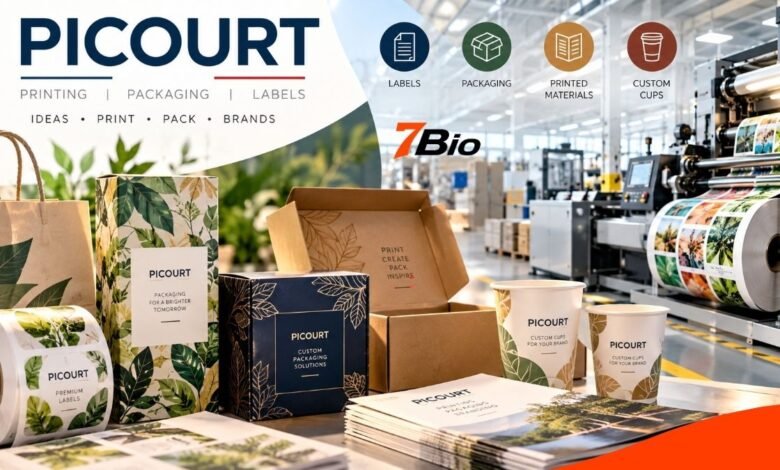
Picourt is a name associated with France’s printing and packaging industry, particularly through Groupe PICOURT, a family-rooted business specializing in labels, custom packaging, printed materials, and paper cups. The group combines established printing processes with newer production technologies to serve businesses with different packaging and communication requirements.
Its activities extend beyond printing a logo onto a box or label. Packaging must protect products, display essential information, suit manufacturing processes and communicate a brand’s identity. The company meets these requirements through several specialist businesses and a portfolio that covers both functional and premium printed materials.
For businesses evaluating packaging suppliers, understanding the group’s capabilities is more useful than relying on broad claims about print quality. Its history, manufacturing methods, product categories and site-specific certifications offer a clearer picture of the services available.
What Is Picourt?
Groupe PICOURT is a French printing and packaging group that provides customized labels, folding cartons, flexible packaging, commercial printed materials, paper cups and specialist decorative printing.
The group traces its origins to a family business established during the early 1980s. It has built production capabilities and acquired specialist printing companies across France.
The group’s headquarters are in Frucourt, in the Somme department of northern France. Other businesses within the group bring additional expertise in labels, commercial printing, packaging design and premium finishing.
Rather than offering one printing technique for every project, the company can consider different manufacturing processes based on the intended application, material, quantity, and desired finish.
The History and Development of Groupe PICOURT
From a Family Printing Business to a Wider Group
The group’s published history identifies Olivier Picourt as the entrepreneur behind its development, beginning with a family printing business in the early 1980s.
A major milestone came in 2009, when Picourt Packaging was created in Frucourt, near Abbeville. The operation specialized in compact cardboard packaging and adhesive labels for markets including food, textiles and industrial goods.
Further expansion brought additional specialist companies into the business.
In 2017, the acquisition of Tech New Label strengthened its expertise in decorative labels, particularly for sectors such as cosmetics and perfume. The operation was subsequently renamed PICXCELL.
The 2021 acquisition of Etiq’Alp added digital label-printing capabilities, including work involving small production quantities and prototypes.
In 2022, the group acquired Imprimerie Rimbaud and Imprimerie Orsi. These businesses brought capabilities in commercial publishing materials, specialist packaging and decorative printing.
Its expansion continued in 2023 with the acquisition of Imprimerie Valmy, along with the development of personalized cardboard-cup manufacturing. The 2024 acquisition of Groupe Taurrus further expanded its printing and graphic-production activities.
These developments explain why the present-day business covers several printing disciplines rather than operating solely as a label manufacturer.
What Services Does Picourt Provide?
1. Custom Label Printing
Product labels are central to the group’s offering. Its capabilities cover several label formats, including adhesive labels, non-adhesive labels and cardboard tags.
Different applications require different properties. A label on refrigerated food packaging may need to withstand moisture or condensation. A cosmetics label may prioritize fine typography and decorative effects, while an industrial label may need durable printing and clearly legible information.
The most appropriate material, adhesive and printing process therefore depend on the conditions in which the product will be stored, transported and used.
2. Custom Packaging Manufacturing
The company’s packaging portfolio includes folding cartons, cardboard sleeves, compact-board packaging and flexible packaging.
These formats serve different purposes. A folding carton provides structure and an exterior printing surface, while flexible packaging may be chosen for its weight, shape, or compatibility with specific packing methods.
Packaging design involves more than appearance. Material selection, dimensions, product protection, regulatory information and production efficiency can all influence the final specification.
3. Commercial and Institutional Printing
Through its broader printing operations, the group produces materials such as catalogs, brochures, stationery, books, and promotional displays.
Commercial printing remains important for businesses that need physical product catalogs, retail materials, or printed customer information.
These projects differ from packaging production. A brochure may prioritize color consistency and paper texture, whereas a retail display must also maintain its shape and remain readable from a distance.
4. Personalized Cardboard Cups
Another service is producing custom-printed paper cups for commercial use.
These products can support brand visibility in settings such as cafés, hospitality venues, exhibitions and promotional events. However, businesses should confirm cup specifications, suitability for hot or cold drinks, minimum order quantities and applicable material requirements before purchasing.
5. Premium Printing and Finishing
Specialist decorative printing is especially relevant for products whose packaging significantly shapes customer perception.
The group’s premium capabilities include finishes such as metallic effects, selective varnishing and raised decorative details.
In October 2026, the company said it would expand its digital finishing capabilities for smaller and medium-sized production runs.
This matters because traditional finishing methods can require substantial setup. Certain digital processes can make decorative effects more practical for prototypes, limited editions and shorter runs.
Printing Technologies Used by the Group
Groupe PICOURT uses several printing methods, including flexographic, offset, screen, and digital printing.
Each method has particular strengths, but the best choice depends on the overall production specifications.
| Printing method | Typical application | Main consideration |
|---|---|---|
| Flexographic printing | Labels and packaging materials | Efficient repeated production |
| Offset printing | Books, brochures and printed packaging | Consistent detailed printing |
| Digital printing | Prototypes and shorter production runs | Flexible designs and quantities |
| Screen printing | Decorative and specialist applications | Particular inks, materials and effects |
Why Technology Selection Matters
A business ordering a small number of prototype labels may have different priorities from a manufacturer ordering large volumes of identical packaging.
Digital printing offers flexibility when designs change frequently or production quantities are modest. Other methods may become more economical when large quantities require consistent reproduction.
Finishing processes, materials and delivery requirements also affect the choice.
For this reason, a useful supplier quotation should explain the recommended production method rather than simply listing a final price.
Quality Standards and Environmental Commitments
BRCGS Packaging Materials Certification
On 3 July 2026, the group announced that its Picourt Packaging site had obtained BRCGS Packaging Materials certification.
According to the company’s announcement, the certified scope includes manufacturing and printing activities covering adhesive labels, cardboard labels and personalized cardboard cups.
The certification is relevant to companies in industries where packaging quality, material traceability and manufacturing controls are particularly important.
However, certification at one site should not be interpreted as automatic certification of every facility, product or process operated by the wider group.
Businesses seeking regulated or specialist packaging should confirm the relevant certificate, scope, validity and product suitability before placing an order.
Responsible Material Sourcing
The group also publishes information about environmental and quality-related initiatives.
Its stated certifications include FSC and PEFC arrangements at specified production sites, while its Rimbaud operation has been associated with the Imprim’Vert environmental label.
Such certifications can help purchasers evaluate aspects of responsible sourcing and production management.
They should nevertheless be assessed carefully. A certified paper supply chain does not automatically mean a finished package is recyclable everywhere.
Coatings, adhesives, mixed materials and local waste infrastructure may affect the appropriate disposal method.
Which Industries Can Benefit From Its Services?
The group’s capabilities apply to several commercial sectors, including food manufacturing, cosmetics, pharmaceuticals, industrial products, and retail.
For food businesses, packaging must support product presentation while meeting applicable material and labeling requirements. Cosmetic brands may place greater emphasis on finish quality, texture and visual identity.
Industrial customers may focus on practical identification, batch information, and durable labeling. Publishers and businesses producing printed marketing materials have different requirements for paper choice, reproduction quality, and binding.
The key distinction is that the right packaging solution depends on the product and its intended use, not simply on whether a supplier offers an attractive design.
Picourt and Picourt-Cabis: Are They the Same Company?
A common source of confusion is the similarity between Groupe PICOURT and Picourt-Cabis.
They have separately documented business histories and identities, and should not be described as the same company without evidence of a corporate connection.
Picourt-Cabis traces its history to a Paris business founded in 1886. It specializes in food presentation and luxury packaging, including decorative paper products and customized packaging for pastry and catering businesses.
Groupe PICOURT, by contrast, traces its origins to the early 1980s and has expanded its printing and packaging portfolio through manufacturing operations and acquisitions.
Anyone researching suppliers should therefore check the full company name, registered business, and relevant product catalog.
How to Evaluate Picourt for a Packaging Project
A prospective customer should begin with a clear understanding of what the finished product needs to achieve.
Define the Production Requirements
Establish the intended dimensions, materials, quantity, surface finish, and environmental conditions. Packaging that looks suitable in a design preview may need changes once you consider its contents, transport conditions, or handling requirements.
Request and Review Samples
Where appropriate, ask for a physical prototype or representative sample. This makes it easier to assess color, texture, folding accuracy, label adhesion, and the appearance of decorative finishes.
Compare the Complete Quotation
A quotation should clarify tooling or setup charges, minimum quantities, artwork requirements, manufacturing times, shipping arrangements and any additional finishing costs.
Lower unit prices do not always mean better overall value when you include setup expenses and surplus inventory.
Check Relevant Compliance Evidence
For food-contact packaging, medical-related applications or other controlled uses, confirm the applicable documentation and the exact manufacturing scope.
General company certifications should not replace product-specific checks.
Consider Future Production Needs
A supplier suitable for a prototype may also need to support larger volumes if the product succeeds.
Discussing potential repeat orders, design revisions and delivery schedules early can help avoid expensive production changes.
FAQs
What is Picourt known for?
In the packaging sector, Groupe PICOURT is known for customized product labels, cardboard packaging, flexible packaging, commercial printing and specialist finishing services.
Is Picourt a French company?
Yes. Groupe PICOURT is a French business with its principal operations based in France, including its established presence in Frucourt.
Does the company provide custom packaging?
Yes. Its published services include customized folding cartons, cardboard sleeves, labels, and other printed packaging solutions.
Can Picourt handle small printing orders?
Some of its operations support prototypes and smaller production runs, particularly through digital printing. Minimum quantities depend on the specific product and manufacturing process.
Is Picourt Packaging certified?
The company announced BRCGS Packaging Materials certification for its Picourt Packaging site in July 2026. Buyers should verify the current certificate and its scope for their intended products.
What is the difference between Picourt and Picourt-Cabis?
Groupe PICOURT is a broader printing and packaging group with a history dating back to the 1980s. Picourt-Cabis is a separately identified specialist in luxury food packaging with historical origins dating to 1886.
Final Takeaway
Picourt is an established presence in France’s printing and packaging sector through Groupe PICOURT, whose activities span labels, packaging, commercial printing, and premium finishing.
Its development has included specialist acquisitions, expanded manufacturing capabilities, and a focus on production quality. Recent developments, including the 2026 BRCGS certification announcement and additional digital finishing equipment, provide useful context for businesses assessing its capabilities.
For potential customers, the best approach is to match a specific project to the right production site, printing technology, quality documentation, and commercial terms.
Understanding those practical distinctions provides a clearer assessment of the company than relying on general claims about packaging innovation.