Costcodle: How to Play, Understand the Clues and Improve Your Guesses
Discover the rules of the daily Costco-inspired puzzle, learn what the colored hints mean, and develop a smarter price-guessing strategy.

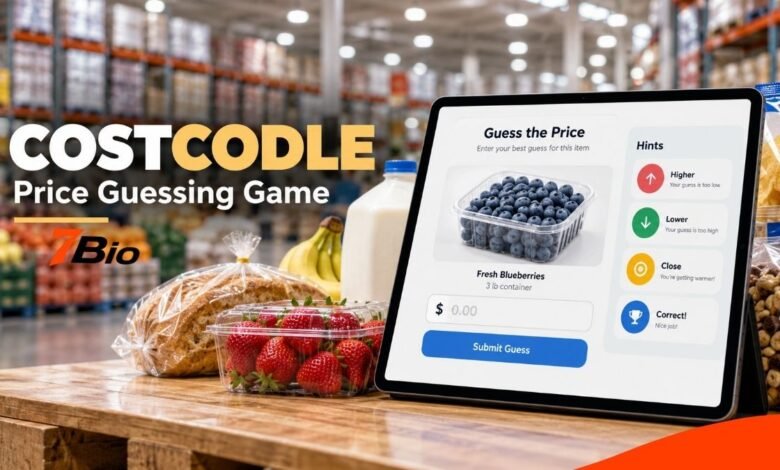
Costcodle is a free, browser-based guessing game that challenges players to estimate a Costco product’s price in six attempts or fewer. Inspired by the familiar daily-puzzle format popularised by Wordle, it replaces word guessing with a simple but surprisingly interesting question: how much does this item cost?
Each day, the game presents a product with an image and description. Players enter a price in US dollars, get feedback on whether their estimate is too high or too low, and adjust their next guess—a prediction within 5% of the target price counts as a win.
Although the rules are straightforward, the challenge gets harder when unfamiliar brands, large package sizes, and warehouse pricing enter the picture. Success involves more than knowing supermarket prices. Players must interpret numerical clues and make sensible decisions with a limited number of attempts.
What Is Costcodle?
Costcodle is an independently developed online game centered on guessing the prices of products associated with Costco Wholesale, the membership-based warehouse retailer.
Its distinctive feature is that players do not need to identify a hidden product. The product is already displayed. Instead, they must determine its price using product knowledge, estimated retail value, and feedback from previous guesses.
The game follows a daily format, offering a new puzzle rather than an unlimited sequence of random questions. This creates a short challenge players can return to regularly without spending much time completing it.
Unlike conventional shopping quizzes, the game does not ask users to choose between several prices. It lets them enter their own estimates, making each attempt a chance to narrow the possibilities.
The key objective is not to guess the exact price. The goal is to get close enough to the target before the six attempts run out.
Who Created Costcodle?
The game was developed by Zachary Kermitz, who uses the online name Kerm. His publicly available project repository identifies the game as a Wordle-inspired daily guessing challenge involving Costco food products.
The developer credits both Wordle and Tradle as influences. Wordle established the familiar format of limited guesses and daily challenges, while Tradle demonstrates how that puzzle structure can be adapted to information other than words.
The project dates to September 2023, according to its published code, and its source code is publicly available under the MIT license.
Importantly, this is an independent entertainment project. It is not an official game operated by Costco Wholesale, even though it focuses on the retailer’s merchandise.
How to Play Costcodle
You need a web browser and an internet connection to play. You don’t need a Costco membership to play the online puzzle.
Step 1: Open the Daily Game
Visit the original game’s website and examine the product displayed on the screen. The product image and name are the main information available before you guess.
Read the description carefully. A familiar item may be sold in a larger package or a different quantity than the version available at a typical supermarket.
Step 2: Enter Your First Price Estimate
Consider what the entire displayed package might cost, then enter an amount in US dollars.
A useful first estimate should reflect the brand, quantity, product category, and likely warehouse pricing. Avoid automatically choosing the price of a smaller supermarket version.
Step 3: Interpret the Feedback
After you submit an estimate, the game tells you whether the correct price is higher or lower than your guess. It also distinguishes relatively close guesses from estimates that are further away.
This information helps you decide whether to increase or decrease your next amount.
Step 4: Narrow the Price Range
Use each clue to reduce the range of possible prices. Instead of making small, arbitrary changes, choose the next most informative amount to try.
For example, if one attempt shows the price is above $10 and another shows it is below $20, you now have a much smaller interval to investigate.
Step 5: Reach the Winning Range
Continue refining your estimates until you land within 5% of the answer or use all six attempts. A successful attempt ends the challenge and contributes to your personal game statistics.
Understanding the Colors and Price Clues
The game’s feedback is particularly useful because it communicates both direction and approximate accuracy.
| Feedback | Meaning |
|---|---|
| Up arrow ↑ | Your estimate is below the target price |
| Down arrow ↓ | Your estimate is above the target price |
| Red indication | Your estimate is more than 25% away |
| Yellow indication | Your estimate is within 25% but outside the winning range |
| Check mark ✓ | Your estimate is within 5% and wins |
These indicators create a simple decision system. The arrow tells you which direction to move, while the closeness indicator shows how much to change your estimate.
Why the 5% Rule Matters
A winning prediction does not have to match the price down to the final cent.
Suppose a hypothetical product costs $20. A guess between $19 and $21, inclusive, falls within the permitted 5% range.
For a $10 product, the successful range is much narrower: $9.50 to $10.50.
This difference explains why inexpensive products can be unexpectedly challenging. A small dollar error represents a larger percentage of a cheaper item’s total price.
An Example of a Successful Game
Consider an illustrative round in which the hidden price is $20. This is a fictional example to explain the rules, not an answer to a particular daily puzzle.
| Attempt | Price entered | Feedback |
|---|---|---|
| First | $12.50 | Too low; more than 25% away |
| Second | $26.00 | Too high; more than 25% away |
| Third | $22.00 | Too high; within 25% |
| Fourth | $20.50 | Within 5%; successful |
The example demonstrates a useful approach. The first two guesses establish the target price’s broader boundaries. The third narrows the likely range, and the fourth enters the winning interval.
A player doesn’t need to follow this exact sequence. The most appropriate next guess depends on the clues and what the player knows about the product.
Practical Strategies for Better Results
Pay Attention to Package Size
One of the easiest mistakes is estimating the cost of an individual item when the displayed product is a multipack or bulk package.
If the screen shows a large bag of snacks, for example, comparing it with a small convenience-store packet will produce a misleading starting estimate.
Look for the weight, volume, number of units, and product variant. Even with a familiar brand, differences in quantity can substantially change the total price.
Use a Middle-Range Guess When Possible
Once you have established a lower and upper boundary, choosing a price somewhere near the middle can be more informative than moving by just a few cents.
Imagine your earlier guesses suggest that the answer is between $12 and $18. A new guess around $15 can provide useful directional feedback.
This resembles a basic numerical search strategy: systematically reduce the interval instead of relying entirely on intuition.
Treat Yellow Feedback as Valuable Information
A yellow indication means your estimate is relatively close, though not yet within the winning tolerance.
Instead of making another large adjustment, consider the remaining numerical range and the arrow’s direction.
A modest, calculated change may be sufficient. However, the best amount still depends on the target price and the information you’ve already collected.
Understand US Retail Pricing
Because the game’s reference prices are in US dollars, familiarity with American retail prices can give you an edge.
Players in the United Kingdom or other countries may find some products difficult to estimate because regional currency values, product packaging, and local retail practices differ.
Simply converting a familiar British supermarket price into dollars will not necessarily produce a reliable prediction.
Learn From Unsuccessful Attempts
An unsuccessful round can still improve your understanding of the game’s pricing patterns. Notice whether your initial guesses tend to be too high or too low, and consider which package types cause the most difficulty.
The goal is to improve your estimation process, not memorize individual answers.
What Makes Costcodle Different From Wordle?
Although both games use a daily challenge and a limited number of guesses, they require different skills.
| Feature | Costcodle | Wordle |
|---|---|---|
| Main challenge | Estimate a product price | Identify a five-letter word |
| Guess format | Numerical dollar amount | Five-letter word |
| Attempts | Six | Six |
| Feedback | Price direction and closeness | Letter position and presence |
| Winning condition | Within 5% of target | Correct word |
| Main skill | Estimation and numerical reasoning | Vocabulary and word deduction |
Wordle rewards the ability to eliminate letter combinations. The Costco-inspired game rewards an understanding of numerical boundaries and the likely value of real products.
Both provide immediate feedback, but players must interpret it differently.
Is Costcodle Free and Available Worldwide?
The original game is free to access in a standard web browser. It doesn’t require a subscription, a retail purchase, or a separate paid account to take part in the daily challenge.
Its browser-based format also makes it accessible to people outside the United States. However, the puzzle prices are shown in US dollars rather than adjusted for each player’s country.
The game is therefore accessible internationally, but its underlying product-price knowledge is particularly relevant to the American market.
Players should also distinguish between the original daily game and third-party websites offering archives, alternative versions or additional practice rounds. Those independently operated services may use different interfaces or features.
Does Playing the Game Improve Shopping Knowledge?
Regular play may encourage people to think more carefully about packaging, quantity, and total product cost. It also creates an opportunity to practice estimation and numerical reasoning.
However, a successful daily guess should not be interpreted as proof that a player understands current retail prices across different stores.
Product prices change, warehouse locations differ, and the amount used in a puzzle may not match a particular shop’s current shelf label.
The game is designed for entertainment, not as a real-time price comparison service.
That distinction matters for readers who might otherwise assume that its numerical answers represent universally available Costco prices.
Common Mistakes to Avoid
Three mistakes are particularly worth recognizing. The first is overlooking the full package description, which can distort your estimate before the game even begins.
The second is ignoring previous feedback. Entering a price outside boundaries already established by earlier guesses wastes valuable opportunities to narrow the answer.
The third is confusing the closeness indicator with a successful result. A yellow clue offers encouragement and useful information, but it doesn’t mean the puzzle is solved.
Players should also avoid treating published answer archives as evidence of current in-store pricing. The daily puzzle and a retailer’s live inventory serve different purposes.
FAQs
1. What is Costcodle?
Costcodle is a free daily online guessing game in which players estimate the price of a displayed Costco product. The goal is to get within 5% of the target price in no more than six guesses.
2. How many chances do you get?
Players receive six attempts for each daily puzzle. After an incorrect prediction, feedback indicates whether the estimate is above or below the target price and how close it is.
3. Do you need a Costco membership to play?
No. The online game is independently operated and does not require a Costco membership. Knowing Costco products may help with estimates, but membership isn’t required to participate.
4. Is there a new puzzle every day?
Yes. The original game is designed around a daily product challenge. Its game-number calculation uses the player’s device date and time, so time-zone and daylight-saving differences can affect when a new puzzle appears.
5. Can you play Costcodle on a mobile phone?
Yes. The browser-based game can be accessed on compatible mobile devices. Players can enter price estimates and follow the same basic rules without downloading a dedicated app.
Conclusion
Costcodle offers a distinctive variation on the familiar daily guessing-game format by turning real product prices into numerical puzzles. Its combination of six attempts, higher-or-lower hints, and a 5% winning tolerance creates an accessible challenge with room for thoughtful strategy.
The most useful approach is to examine each product carefully, consider its full package size, interpret the feedback, and systematically narrow the possible price range.
Whether someone follows daily internet puzzles, enjoys retail trivia, or wants a short numerical challenge, the game offers an entertaining way to test price-estimation skills without lengthy sessions or complicated rules.