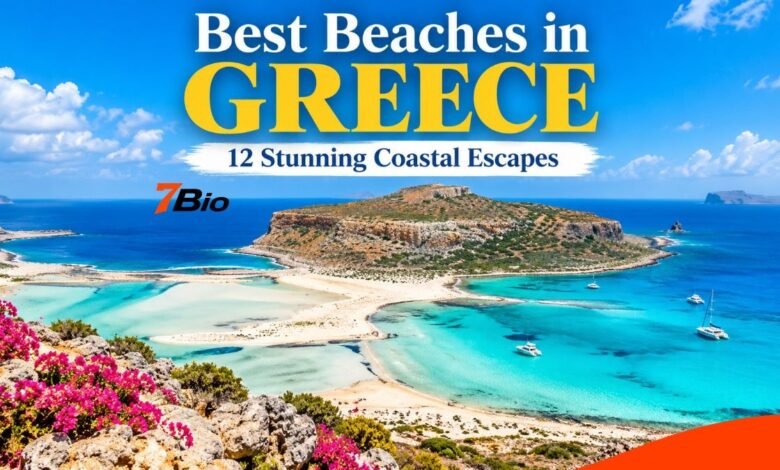
Greece offers a remarkable variety of beaches, from sheltered sandy bays to wild stretches of coastline surrounded by towering cliffs. The best beaches in Greece aren’t necessarily the ones with the most dramatic photos. The right choice depends on whether you want gentle swimming, beautiful scenery, family facilities, or a quiet place to relax.
Crete is known for its lagoons and broad sandy beaches, while the Ionian Islands feature bright blue water beneath limestone cliffs. The Cyclades offer everything from developed holiday resorts to unusual volcanic landscapes. Mainland Greece and its smaller neighboring islands also have beaches worth a visit.
This guide selects 12 outstanding beaches based on scenery, distinctive features, practical accessibility, and suitability for different types of visitors.
This article explains where to find Greece’s most appealing beaches, what makes each destination different, and how to plan a comfortable, responsible coastal holiday.
1. Balos Lagoon, Crete — Best for Spectacular Lagoon Views
Balos Lagoon lies on Crete’s northwestern coast, near the Gramvousa Peninsula. Its shallow turquoise water, pale sand and striking coastal scenery make it one of the country’s most recognizable natural destinations.
The lagoon contains areas of calm-looking, shallow water, although conditions vary with the wind and sea. Its unusual color comes from the combination of clear water, a sandy seabed, and surrounding coastal formations.
One of the main attractions is the panoramic view from the hillside above the lagoon. From here, visitors can appreciate the contrast between the lighter lagoon water and the darker open sea.
You can reach Balos by boat from Kissamos or by traveling along a partly unpaved road, followed by a walk. The land route can be challenging, particularly in hot weather, and travelers should check vehicle-hire restrictions before attempting it.
Because Balos is part of a protected natural landscape, visitors should follow marked routes, avoid disturbing vegetation and take their rubbish away.
Best for: Scenery, photography, lagoon landscapes and adventurous day trips.
2. Elafonissi Beach, Crete — Best for Shallow Water and Pink-Tinged Sand
Elafonissi, on Crete’s southwestern coast, is particularly famous for its pale sand, occasional pink coloring, and beautiful shallow water.
The pink tones originate from tiny shell fragments mixed with the sand. However, visitors should not expect the entire beach to appear bright pink. The color varies naturally across the shoreline.
Elafonissi especially appeals to travelers who prefer broad, sandy coastal areas rather than rocky coves. Its shallower sections can suit relaxed paddling when conditions are calm, although children still require close supervision.
The surrounding landscape is environmentally sensitive and belongs to the Natura 2000 protected-area network. Dunes, coastal plants and wildlife are important features of the setting.
Visitors should avoid removing sand or shells, walking through protected vegetation or leaving waste behind.
Elafonissi is accessible by road from the Chania region, but the journey takes planning because it lies some distance from the island’s main urban centers.
Best for: Families, shallow-water paddling, nature lovers and distinctive coastal scenery.
3. Falassarna Beach, Crete — Best for Open Sands and Sunsets
Falassarna, also written Falasarna, provides a different experience from Crete’s famous lagoons. It is known for its extensive sandy coastline, open views and impressive sunsets.
Located on western Crete, Falassarna offers space for traditional beach activities such as swimming, sunbathing and walking beside the sea.
Parts of the beach offer organized facilities, including sunbeds, refreshments, and water sports during the tourist season.
Its exposed western position means that windy conditions can produce substantial waves. Families and inexperienced swimmers should assess the sea before entering rather than assuming that clear water means safe conditions.
Falassarna is a practical choice for visitors staying around Chania who want a full beach day without the more demanding approach associated with Balos.
Late afternoon is particularly attractive because the coastline faces west, offering expansive views towards the setting sun.
Best for: Spacious sandy surroundings, sunset photography and beach activities.
4. Porto Katsiki, Lefkada — Best for Dramatic Cliffs
Porto Katsiki is one of Lefkada’s signature beaches, on an Ionian island connected to mainland Greece by road.
The beach sits beneath enormous pale cliffs, with striking blue water creating a memorable contrast against the rocky landscape.
Its appeal lies primarily in the scenery. The cliffs provide a dramatic setting that differs greatly from the flat, sandy shores found on many other Greek islands.
Reaching the beach from the road involves descending a substantial staircase. This makes it less suitable for travelers with limited mobility, those carrying heavy equipment or families managing pushchairs.
The return climb can feel strenuous in strong sunshine. Visitors should bring drinking water, appropriate footwear and sufficient protection from the heat.
Sea conditions can change, especially on exposed Ionian beaches, so visitors should be cautious when swimming.
For travelers who value natural landscapes as much as time in the water, Porto Katsiki is an excellent choice.
Best for: Cliff scenery, coastal photographs, and adventurous travelers.
5. Myrtos Beach, Kefalonia — Best for Wild Coastal Beauty
Myrtos Beach sits on Kefalonia’s northwest coast and is famous for its sweeping bay framed by steep limestone cliffs.
The beach is made of pale sand and pebbles, and the water shows beautiful shades of blue when sunlight and sea conditions are favorable.
The viewpoint above Myrtos is a major attraction in its own right. From the surrounding road, visitors can see the remarkable curve of the bay beneath the mountains.
Myrtos is more exposed than many sheltered resort beaches. Waves, strong currents and a seabed that deepens relatively quickly can make swimming unsuitable at certain times.
For that reason, don’t assume it’s a safe family swimming destination just because the water looks inviting.
Facilities may be limited or seasonal, so it’s sensible to bring water and sun protection.
Myrtos is especially rewarding for visitors who prefer dramatic natural surroundings over extensive resort entertainment.
Best for: Landscape photography, scenic drives and experienced beach travelers.
6. Voutoumi Beach, Antipaxos — Best for Clear Ionian Water
Voutoumi Beach is found on Antipaxos, a small island south of Paxos in the Ionian Sea.
It is celebrated for its clear blue-green water, pale shoreline and green hillsides. The relatively intimate coastal setting gives it a different atmosphere from the broad sandy beaches of larger islands.
Many visitors arrive during boat excursions from Paxos or nearby parts of the Ionian region.
The beach’s appeal is closely connected to the surrounding natural landscape. The clear water can make it attractive for snorkeling and relaxed swimming when conditions allow.
Because Antipaxos is a small island, visitors should not assume that transport, refreshments and facilities will be available on the same scale as at a major holiday resort.
Boat timetables and services can change with weather and season, making planning worthwhile.
Best for: Boat excursions, beautiful water colors and a peaceful island atmosphere.
7. Sarakiniko Beach, Milos — Best for Unusual Volcanic Landscapes
Sarakiniko Beach on Milos offers one of Greece’s most distinctive coastal experiences.
Instead of a conventional long sandy shoreline, much of the landscape consists of smooth, pale volcanic rock formations shaped by erosion.
The result is a striking white landscape beside intensely blue water. Its unusual appearance helps explain why Sarakiniko has become such a recognizable destination for coastal photography.
A relatively small sandy section exists, but many visitors spend more time exploring the surrounding landscape and admiring the rock formations.
Sarakiniko may not be the best choice for travelers seeking a comfortable, shaded beach with extensive facilities.
The exposed rock can become extremely hot under summer sunshine, while slippery surfaces, waves and sudden changes in water depth create potential hazards.
Visitors should avoid jumping from rocks or entering the sea without carefully evaluating conditions.
Best for: Geological scenery, photography and unusual coastal experiences.
8. Agios Prokopios, Naxos — Best for Comfortable Family Holidays
Agios Prokopios is one of the most practical options for visitors seeking a traditional Greek beach holiday.
Located on the western side of Naxos, this long sandy beach has clear water, an established resort atmosphere and a range of nearby services.
Visitors can find restaurants, cafés, accommodation and beach facilities in the surrounding area.
Its accessibility makes it convenient for travelers who prefer to spend most of their holiday near the coast rather than make lengthy excursions every day.
Some sections are more developed, while others offer a less organized beach experience.
Families often appreciate the sandy surroundings and relatively sheltered position, although water conditions and depth must still be checked.
Naxos also offers opportunities to combine beach days with traditional villages, local food and historical sites.
Best for: Family holidays, beachside accommodation and convenient facilities.
9. Simos Beach, Elafonisos — Best for Fine Sand and Dunes
Simos Beach is located on Elafonisos, a small island just off the southeastern Peloponnese.
It consists of two adjoining sandy bays, commonly known as Megalos Simos and Mikros Simos.
Attractive dunes and coastal vegetation frame the beaches, creating a setting that feels markedly different from the cliff-backed landscapes of western Greece.
Fine sand and beautiful water colors make Simos appealing to visitors who want a relaxed day beside the sea.
The island is reached by ferry from Pounta on the mainland, and travelers should check current crossings before organizing their trip.
Although the beaches can feel peaceful outside busy periods, wind and summer crowds can affect the experience.
Visitors should avoid walking across sensitive dunes or damaging the coastal plants that help stabilize them.
Best for: Sandy scenery, couples, island excursions and nature-focused holidays.
10. Voidokilia Beach, Messinia — Best for Natural Beauty on the Mainland
Voidokilia Beach shows that some of Greece’s best beaches are on the mainland rather than the famous holiday islands.
In Messinia, in the southwestern Peloponnese, it is known for its nearly semicircular shoreline.
The beach curves around a bay with pale sand and blue water, while the nearby Gialova Lagoon forms an important protected wetland.
Its natural appearance is one of its greatest attractions.
Unlike heavily developed resort beaches, Voidokilia offers fewer commercial facilities. Visitors should bring water, food, suitable footwear, and adequate sun protection.
The surrounding environment also rewards careful exploration, particularly for people interested in coastal landscapes and birdwatching.
Because the nearby wetland is ecologically important, visitors should respect designated paths and avoid disturbing wildlife.
Best for: Natural landscapes, quiet beach days and mainland road trips.
11. Koukounaries Beach, Skiathos — Best for Pine Forests and Golden Sand
Koukounaries offers a combination of sandy coastline and greenery that makes Skiathos particularly attractive.
The beach lies beside a pine-covered landscape and near Lake Strofylia, which forms part of an environmentally important area.
Its golden sand and clear water provide the familiar pleasures of a Mediterranean beach holiday, while the surrounding trees create a distinctive natural backdrop.
Koukounaries also offers organized facilities during the main tourist season, making it suitable for visitors who value practical conveniences.
It can be reached by road from Skiathos Town, and local transport options may be available depending on the season.
As one of the island’s established attractions, the beach can become busy during peak holiday periods.
Travelers seeking a balance between scenic surroundings and visitor services may find Koukounaries particularly appealing.
Best for: Couples, families, golden sand and nature lovers.
12. Tsambika Beach, Rhodes — Best for a Classic Sandy Beach Day
Tsambika Beach, also written Tsampika, is found on the eastern side of Rhodes.
It has a broad sandy shoreline and an established selection of seasonal visitor facilities, including refreshments and water sports.
The beach is particularly suitable for travelers who want a convenient day by the sea without undertaking a difficult hike or boat transfer.
The surrounding hills give the coast a pleasant natural setting, while the famous Tsambika Monastery and chapel add cultural interest to the wider area.
Its open sandy space is useful for families, although conditions should always be assessed before swimming.
Tsambika provides a straightforward alternative to more remote beaches that require complicated transport arrangements.
Best for: Family beach days, sand, swimming in suitable conditions and convenient amenities.
Best Beaches in Greece: Quick Comparison
| Beach | Location | Main Appeal |
|---|---|---|
| Balos Lagoon | Crete | Turquoise lagoon scenery |
| Elafonissi | Crete | Shallow water and pink-tinged sand |
| Falassarna | Crete | Wide sand and sunsets |
| Porto Katsiki | Lefkada | Dramatic limestone cliffs |
| Myrtos | Kefalonia | Wild coastal scenery |
| Voutoumi | Antipaxos | Clear Ionian water |
| Sarakiniko | Milos | Unusual white volcanic rock |
| Agios Prokopios | Naxos | Family facilities and long sandy beach |
| Simos | Elafonisos | Twin bays and sand dunes |
| Voidokilia | Messinia | Natural horseshoe-shaped bay |
| Koukounaries | Skiathos | Golden sand and pine forest |
| Tsambika | Rhodes | Convenient sandy beach holiday |
These selections are based on different travel preferences rather than a claim that one destination is objectively better than every other Greek beach.
Which Greek Island Has the Best Beaches?
The answer depends on the experience you want.
Crete is particularly versatile. Its beaches include shallow lagoons, extensive stretches of sand and more exposed shorelines. It is an excellent choice for travelers who want variety during a single holiday.
Lefkada and Kefalonia appeal to visitors who enjoy dramatic cliffs, spectacular viewpoints and the vivid blues of the Ionian Sea. However, some of their most famous beaches are hard to reach or have challenging swimming conditions.
Naxos is a strong option for travelers seeking sandy beaches, established accommodation and a more straightforward seaside holiday.
Milos is particularly appealing for its unusual geology and scenic coastal exploration rather than conventional resort beaches alone.
Skiathos and Rhodes combine beautiful coastal scenery with established tourist infrastructure and options for different holiday styles.
The best island is therefore the one that matches your preferences, mobility needs and available travel time.
Best Time to Visit the Beaches in Greece
For many visitors, late May, June and September offer a useful balance between pleasant weather, swimming opportunities and smaller crowds.
July and August are usually the busiest summer months at popular destinations. Accommodation, parking, and beach facilities may see higher demand.
Sea temperatures also vary by region and time of year. Early summer water can feel cooler than expected, while some coastal areas remain suitable for swimming into early autumn.
September often appeals to travelers who want warm sea conditions without the peak-season crowds.
Wind deserves particular attention, especially in the Aegean Islands, where strong summer winds can affect swimming, boat excursions and exposed beaches.
Before traveling, check local weather forecasts, sea conditions and the seasonal operation of ferries or beach services.
How to Choose the Right Greek Beach
Choosing a beach should involve more than looking at photographs.
For families with young children, convenient access, gentle entry into the water, nearby facilities and the availability of lifeguards may matter more than dramatic scenery.
Photographers and nature enthusiasts may prefer remote coves and unusual coastal formations. However, these destinations may require extra walking, boat transport, or careful preparation.
Visitors with limited mobility should watch for stairs, steep paths, unpaved roads, and whether accessible beach facilities are available.
Those hoping to swim or snorkel should check the weather and local water conditions rather than assuming that beautiful blue water is necessarily calm or safe.
It is also worth considering accommodation location. Staying close to several suitable beaches can be more relaxing than traveling across an island every day.
Beach Safety and Environmental Protection
Greece’s coastal landscapes are valuable natural environments, and responsible behavior helps preserve them.
Some beaches contain protected dunes, nesting habitats, rare plants and sensitive marine ecosystems. Visitors should follow local regulations and avoid collecting shells, sand or other natural materials from protected sites.
Strong sunshine and limited shade can become serious concerns during summer. Carry sufficient drinking water, wear appropriate sun protection and avoid prolonged exposure during the hottest part of the day.
Swimming safety is equally important. Watch for warning signs, follow lifeguard instructions, and watch for waves, currents, and changing weather.
Remote beaches may have limited emergency assistance or no organized services.
Important access update — 31 October 2026: Navagio, also known as Shipwreck Beach on Zakynthos, remains closed to landing and swimming under safety restrictions at the time of writing. Its iconic scenery should not be confused with an accessible swimming destination. Check official local guidance before making plans, as restrictions may change.
Final Takeaway
The best beaches in Greece offer different experiences, not a single definition of coastal perfection.
Balos and Elafonissi are memorable for their extraordinary lagoons, Porto Katsiki and Myrtos for their impressive cliffs, and Sarakiniko for its remarkable volcanic landscape. Meanwhile, Agios Prokopios, Koukounaries, and Tsambika offer appealing options for travelers who prioritize convenience and established beach facilities.
For a first beach-focused holiday with plenty of variety, Crete is a practical place to start. For a more specialized trip, choose an island or mainland region based on the particular scenery and activities you enjoy.
Whatever destination you select, planning around access, seasonal conditions and environmental protection will make the experience more rewarding.
FAQs
1. What is the most beautiful beach in Greece?
There is no universally agreed winner because beauty is subjective. Balos Lagoon is especially admired for its turquoise water and distinctive landscape, while Porto Katsiki and Myrtos offer dramatic cliffs. Sarakiniko is an excellent choice for visitors who appreciate unusual volcanic scenery.
2. Which Greek island has the best beaches for families?
Crete, Naxos, Rhodes and Skiathos all provide appealing family beach options. Agios Prokopios in Naxos and Tsambika in Rhodes are particularly convenient because of their sandy shorelines and nearby facilities. Families should still check swimming conditions, supervision arrangements, and accessibility before visiting.
3. When is the best month to visit Greece for a beach holiday?
June and September are often excellent choices for beach holidays because they can offer pleasant temperatures and fewer visitors than the busiest summer weeks. September may be particularly appealing for warmer sea temperatures, although weather conditions vary by region.
4. Are the beaches in Greece free to visit?
Many Greek beaches are publicly accessible without a general admission charge. However, parking, transport, boat excursions, sunbeds and umbrellas may involve additional costs. Some protected areas also have special access rules, so travelers should check local conditions before visiting.
5. What are the best beaches in Greece for clear blue water?
Balos, Elafonissi, Voutoumi and Porto Katsiki are widely admired for their beautiful blue or turquoise water. The exact appearance depends on sunlight, sea depth, seabed composition, and weather conditions. Clear water does not automatically indicate safe swimming, so visitors should always assess local conditions.