g.d. food: The Essential Guide to G.D. Foods, TOPS Products and Brand Ownership
How an Indian noodle brand grew into a wider packaged-food business, and what changed after its acquisition.

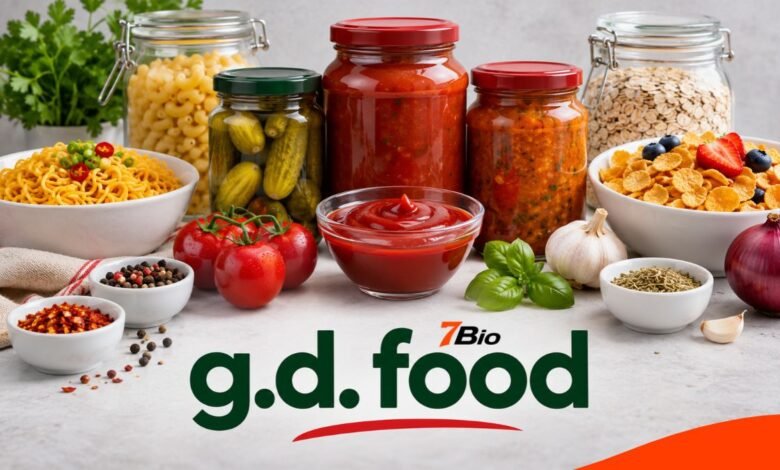
Searching for G.D.G.D. Foods can bring up several businesses with similar names. This article covers G.D. Foods Manufacturing (India) Private Limited, the Indian packaged-food producer behind the TOPS brand. Its products extend beyond tomato ketchup to pickles, culinary sauces, noodles, breakfast cereals, jams, and cooking ingredients. The name can otherwise suggest a restaurant or an unrelated manufacturer. AWL Agri Business acquired a majority stake in 2025, and the brand introduced further products in 2026.
Quick Answer: G.D. Foods is an India-based manufacturer and marketer of packaged food products best known for TOPS. The brand began with noodles in 1984, and AWL Agri Business completed the purchase of an 80% equity stake in the company in April 2025.
What Is G.D. Foods?
G.D. Foods operates in the fast-moving consumer goods, or FMCG, sector. In practical terms, that means it makes and sells packaged items intended for repeated household use rather than serving meals like a restaurant. Its flagship consumer-facing identity is TOPS. A shopper might therefore recognize the red TOPS logo on a sauce bottle without noticing the manufacturer’s corporate name on the label.
The company’s operations have historically been centered on India, with an especially established presence in the country’s northern markets. Its official TOPS website also describes exports to destinations beyond India. A corporate name and a consumer brand need not match.
The phrase g.d. food should not automatically be treated as the official name of every organization using the initials GD. For this guide, references to the company mean the India-based TOPS producer rather than similarly named food businesses elsewhere.
How the TOPS Brand Developed
A Noodle Product Became a Broader Pantry Range
The TOPS brand’s history begins in 1984, when noodles formed the starting point of its product offering. The company credits Brij M. Seth and Chand Seth with developing the business in its early years. Over time, TOPS expanded into products serving different parts of a meal, from breakfast ingredients and snack accompaniments to cooking aids and dessert preparations.
By expanding into sauces, noodles, and baking ingredients, G.D. Foods built a brand serving different kitchen needs.
The brand website describes a catalog containing more than 250 stock-keeping units, or SKUs. An SKU can represent a particular flavor or pack size rather than a distinct product family. Counts can change as the range evolves.
Which Products Does G.D. Foods Make?
The official TOPS range covers these categories, although local availability varies.
| Product Category | Examples of the Range | Typical Use |
|---|---|---|
| Sauces and ketchup | Tomato ketchup, culinary and speciality sauces | Dipping, seasoning or cooking |
| Pickles | Indian-style pickle varieties | Accompaniments to meals |
| Noodles and vermicelli | Packaged noodles and vermicelli | Quick meals and recipe ingredients |
| Jams and jelly | Fruit-based spreads and jelly products | Breakfasts and desserts |
| Breakfast cereals | Corn flakes and choco flakes | Breakfast servings |
| Baking and cooking essentials | Cake mixes, baking powder, vinegar and corn starch | Food preparation |
| Instant mixes and seasonings |
The Difference Between a Product Category and a Recipe
A packet of instant mix is not necessarily a ready-to-eat meal. Some products require water, oil, cooking, or other ingredients, and the preparation method can differ considerably between varieties. A culinary sauce’s heat level and ingredients also vary by product.
For readers comparing G.D. Foods products, the most reliable information is the label of the exact item being purchased. A general brand description cannot establish the ingredients, nutrition, or preparation instructions of every variant.
Who Owns G.D. Foods in 2026?
AWL Agri Business Limited, formerly known as Adani Wilmar Limited, became the majority owner following a transaction announced in March 2025. The agreement contemplated a staged acquisition, with an enterprise value of ₹603 crore. That figure represented the transaction’s stated enterprise valuation, not a consumer product price or a claim about current market value.
On 16 April 2025, AWL completed the first stage by acquiring an 80% equity stake in G.D. Foods Manufacturing (India) Private Limited. The remaining interest was covered by contractual arrangements for a later transfer. Therefore, it would be misleading to describe the April 2025 transaction as an immediate purchase of every outstanding share simply because the original agreement concerned a full acquisition. In some financial reporting, the accounting treatment of options over the remaining stake is discussed separately from the shares legally transferred.
Older coverage names the buyer Adani Wilmar; current documents use AWL Agri Business. These refer to the same renamed buyer, not separate transactions.
Why Did the Buyer Want TOPS?
AWL already had a substantial presence in everyday cooking staples through brands such as Fortune. Adding TOPS expanded its exposure to condiments and other value-added packaged foods. It also offered access to established distribution channels.
For G.D. Foods, the potential benefit was access to more distribution capacity and channels. That rationale does not mean every item is available everywhere or that ownership automatically improves quality.
What Changed for the Brand in 2026?
The acquisition is not the end of the story. In a 27 October 2026 release covering the quarter ended 30 September 2026, AWL reported that the TOPS portfolio had added Chili Oil and Multigrain Chocos. These launches reflect an effort to serve both savory cooking and breakfast or snacking occasions, rather than remaining concentrated in ketchup and pickles.
In the same release, AWL said the sauces and condiments business associated with G.D. Foods had recorded revenue growth of more than 30% year on year for the quarter, supported by similar underlying volume growth. It linked that performance particularly to sauces, instant noodles and vermicelli. This is a company-reported quarterly comparison, not a forecast, a lifetime growth rate or a result that should be assumed to continue indefinitely.
These updates show why older descriptions of a pending acquisition or a static product range are no longer sufficient. Importantly, AWL’s report concerns a defined quarter and a particular business grouping. It does not reveal sales for each TOPS product separately. Readers assessing G.D. Foods over time should compare like-for-like reporting periods and avoid interpreting growth in one product grouping as growth across every category.
Where Are TOPS Products Sold?
India remains central to the brand’s identity. The TOPS website also lists international markets, including Australia, Canada, Singapore, the United Arab Emirates and the United States. Its export presence does not mean every listed item is available in every city, nor does it confirm continuous availability through a particular retailer.
What Should UK Shoppers Know?
UK readers searching for g.d. food may encounter an imported TOPS product in an international grocery shop or through an online seller. However, verify UK retail availability rather than infer it from the brand’s broader export activity. Check whether the seller is established, whether the product is intended for the UK market, and whether the listing shows the actual pack size and version.
For any packaged food, read the product’s ingredients, allergen information, storage instructions and date marking. This is particularly important if you have an allergy, manage your salt or sugar intake, or need the food to meet a specific dietary requirement. When shopping online, the physical pack’s information should take priority over an incomplete marketplace description.
How to Compare Products Sensibly
Choosing a product from G.D. Foods works better when you start by matching the comparison to the meal you plan to prepare. For ketchup, that might mean sweetness, acidity, ingredients, nutrition, and pack size. For a pickle, the important questions may be its main vegetables or fruits, oil, salt content, and spice profile. For noodles or instant mixes, look at the cooking time, required additions, and number of servings.
Consider the unit price as well as the shelf price. A larger pack is not automatically better value if you’re unlikely to finish it within the recommended storage period after opening. Bundles do not always provide better value.
Dietary suitability should never be inferred from the manufacturer name alone. TOPS is a brand, not a blanket vegetarian, vegan, halal, gluten-free or allergen-free certification. Requirements must be checked on the individual product, and any certification claim should be supported by the relevant pack or an up-to-date confirmation from the manufacturer.
Practical Ways to Use the Different Categories
A household keeping a few versatile pantry ingredients could use a tomato sauce as a dip or cooking ingredient, a pickle alongside a cooked meal, and vermicelli in a recipe that calls for it. A baking mix may shorten preparation but still require eggs, milk or other additions depending on its formulation. These are illustrative uses, not claims that the products were independently tested or that all variants have identical instructions.
Choose the category first, then the flavor and pack size that suit your recipe.
How to Avoid Confusing Similar Company Names
The initials GD are used by more than one food-related business. A Singapore-registered entity called GD FOOD PTE. LTD. appears in business listings, while another India-based website uses the name G D Foods for products sold under Mercy and Nature’s Delight. Those names alone do not establish a corporate connection to TOPS.
When the intended subject is G.D. Foods Manufacturing (India), look for a direct reference to TOPS, its Indian corporate identity, or its relationship with AWL Agri Business. Checking the full legal name is particularly helpful for business inquiries and product verification.
FAQs
Is g.d. food a Type of Cuisine?
No. In this context, the term refers to an Indian packaged-food manufacturer, not a cuisine, eating style, or recipe. The company’s consumer brand is TOPS.
Who Started the TOPS Brand?
The brand dates back to 1984. Its official history credits Brij M. Seth and Chand Seth with developing the business, which first established itself through noodles.
Is TOPS the Same Company as Fortune?
No. TOPS and Fortune are distinct consumer brands with different product histories. They are connected through AWL Agri Business’s ownership of the company behind TOPS and AWL’s own wider food portfolio.
Does AWL Own 100% of G.D. Foods?
The acquisition agreement envisaged a full purchase over multiple stages. The verified first closing transferred 80% of the equity in April 2025; the remaining shareholding was addressed through subsequent contractual options. It is best not to confuse that legal stake with accounting descriptions of control.
How Can I Identify the Right TOPS Product Online?
Check the precise product name, quantity, ingredient details, and the manufacturer shown on the listing or packaging. Compare those details with the current product information, and use a reputable retailer rather than a generic image or an unusually vague description.
Final Takeaway
For readers investigating G.d. Food, the most useful starting point is its relationship with TOPS. The Indian business grew from a noodle-led brand into a collection of packaged kitchen products. Majority ownership changed in 2025, and the product range continued to evolve in 2026. That combination of brand history, current ownership, and practical buying information describes the company more accurately than a vague label like “food supplier.” Check individual labels and local availability before choosing a particular item, and distinguish this manufacturer from other businesses with similar initials.