HEP2go: A Complete Guide to Home Exercise Programmes, Features and Benefits
An informative guide to the rehabilitation platform, explaining how healthcare professionals create personalized exercise plans and what patients should know before following them.

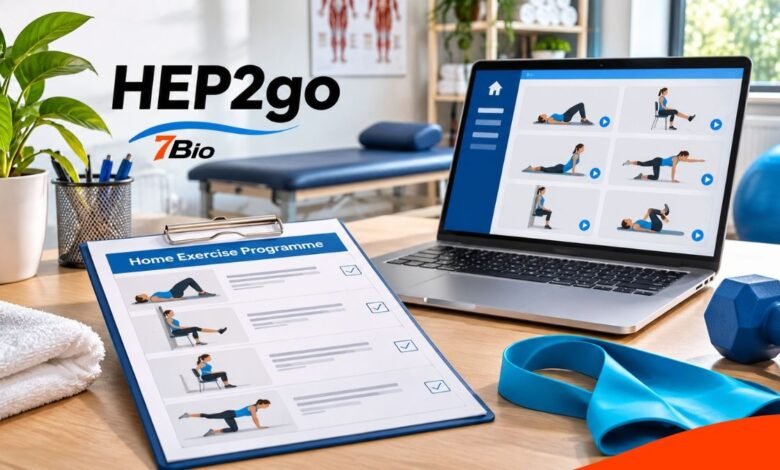
HEP2go is an online platform that helps rehabilitation professionals create, customize, and share home exercise programs. It provides a searchable collection of therapeutic exercises, illustrated instructions and tools for preparing exercise handouts. Physiotherapists, occupational therapists and other rehabilitation professionals can use the platform to organize exercises that patients perform outside their appointments.
The service addresses a common challenge in rehabilitation: patients need clear instructions for continuing their prescribed exercises at home. A printed or digitally accessible program can explain which movements to perform, how frequently to complete them, and what the treating professional expects.
The platform offers free and paid membership options, although the availability of specific features depends on the account.
What Is HEP2go?
HEP2go is a web-based Home Exercise Program (HEP) builder designed primarily for rehabilitation professionals. The abbreviation HEP stands for Home Exercise Program, a term commonly used in physiotherapy and other rehabilitation services.
A home exercise program is an organized set of movements or activities prescribed for someone to perform independently between clinical appointments. Depending on the patient’s assessment, its purpose may involve maintaining joint movement, developing muscle strength, improving balance or supporting functional recovery.
Rather than preparing every exercise instruction from scratch, a clinician can search an existing exercise library, choose suitable movements, and arrange them into a personalized program.
The software helps with exercise selection, documentation and communication. It does not independently diagnose injuries, assess a patient’s condition or determine whether a particular movement is medically appropriate.
The distinction matters: a digital exercise library is a clinical support resource, not a substitute for a qualified professional’s judgment.
How Does HEP2go Work?
The platform follows a relatively straightforward process. A rehabilitation professional searches for exercises, chooses movements appropriate to the patient’s treatment plan, adjusts the instructions, and produces a program for the patient.
Searching the Exercise Library
The exercise library contains therapeutic movements relating to areas such as flexibility, strengthening, mobility, balance and rehabilitation.
Clinicians can search for relevant exercises and review the available instructions before adding them to a program.
For example, a physiotherapist preparing a knee rehabilitation plan might search for exercises involving the quadriceps, knee movement or functional leg strengthening. The actual selection would depend on the patient’s condition, symptoms, treatment stage and any medical restrictions.
A searchable library can make program preparation more efficient, particularly when a practitioner regularly provides written exercise instructions.
Customizing Exercise Instructions
A central feature of HEP2go is the ability to adapt exercise details for an individual program.
Exercise handouts can include information such as repetitions, sets, hold durations and frequency. These details tell the patient how the prescribed activity should be performed.
A practitioner may also need to explain positioning, equipment requirements, permitted movement ranges or individual precautions.
Exercise dosage should always reflect clinical assessment. A repetition count displayed in a software library is not automatically suitable for every patient.
Preparing a Home Exercise Program
Once suitable exercises are selected, the practitioner can assemble them into a program.
The resulting document brings individual exercises together in a more convenient format than separate verbal instructions.
A well-prepared program should communicate what the patient needs to do, explain any important precautions, and identify when professional advice is required.
Printing and Sharing Instructions
HEP2go supports printable exercise programs, allowing patients to take a physical copy home.
Its Pro features also include electronic sharing options, such as email, text-message and QR-code delivery, according to published descriptions of the service.
These methods provide different ways for patients to access their instructions. A printed copy may suit someone who prefers paper, while electronic access may be more convenient for a patient who regularly uses a smartphone.
The exact sharing options should be checked against the user’s current membership.
Main Features of HEP2go
The platform focuses on practical tools for preparing and distributing rehabilitation instructions rather than providing a complete clinical management system.
Illustrated Therapeutic Exercises
The exercise library provides written guidance supported by visual material.
Images can help patients recognize the starting position of a movement and understand the general action required. Some exercise content also includes video references.
However, an illustration cannot identify whether a patient is compensating incorrectly, experiencing unusual symptoms, or attempting an exercise that is unsuitable for their condition.
Custom Exercise Creation
The platform supports the creation of custom exercises, enabling professionals to prepare content that may not already exist in the standard library.
This can be useful when a clinician wants to provide specific instructions or adapt an exercise for a particular treatment approach.
Custom content should be reviewed for accuracy, clarity, and appropriate patient use before distribution.
Saved Exercise Routines
Saved routines allow clinicians to organize commonly used combinations of exercises.
For example, a practitioner may prepare a reusable collection of general mobility exercises and then modify the selection for an individual patient.
This can reduce repetitive administrative work. However, a saved routine should never replace an individual clinical assessment.
Printable Program Documents
Printable handouts remain a useful feature of rehabilitation care.
A printed program can be kept in a familiar location and reviewed without requiring a device, an internet connection or an application.
This accessibility may be particularly helpful for patients who are less comfortable navigating digital services.
Electronic Program Delivery
Depending on membership, electronic sharing can make it easier to distribute exercise information without relying entirely on paper.
Before using electronic delivery, clinicians should consider whether the communication method is permitted by their organization and suitable for the information being shared.
HEP2go Free vs Pro: What Is the Difference?
HEP2go operates with free and premium membership options.
The free version is designed around essential exercise-program creation, while Pro provides additional convenience features for practitioners who regularly prepare and distribute rehabilitation materials.
| Feature | Free Membership | Pro Membership |
|---|---|---|
| Exercise library | Available | Available |
| Custom exercise creation | Available | Available |
| Printable exercise programmes | Available | Available |
| Saved routines | Limited | Expanded or unlimited |
| Email and SMS delivery | Check current restrictions | Pro sharing features |
| QR-code sharing | Check current restrictions | Supported |
| Additional workflow tools | Limited | Expanded |
Membership functionality and restrictions may change. Check the current official membership information before subscribing.
Is the Free Version Enough?
For a clinician who mainly needs to prepare occasional printable programs, the free membership may offer sufficient functionality.
It provides a useful starting point for evaluating the exercise library and deciding whether the platform fits an existing clinical workflow.
A larger practice preparing many programs may benefit from additional tools, but the appropriate choice depends on usage rather than subscription price alone.
Is Pro Worth Paying For?
The paid option is more relevant when a practitioner needs expanded routine storage, additional distribution methods, or more flexibility in preparing exercise documents.
Before purchasing, consider how frequently programs are created, whether electronic delivery is necessary, and how the service fits the clinic’s information-governance requirements.
Current subscription prices and billing terms should be confirmed directly with the provider rather than relying on older third-party price listings.
How to Create an Exercise Program
A clinician preparing a program can follow this general workflow. Individual interface labels may differ as the software changes.
Step 1: Create an account or sign in. Access the platform using the appropriate professional account and review the available membership features.
Step 2: Search for relevant exercises. Use the exercise library to identify movements that match the patient’s clinically determined requirements.
Step 3: Review each exercise. Check the starting position, instructions, movement requirements, and any limitations before including it.
Step 4: Customize the program. Enter the prescribed repetitions, sets, hold durations and frequency. Include individual guidance where appropriate.
Step 5: Prepare the final handout. Arrange the selected exercises into a program and review the document for accuracy.
Step 6: Share and explain the plan. Print or distribute the instructions using an available, approved method. Demonstrate unfamiliar movements and confirm that the patient understands what to do.
Step 7: Review progress clinically. Reassess the program when necessary rather than assuming the original instructions remain appropriate throughout recovery.
This workflow illustrates how the software can support care without replacing assessment, supervision, or professional decision-making.
Who Can Benefit From the Platform?
HEP2go is primarily useful to rehabilitation professionals who provide structured exercise instructions.
Physiotherapists
Physiotherapists frequently prescribe activities intended to support joint movement, strength, balance and physical function.
A home exercise builder provides a convenient format for recording those instructions and explaining them to patients.
In the UK, physiotherapy may include exercises between appointments as part of a wider treatment plan.
Occupational Therapists
Occupational therapists may use exercise-based activities when they are appropriate to a person’s functional goals and within the practitioner’s scope of practice.
Clear written instructions can support activities that patients need to practice outside therapy sessions.
Sports Rehabilitation Professionals
Professionals working with sports injuries may use exercise documents to explain prescribed movements between rehabilitation appointments.
The correct exercises and their progression depend on clinical assessment and the demands of the individual’s activities.
Patients Following Prescribed Programs
Patients benefit indirectly when their clinician provides clear, accessible instructions.
A suitable program may reduce confusion about exercise names, movement positions, and prescribed frequencies.
It should also make clear whom the patient should contact if they experience unexpected symptoms or cannot perform an activity correctly.
Benefits and Limitations of HEP2go
The platform has practical strengths, but its value depends on how it is used.
Benefits for Clinical Workflows
One advantage is consistent presentation. Exercise instructions can be organized into a recognizable format, potentially reducing the need for clinicians to repeatedly write out common movements.
Customization allows programs to contain instructions relevant to the individual’s treatment.
The availability of printed material also supports patients who prefer an offline reference.
Free access to core program-building tools may be helpful to individual practitioners or smaller services evaluating their options.
Limitations to Consider
The platform should not be treated as a complete rehabilitation monitoring system.
A printed handout does not establish whether exercises have been completed correctly, whether the patient is making progress or whether symptoms have changed.
Clinicians may need separate systems for clinical records, appointments, progress monitoring and communication.
Organizations should also verify integration capabilities, accessibility arrangements, data protection safeguards and contractual requirements before adopting a software service.
No exercise platform can guarantee recovery or remove the need for appropriate clinical follow-up.
Is HEP2go Safe for Patients?
The safety of a home exercise program depends primarily on the appropriateness of the prescribed movements, the patient’s health circumstances and the quality of the instructions.
An exercise that is suitable for one person may be unsuitable for another, even when both are experiencing discomfort in the same part of the body.
For example, two people recovering from knee problems may require different movement restrictions, loading levels, or progression schedules.
Patients should follow the specific instructions provided by their treating professional rather than choosing additional exercises solely because they appear in an online library.
Some discomfort during rehabilitation may be expected, depending on the condition and the clinician’s advice. However, significant or worsening pain, unusual symptoms, or feeling unwell should prompt the patient to stop the activity and seek appropriate medical guidance.
Anyone recovering from surgery, managing a significant injury or living with complex health conditions should obtain individual advice before starting unfamiliar rehabilitation exercises.
Patient Privacy and Information Security
Healthcare organizations must also consider confidentiality.
Before sharing identifiable patient information through a third-party platform, a practice should assess the relevant privacy arrangements, access controls and legal obligations.
UK organizations should consider their responsibilities under applicable data protection law, including UK GDPR where relevant.
A service being useful for clinical exercise handouts does not automatically establish that every method of storing or sharing patient information is appropriate.
HEP2go Compared With Other Exercise Program Tools
HEP2go is one option within a wider category of rehabilitation exercise software.
Other providers, including Physitrack and MedBridge, offer home exercise program tools alongside different combinations of clinical workflow, patient engagement, and practice-management functionality.
The most suitable platform depends on what a service actually needs.
| Consideration | Basic HEP Builder | Broader Rehabilitation Platform |
|---|---|---|
| Main purpose | Prepare exercise instructions | Support exercises and additional clinical workflows |
| Printed handouts | Core function | Commonly available |
| Digital communication | Depends on plan | Depends on provider |
| Progress monitoring | May be limited | May offer additional tools |
| Clinical integration | Must be verified | Varies by system |
| Main decision factor | Ease of programme creation | Required functionality and compatibility |
This is a comparison of software approaches rather than a claim that every provider offers the same features.
A small practice focused on printable handouts may prioritize simplicity. A larger organization may require additional documentation systems, reporting tools, or technical integrations.
Comparing these requirements before subscribing is more useful than choosing software solely because it has a large exercise library.
Common Mistakes When Using Home Exercise Software
The first mistake is treating an exercise library as an automatic treatment recommendation. Software may provide instructions, but the clinician remains responsible for evaluating whether the movement is suitable.
Another problem is distributing exercise sheets without explaining important details. A patient might understand the basic movement but remain uncertain about the correct frequency, permitted resistance, or symptom precautions.
Generic programs can also create difficulties when they are reused without reviewing a patient’s individual needs.
Finally, clinicians should avoid assuming that providing instructions guarantees that the patient will follow them.
Clear communication, appropriate review and realistic program design remain important parts of rehabilitation care.
FAQs
1. What is HEP2go used for?
HEP2go is used to create, customize, and distribute home exercise programs. Rehabilitation professionals can select exercises from a library and prepare instructions for patients to follow between appointments.
2. Is HEP2go completely free?
It offers a free membership with core exercise-program features. Additional functionality is available through Pro. Users should check the current membership details for restrictions and subscription terms.
3. Can patients use HEP2go without being physiotherapists?
Patients may receive exercise instructions created through the platform and access them using the delivery method provided by their clinician. They should follow professional guidance rather than independently selecting rehabilitation exercises for an undiagnosed condition.
4. Can exercise programs be printed?
Yes. Printable home exercise programs are a central feature. They allow clinicians to provide written and illustrated instructions for patients who prefer physical handouts.
5. Does HEP2go replace a physiotherapist?
No. It is an exercise-program preparation tool, not a diagnostic service or substitute for professional care. Clinical assessment, treatment decisions, exercise progression and appropriate follow-up remain the responsibility of qualified healthcare professionals.
Final Takeaway
HEP2go provides a practical way for rehabilitation professionals to organize therapeutic exercises into accessible home programs. Its searchable exercise library, customization options, and printable handouts address everyday needs in physiotherapy and related services.
The free membership can be a useful starting point, while Pro offers additional workflow and sharing capabilities.
For patients, the most important consideration is not the platform itself but the quality of the prescribed program and the guidance accompanying it.
When used appropriately, home exercise software can support communication and continuity of care. Its role is to make professional instructions easier to prepare and understand, not to replace individual clinical judgment.