Wenrath Explained: The Real Location, History and Meaning Behind the Name
Discover the connection between Wenrath and Wehnrath, a small German locality with a surprisingly significant business presence.

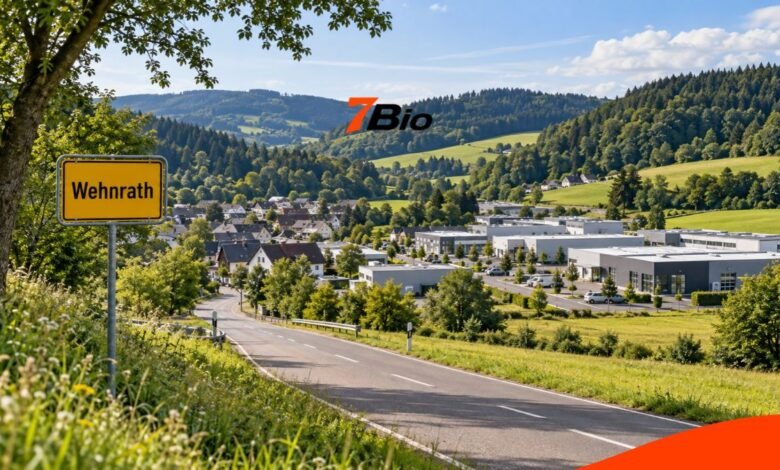
Searching for Wenrath can lead to an unexpected discovery. Although the word may initially appear to be a surname, business name, or unfamiliar online term, documented references link it to Wehnrath, a small locality in the municipality of Reichshof, Germany.
The distinction between the two spellings matters. Current municipal information uses Wehnrath, while an archived 2012 German Bundestag article uses the shorter spelling to describe the same general location. Beyond this naming question lies a place with historical roots, established businesses, and connections to the international cycling industry.
Understanding the locality requires looking at its geographical position, administrative records, and economic development rather than relying on speculative definitions.
What Is Wenrath?
Wenrath is a spelling documented in connection with Wehnrath, a locality in the German federal state of North Rhine-Westphalia. It is part of Reichshof, a municipality in the Oberbergischer Kreis district.
The municipality consistently identifies the settlement and its commercial area as Wehnrath. However, the shorter form has appeared in institutional reporting, most notably in a German parliamentary article discussing a visit to bicycle tire manufacturer Schwalbe.
This establishes an identifiable geographical connection without proving that the spellings have always been interchangeable or that Wenrath was historically the official name.
For readers investigating a German company address, regional history or an unfamiliar place reference, Wehnrath in Reichshof is therefore the most useful starting point.
The word alone should not be treated as evidence of a particular celebrity, technology platform, or commercial brand. Other uses may exist, but each would require its own supporting information.
Where Is Wenrath Located in Germany?
Wehnrath lies in the Oberbergisches Land, a region of North Rhine-Westphalia characterized by wooded hills, smaller settlements, and a mix of rural and industrial landscapes.
The locality is part of Reichshof, a municipality covering about 114 square kilometers and containing 106 settlements. The administrative center is Denklingen, and the surrounding area includes established residential communities, businesses, and recreational facilities.
Wehnrath lies northeast of the Wiehl reservoir, with Gummersbach as one of the better-known nearby urban centers.
Its postal code is 51580, which is used for addresses within Reichshof.
Although relatively small in residential terms, the locality benefits from access to important regional roads. Reichshof’s municipal economic information identifies the A4 motorway and the B256 federal road as significant transport connections for its industrial area.
These links are particularly relevant for companies moving goods between regional suppliers, logistics centers and national markets.
Wenrath and Wehnrath: Understanding the Spelling Difference
One of the most interesting aspects of researching the name is how a small spelling difference changes the available information.
The German Bundestag published a 2012 report on the constituency activities of parliamentarian Klaus-Peter Flosbach. During the reported visit, he traveled to Schwalbe’s premises in a location described as Reichshof-Wenrath.
The report also referred to the local commercial district using the shorter spelling.
By comparison, official municipal planning documents, population tables and business information identify the locality as Wehnrath.
The evidence shows that both forms appear in published material about the same area. However, a single historical article is not enough to establish a formal name change.
For modern addresses, mapping, municipal correspondence, and business research, the current official spelling is Wehnrath.
This distinction is especially helpful when older documents produce different results from contemporary business directories.
The Historical Background of Wehnrath
The settlement’s history predates its modern business district by several centuries.
Historical summaries of the locality trace an early documented reference to 1357, when a name recorded as Wenegenroede appeared in connection with a person named Eckhardt and the political affairs of the region.
That historical form is considerably different from the modern spelling. Such changes are not unusual in place-name history, particularly when documents span different centuries and spelling conventions.
Nevertheless, identifying an early form is not the same as establishing a definitive linguistic translation. A precise explanation would require specialist historical and linguistic evidence.
The wider history of Reichshof also provides useful context. The region developed through changing political jurisdictions, rural communities and local economic activities long before modern industrial estates became prominent.
Over time, improvements in road infrastructure and planned commercial development expanded the area’s economic role.
Understanding this progression helps explain why a relatively small settlement appears in records involving established international companies.
How Wehnrath Developed into an Important Business Location
Wehnrath’s modern significance is closely tied to Gewerbegebiet Wehnrath, its organized commercial and industrial district.
Municipal development records show that the area expanded through several planned stages rather than being established as one large project.
The first major planning section received approval in 1990, followed by another in 1992. Additional sections were approved in 1997 and 2002.
This phased approach allowed industrial infrastructure and commercial premises to develop as businesses were attracted to the location.
Later amendments to the planning framework demonstrate that the district continued to require adjustments as business requirements and land-use arrangements evolved.
A key part of this development was cooperation between Reichshof and the neighboring municipality of Bergneustadt. Their intermunicipal business park, Wehnrath-Sinspert, helped establish a larger economic area.
The broader municipality identifies machinery manufacturing, metalworking, plastics processing, electronics, and construction as key economic activities.
The location is noteworthy for the contrast between its relatively small residential community and its much larger industrial presence.
The commercial district’s significance cannot be understood simply by looking at the village’s population.
The Connection Between Wehnrath and Schwalbe
Perhaps the best-known business in the area is Ralf Bohle GmbH, the company behind the Schwalbe bicycle tire brand.
The company identifies its headquarters at Otto-Hahn-Straße 1, 51580 Reichshof-Wehnrath.
Schwalbe supplies bicycle tires and tubes and has developed an international presence through its products and commercial operations.
Company publications state that it completed its headquarters in Reichshof-Wehnrath in 1995. This places the company’s development within the wider period of investment in the local business district.
The headquarters provides a particularly useful reference when investigating the spelling question because it appears in both contemporary corporate information and the older German Bundestag report.
Schwalbe’s development has also involved investment in facilities, logistics and sustainability-related projects.
This connection illustrates an important feature of smaller European industrial communities: an internationally recognized brand may operate from a locality that remains largely unfamiliar outside its region.
Consequently, people searching for Schwalbe’s headquarters, bicycle industry information, or related corporate history may encounter the Wehnrath name even when they are not researching German geography.
Population and Community Life
Despite its economic significance, Wehnrath remains a relatively small residential locality.
According to Reichshof’s published population records, the settlement had 286 residents on 31 December 2024, compared with 295 at the end of 2023.
These figures are historical snapshots, not estimates of the population in October 2026.
Its small population does not mean that the area has limited daily activity. Industrial premises attract workers, deliveries, suppliers and visitors from surrounding communities.
This distinction is important when interpreting local statistics. The number of people living within a settlement does not necessarily reflect how many people travel there for employment.
Residents also belong to the wider Reichshof community, whose public facilities, schools, administration and recreational services serve numerous smaller settlements.
The surrounding wooded countryside also shapes the region’s identity, creating a contrast between the natural landscape and the organized commercial zones.
Transport, Infrastructure and Regional Connections
Transport access helps explain why commercial development has been practical in this part of Germany.
Reichshof’s municipal business information places the A4 motorway about three kilometers from the commercial area and the B256 federal road about two kilometers away.
The same information identifies Cologne/Bonn Airport and the Rhine port at Cologne-Niehl as wider transport connections.
These figures describe infrastructure access from the business area and should not be mistaken for independently verified distances from every residential address.
For manufacturers and distributors, road access can influence delivery arrangements, employee commuting and relationships with suppliers.
Regional accessibility also matters to smaller communities because employment opportunities may be distributed across several neighboring settlements rather than concentrated in one urban center.
Improvements in transport and business infrastructure can therefore have consequences beyond individual companies, affecting how people work and travel throughout the district.
A Recent Example of Business Innovation in Wehnrath
The locality’s business activity is not confined to traditional manufacturing.
In April 2026, German broadcaster WDR reported on a successful drone test flight at MED LaborUnion GmbH’s premises in Reichshof-Wehnrath.
The project explored whether a drone could transport medical laboratory samples between locations in the region.
The report explained that the initial test examined the aircraft’s take-off and landing procedures, with additional trials planned before decisions about regular operations.
This is an interesting example because it connects an established industrial location with a newer logistical application.
However, the reported test should not be interpreted as confirmation that a permanent commercial drone-delivery service was subsequently introduced.
Distinguishing a completed experiment from a fully operational service matters when reporting on emerging technology.
For Wehnrath, the project offers another illustration of the different types of businesses and activities associated with the commercial district.
What Does the Name Wenrath Actually Mean?
No sufficiently established linguistic evidence provides a definitive literal translation of the exact spelling Wenrath.
It may be tempting to divide the word into possible German linguistic elements and assign it a historical meaning. Without specialist evidence, however, such an interpretation would be speculative.
A more defensible explanation concerns documented usage rather than invented etymology.
The available material establishes that the shorter spelling appeared in published reporting connected with Wehnrath, while modern municipal records use the longer form.
For anyone studying historical place names, an early spelling such as Wenegenroede may provide a starting point for further investigation, but it does not automatically prove a particular modern translation.
The correct interpretation also depends on the original context. A word appearing in a family record, company address, or online profile may require a different investigation.
How to Research the Name Accurately
When an unfamiliar name appears in a document, context usually provides the most useful clues.
If the reference includes Reichshof, Otto-Hahn-Straße, Schwalbe or the postal code 51580, the German geographical connection is particularly strong.
Municipal publications help confirm official spelling, administrative boundaries, population figures, and development plans.
Company documents provide stronger evidence when the question concerns a commercial address, headquarters or business activity.
Historical reports can establish how a name appeared at a particular time, although they may not confirm its official administrative status.
If the word occurs as a surname, it should be investigated separately through appropriate historical or genealogical records. A geographical spelling resemblance does not establish a family connection.
Comparing sources this way reduces the risk of confusing people, places, and organizations with similar names.
Why Wehnrath Is Worth Understanding
The most revealing aspect of the name is the relationship between a modest residential settlement and its wider economic significance.
On one hand, Wehnrath is part of a rural German municipality made up of numerous small communities. On the other hand, its industrial area has attracted businesses whose operations extend far beyond the region.
The Schwalbe headquarters demonstrates how international commercial activity can become associated with a comparatively little-known location.
Municipal planning records also show that the area’s economic development has involved decades of organized investment rather than a single recent initiative.
More recent business activity, including the 2026 laboratory-drone trial, shows that the locality can still appear in discussions about changing industrial and logistical practices.
These details explain the name more meaningfully than describing it as a mysterious internet keyword.
Final Takeaway
Wenrath is best understood through its documented association with Wehnrath, a locality within Reichshof in North Rhine-Westphalia, Germany.
The shorter spelling appears in an archived parliamentary report, while current municipal and corporate information consistently uses Wehnrath.
Although the village has a small population, its established commercial district and connections to businesses such as Schwalbe give it greater economic importance.
For accurate modern geographical or business research, Wehnrath is the preferred spelling. The precise linguistic meaning of Wenrath remains less certain and should not be presented as fact without stronger historical evidence.
FAQs
1. What is Wenrath?
Wenrath is a spelling documented in connection with Wehnrath, a small locality in Reichshof, Germany. Current municipal records use Wehnrath, while the shorter spelling appears in an archived German Bundestag article.
2. Where is Wenrath located?
The associated locality, Wehnrath, is located in Reichshof, within the Oberbergischer Kreis district of North Rhine-Westphalia, Germany. The postal code used for the area is 51580.
3. What is the difference between Wenrath and Wehnrath?
Wehnrath is the spelling used in modern official municipal records and company addresses. Wenrath appears in some published historical reporting concerning the same location. The available evidence does not establish a formal renaming.
4. What is Wehnrath famous for?
Wehnrath is best known for its commercial and industrial district. One of its best-known business connections is Ralf Bohle GmbH, the company behind the internationally recognized Schwalbe bicycle tire brand.
5. What does the name Wenrath mean?
No reliable linguistic evidence has conclusively established a single literal meaning. The clearest documented interpretation is its geographical association with Wehnrath in Germany, rather than a confirmed standalone dictionary definition.