
Wuschitz: Who Is Stefanie Wuschitz and Why Does Her Work Matter?
A researched profile of the Austrian artist and researcher connecting feminist hacking, open technology, critical making and the politics of digital systems.

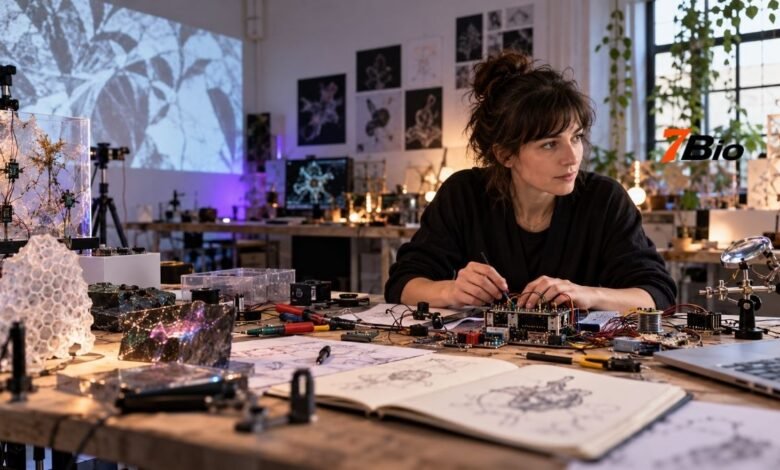
In an art-and-technology context, the search term wuschitz most clearly points to Stefanie Wuschitz, an Austrian media artist and artistic researcher whose work examines how technology intersects with gender, power, access, and culture. Rather than approaching computers and electronic systems simply as neutral tools, she investigates the social assumptions and material structures behind them.
Her career connects artistic practice with academic research, feminist hackerspaces, open-source culture and collaborative technology-making. Wuschitz studied transmedia art, continued her education at New York University, and later completed doctoral research focused on feminist hackerspaces. She also founded Mz* Baltazar’s Laboratory, a Vienna-based feminist art and technology collective.
More recently, her research has expanded into questions surrounding digital colonialism, particularly in Indonesia. As of 2026, the Academy of Fine Arts Vienna lists Wuschitz as project leader of a four-year FWF-supported research project scheduled to run until October 2027.
Quick Answer
Wuschitz generally refers to Stefanie Wuschitz when the search is connected with art, technology, or feminist research. She is a Vienna-based artist and researcher whose work includes feminist hacking, critical making, open technology, and research into the political and social structures embedded in digital systems.
Stefanie Wuschitz at a Glance
| Detail | Verified Information |
|---|---|
| Full name | Stefanie Wuschitz |
| Born | 1981 |
| Field | Media art and artistic research |
| Based in | Vienna, Austria |
| Key research areas | Feminist hacking, technology, gender, power and decolonisation |
| Education | University of Applied Arts Vienna, New York University, Vienna University of Technology |
| Organisation | Founder of Mz* Baltazar’s Laboratory |
| Current research connection | Academy of Fine Arts Vienna |
| Current major project | Data Colonialism in Indonesia |
| Project period | November 2023–October 2027 |
Institutional and gallery biographies identify Wuschitz as a media artist, researcher and practitioner working at the intersection of art and technology.
Who Is Stefanie Wuschitz?
Stefanie Wuschitz is an Austrian artist whose professional identity does not fit neatly into a single conventional discipline. Her practice crosses media art, research, education, collaborative technology and socially engaged artistic production.
Her academic development provides important context for understanding that approach. Berlin University of the Arts records that she graduated in Transmedia Arts in 2006 and completed a master’s program through New York University’s Interactive Telecommunications Program in 2008. She subsequently became a Digital Art Fellow at Umeå University in Sweden.
That combination of art and technology became central to her later work. Rather than separating technical knowledge from questions about society, Wuschitz developed projects that ask who creates technology, whose experiences influence design, and who may be excluded from technical spaces.
Wuschitz and the Development of Feminist Hacking
One of the most recognizable ideas associated with Wuschitz is feminist hacking.
In this context, “hacking” is broader than the popular association with breaking into computer systems. It can describe experimenting with technologies, modifying tools, learning how systems work, and creating alternative ways to build or share technical knowledge.
Wuschitz connects these practices to questions of gender, participation, and unequal access. Her doctoral research, Feminist Hackerspaces: A Research on Feminist Space Collectives in Open Culture, was completed at the Vienna University of Technology in 2014.
The significance of this work lies in treating technical environments as social environments too. A workshop, hackerspace, or maker community is not defined only by its computers and equipment; it also develops through its rules, culture, teaching practices, and assumptions about who belongs there.
This gives Wuschitz’s work a wider relevance beyond contemporary art. It connects with conversations about technology education, participation, community-based learning and the distribution of technical expertise.
Mz* Baltazar’s Laboratory
A central part of Wuschitz’s career has been Mz Baltazar’s Laboratory*, an art and technology initiative associated with feminist approaches to making.
Institutional biographies date the Vienna feminist hackerspace to 2009, while accounts of its development describe Wuschitz as a foundational figure. The organization has supported workshops, exhibitions, and collaborative projects that bring together art, electronics, open hardware, and feminist practice.
Its importance is easier to understand when viewed as more than a physical workshop. The project provides a setting where technical experimentation becomes a form of cultural participation.
Participants can engage with electronics or digital tools while simultaneously questioning conventional assumptions about expertise, technology and authorship.
Why the Laboratory Model Matters
Traditional technology environments can emphasize individual expertise and finished products. A collaborative laboratory can instead make experimentation, learning and knowledge exchange part of the work itself.
That approach helps explain why Wuschitz’s artistic practice regularly moves between workshops, research projects, installations, drawing and collaborative programs.
Art, Open Source and Critical Media Practice
Another concept repeatedly associated with Wuschitz is critical media practice.
The phrase describes an approach in which people do more than use media technologies. They examine how those technologies are created and what political, cultural, or economic assumptions they may carry.
Institutional profiles connect Wuschitz’s work with feminist hacking, open-source development and peer production.
Open-source thinking matters here because it challenges the idea that technology must remain a closed system controlled exclusively by manufacturers or specialists. In artistic settings, opening systems to investigation can also become a way to ask broader questions about ownership, participation, and access.
For Wuschitz, this critical perspective is closely connected to making things. Research therefore becomes material: circuits, workshops, drawings, films and installations can all function as ways of exploring a research question.
From Feminist Hacking to Feminist Hardware
Her work has also contributed to discussions around feminist hardware.
The Feminist Hardware Festival, organized through Mz* Baltazar’s Laboratory, brought artists together to rethink the materials and social relationships involved in electronic hardware. The program explored alternatives involving decentralized, renewable, reusable, and unconventional materials.
This expands feminist technology research from software and participation into the physical supply chain of digital devices.
A smartphone or computer may appear immaterial through apps and interfaces, yet every device depends on metals, plastics, manufacturing processes, energy, and labor. Projects associated with Wuschitz encourage audiences to consider those hidden layers.
One example is Clay PCB, created with artist and researcher Patrícia J. Reis. The project investigates alternative forms of hardware and was nominated for the S+T+ARTS Prize. Its framing connects environmental concerns, material extraction and feminist approaches to technology.
Research in Indonesia and Digital Colonialism
Wuschitz’s more recent research extends these questions beyond individual devices toward global digital power.
The Academy of Fine Arts Vienna lists her as the project leader for Data Colonialism in Indonesia: Artist’s Strategies against Digital Colonialism. The four-year project began on 1 November 2023 and is scheduled to continue until 31 October 2027. The Austrian Science Fund’s Elise Richter PEEK program supports it.
The project examines digital colonialism through arts-based research and builds on previous work concerning coded feminisms in Indonesia.
This direction adds another dimension to the meaning of wuschitz as a research keyword. Her work is no longer concerned only with access to technology or participation in technical spaces. It also asks how digital infrastructures can interact with history, global power, and the representation of communities.
What Does “Digital Colonialism” Mean Here?
In broad terms, digital-colonialism research examines situations in which technological infrastructures, platforms or systems can reproduce unequal relationships of control, extraction or representation.
Wuschitz approaches these questions through artistic research rather than treating them purely as abstract technological theory.
The Academy’s description of the Indonesia project explains that interviews and analog archival material are transformed into animated stories and visual forms, providing a way to communicate research while respecting participants’ privacy.
Why Wuschitz’s Work Is Distinctive
Three characteristics make Wuschitz’s practice particularly useful for understanding contemporary technology debates.
First, she connects technical practice with social questions. Technology is examined through who creates it, who participates, and who holds power.
Second, she combines theory with physical experimentation. Workshops, electronics, hardware, art and collaborative making become research methods rather than decorative additions to academic work.
Third, her research has moved across local and international contexts. Work connected with Vienna, Sweden, Germany, the United States, and Indonesia shows how questions about technology and participation can change with place and history. Her documented research appointments have included institutions in Vienna, Berlin, and the University of Michigan.
That breadth is more informative than simply describing Wuschitz as either an artist or an academic researcher. The interaction between those roles is central to her practice.
Common Misconceptions About Wuschitz
Searching for Wuschitz can be ambiguous because it is a surname and does not automatically identify one person.
However, current search results specifically about art, feminist technology, hacking, critical making, and digital colonialism overwhelmingly point to Stefanie Wuschitz.
Another possible misunderstanding concerns the word “hacking.” Her documented work focuses on feminist hacking, critical making, open-source technology, and artistic practice. It should not be confused with malicious computer intrusion.
Finally, her projects should not be reduced to conventional technology advocacy. A central purpose of the work is critical examination: questioning technologies, their material origins and the social structures surrounding them.
Frequently Asked Questions
Who is Wuschitz?
In art-and-technology searches, Wuschitz usually refers to Stefanie Wuschitz, an Austrian media artist and artistic researcher based in Vienna.
What is Stefanie Wuschitz known for?
She is known for research and artistic practice involving feminist hacking, critical media practices, open-source technology, feminist hardware, and the decolonization of technology.
What is Mz* Baltazar’s Laboratory?
Mz* Baltazar’s Laboratory is a Vienna-based feminist art and technology collective and hackerspace focused on collaborative experimentation, open technology, workshops, and critical approaches to making.
Where did Stefanie Wuschitz study?
Institutional biographies document studies in Transmedia Art at the University of Applied Arts Vienna, a master’s at New York University’s Interactive Telecommunications Program, and doctoral research at Vienna University of Technology.
What is Wuschitz researching now?
As of 2026, the Academy of Fine Arts Vienna lists Stefanie Wuschitz as leading the research project Data Colonialism in Indonesia: Artist’s Strategies against Digital Colonialism, scheduled through October 2027.
Is Wuschitz primarily an artist or a researcher?
Both descriptions are appropriate. Institutional sources describe her as a media artist or arts-based researcher whose projects deliberately combine artistic production with academic and social research.
Final Takeaway
The keyword wuschitz opens onto a body of work that challenges a simple division between art and technology. Stefanie Wuschitz has developed a practice in which circuits, hackerspaces, drawing, collaborative workshops, and academic research can all become tools for investigating power.
From founding Mz* Baltazar’s Laboratory and doing doctoral work on feminist hackerspaces to researching feminist hardware and digital colonialism in Indonesia, a consistent question runs through her career: technology is not only something people use—it is also something societies design, organize, distribute, and interpret.
That perspective makes Wuschitz particularly relevant to readers interested in contemporary media art, feminist technology studies, open-source culture, critical making and the changing politics of digital infrastructure.