zavalio.com: What the Website Offers and How to Evaluate Its Content
An evidence-based look at the digital publication, its subject areas, editorial policies, advertising practices, and the questions readers should ask before trusting information.

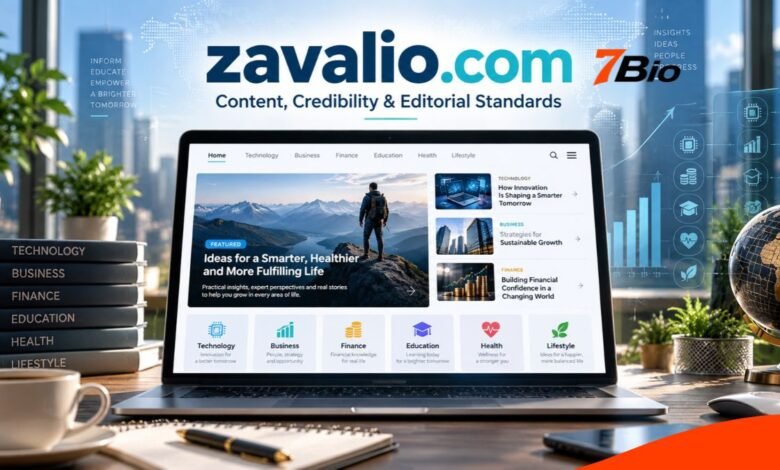
Finding an unfamiliar website in search results is straightforward. Deciding whether you can trust its information takes more thought. zavalio.com is a digital publication that features articles on technology, business, finance, education, health, lifestyle, and other subjects. Its public website presents a conventional online publishing operation rather than an e-commerce service or subscription-based creator platform.
The distinction matters because different online descriptions can create expectations that do not match what visitors actually find. A reader looking for a technology explanation has different needs from someone searching for a shopping service, professional advice, or a platform to publish their work.
The most useful way to understand the website is to examine what it publishes, how it describes its editorial responsibilities, and which claims can be independently verified.
What Is zavalio.com?
The website identifies itself as an independent digital media publication offering informational and editorial content for a general online audience. According to its About page, it was established in 2023, though the publication itself states this founding date rather than providing independently confirmed incorporation or ownership information.
Unlike services that focus on a single industry, the publication brings several subject areas together on one website. Visitors can explore articles through category navigation and individual content pages.
Its material includes explainers, features, commentary, practical guides, and analysis. These formats allow the publication to address both straightforward questions and subjects that require more background.
The essential point is that this is primarily a place to read published information. Its public presentation does not establish a marketplace for physical goods, a paid membership community, or a creator subscription service.
Understanding Its Purpose
A multi-topic publication attempts to serve readers with different interests. Someone researching a business concept might arrive through a search engine, while another visitor could be seeking information about education, property or a digital product.
The website describes its editorial approach as subject-led, meaning that the intended format should depend on the information being covered.
That approach provides a useful statement of editorial direction. However, the quality of the finished work still depends on how accurately each article handles its subject.
What Topics Does the Website Cover?
The homepage and editorial information identify a broad selection of categories. These include technology, business, finance, health, education, lifestyle, real estate, and home improvement, as well as law, fashion, gaming, and automotive topics.
| Editorial Area | Typical Subject Matter |
|---|---|
| Technology | Digital tools, software, AI and emerging technology |
| Business | Companies, entrepreneurship and industry developments |
| Finance | Financial concepts, markets and money-related issues |
| Education | Learning, academic developments and practical educational information |
| Health | Wellness and general health-related subjects |
| Lifestyle | Everyday interests, activities and consumer choices |
| Real Estate | Housing, property and ownership considerations |
| Home Improvement | Maintenance, design and household projects |
These descriptions indicate the types of information a visitor may encounter. They should not be interpreted as guarantees that every article contains specialist analysis or professional advice.
A broad editorial catalog can be convenient for casual research. It also makes source evaluation especially important because expertise in one subject does not automatically demonstrate expertise in another.
How Does the Website Organize Its Information?
The platform follows a familiar online magazine structure, allowing visitors to move between subjects and individual articles.
Category-Based Browsing
Readers can begin with a subject area rather than needing to know an exact article title. This is useful when someone wants an introduction to a topic or wishes to explore related material.
For example, the technology section provides an obvious starting point for visitors interested in digital developments, while business and finance categories serve different research interests.
Articles, Features and Explainers
The publication distinguishes between several editorial formats. An explainer aims to make a subject understandable, while a feature allows for more detailed treatment. Editorial commentary may include interpretation or opinion.
Readers should recognize these differences when deciding how much weight to give a particular statement. An opinion article is not equivalent to a factual report, even when both are professionally presented.
Accessing Published Content
Public articles can generally be read without opening a reader account. The website’s privacy information also states that visitors do not need to provide personal identification or financial account information to access articles.
That makes browsing relatively straightforward, although ordinary website access can still involve analytics technologies, cookies, and advertising services.
What Do Its Editorial Policies Actually Establish?
One of the publication’s more useful features is its written editorial standards.
Its Editorial Policy, updated on 19 September 2026, addresses accuracy, originality, sources, corrections, editorial independence and the handling of commercial material.
The publication says contributors should use appropriate evidence, avoid copying existing work and distinguish factual information from opinion.
These are sensible publishing principles. Their presence gives readers a basis for assessing the publication’s stated standards, but a published policy is not independent proof that every article follows it successfully.
Accuracy and Responsible Reporting
The policy identifies areas that require particular attention, including names, dates, statistics, financial information, legal claims, and quotations.
A reader should still examine whether an individual article identifies the evidence supporting its main conclusions.
For example, an article discussing an official regulation is more useful when it links its claims to the relevant authority. Similarly, a technology article containing product specifications should be consistent with current manufacturer documentation.
Corrections and Editorial Accountability
The website also maintains a separate Corrections Policy, updated on 20 September 2026.
It explains that readers can report factual errors and that significant inaccuracies may result in corrections or article updates.
Visitors wishing to raise a concern are encouraged to identify the article, explain the disputed statement and provide supporting information.
This gives readers a published route for challenging an error. Whether a particular concern is resolved satisfactorily must be judged from the response and any correction actually made.
How Can Readers Assess the Reliability of an Article?
A website does not become trustworthy simply because it has attractive design, numerous pages, or professional-sounding editorial language. Reliability is better evaluated at the level of individual claims.
Several practical checks can help readers distinguish useful information from unsupported assertions.
Look Beyond the Headline
First, determine whether the article answers the question suggested by its title.
A strong headline should accurately describe the content. If the article promises specific facts but provides only broad statements, it may not satisfy the reader’s original purpose.
Check the Evidence
Important claims should be traceable to credible information.
For business subjects, that might mean company statements, official records, or established industry research. For scientific subjects, reliable institutions and published studies may provide a stronger foundation.
A statement can be repeated across many websites without becoming more accurate.
Consider the Publication Date
Information about software, financial markets, regulations, and public policies can change.
An older article isn’t automatically wrong, but readers should decide whether its conclusions still reflect current circumstances.
Distinguish Fact From Interpretation
A writer’s assessment may be useful, especially in business or technology commentary. It should still be recognizable as interpretation rather than presented as undisputed fact.
This distinction matters most when an article makes predictions or discusses potential outcomes.
Does zavalio.com Publish Advertising and Sponsored Material?
Yes. Its advertising information describes commercial opportunities including display advertising, sponsored articles, brand features, and promotional content.
The website’s stated policy is that commercially motivated material should be distinguishable from independent editorial coverage.
That distinction is important for readers.
A sponsored article may contain useful factual information, but it can also serve the interests of the organization paying for its publication. Readers should check commercial disclosures and evaluate product or company claims accordingly.
Advertising does not automatically make an entire publication unreliable. Many legitimate publishers use advertising to support their operations.
What matters is transparency, the accuracy of published material, and whether the publication clearly separates commercial interests from independent editorial judgment.
Can Writers Contribute Articles?
The publication’s contact information includes a route for potential contributors to propose article ideas.
Prospective writers are asked to provide an introduction, details of their proposed subject and relevant writing samples or published work.
The website also states that it reviews submissions for suitability and that sending a proposal does not guarantee publication.
This should not be confused with an unrestricted self-publishing system where anyone can immediately create a public page.
Contributors should clarify editorial requirements, publication terms, and any commercial arrangements directly with the publisher before submitting work.
Is zavalio.com Legitimate and Safe to Use?
The observable evidence supports a limited but useful conclusion: it is an operating content website with public articles, category navigation, editorial information, contact details, and published policies.
That establishes what the website publicly offers. It does not independently verify ownership, financial operations, technical security, or the credentials of everyone associated with the publication.
The website provides a Privacy Policy explaining that analytics, advertising services, and cookies may be involved in its operation. Readers concerned about personal information should review that policy before using interactive features or submitting details.
For ordinary informational reading, the practical question is less about applying a single label to the whole domain and more about deciding whether a particular page provides dependable information.
Claims involving healthcare, investment decisions, legal rights, or personal safety deserve stronger independent verification than general-interest material.
A Practical Checklist Before Relying on Its Content
The following steps are useful when evaluating material from this publication or any unfamiliar information website.
- Confirm the subject: Make sure the page addresses the topic you actually searched for.
- Review the author and date: Look for information that helps establish relevant expertise and whether the material remains current.
- Inspect important claims: Check whether statistics, quotations, and technical statements have credible supporting evidence.
- Identify commercial content: Look for sponsorship, advertising, or promotional disclosures when products and businesses are discussed.
- Verify consequential information: For health, legal, financial, and safety decisions, consult appropriate primary sources or qualified professionals.
- Check conflicting reports: When reliable sources disagree, investigate the difference rather than automatically accepting the most confident explanation.
These checks are more useful than relying entirely on an unfamiliar website’s branding or promotional descriptions.
FAQs
Is zavalio.com a news website or a blog?
It operates as a general-interest digital publication combining informational articles, explainers, features, and commentary. Its editorial scope is broader than a traditional personal blog, although not all its material is necessarily breaking-news reporting.
Is the website free for readers?
Public informational articles can generally be accessed without creating a paid reader account. The publication also describes advertising and other commercial activities separate from ordinary reading.
Who operates the publication?
The website presents an editorial team and describes itself as an independent publisher founded in 2023. Those statements provide publicly available information about its identity, but they do not independently establish its ultimate ownership or verify individual credentials.
Does the publication accept guest contributions?
Its contact page invites writing proposals and provides submission guidance. Acceptance is subject to editorial review, and publication is not guaranteed.
Can you trust every article on the website?
No blanket conclusion about every article is justified. Reliability depends on the subject, evidence, author information, accuracy, and whether the material is current. Important claims should be checked against authoritative sources.
Is Zavalio the same as a shopping or creator platform?
The currently visible website operates primarily as an editorial publication. Descriptions suggesting that it offers retail checkout, paid creator subscriptions, or other specialized platform services should not be accepted without verifying those features on the actual domain.
Final Takeaway
zavalio.com is best understood as a multi-topic online publication that brings together editorial content about technology, business, finance, education, health and everyday interests.
Its public policies provide useful information about editorial expectations, corrections, commercial content and contributor submissions. Those disclosures help readers understand how the publication presents itself, but they cannot replace careful evaluation of individual articles.
The sensible approach is to use its content for information and background where appropriate, while checking significant claims against authoritative evidence. A publication’s credibility ultimately comes from the accuracy, transparency, and usefulness of its work, not its name or the number of articles it publishes.