
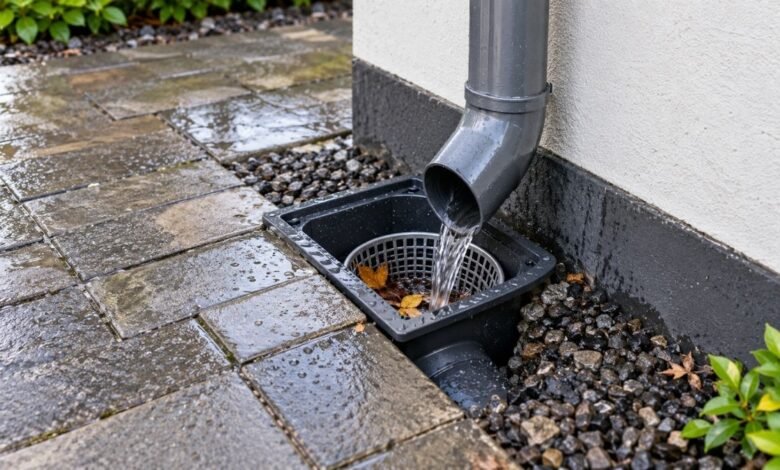
It’s easy to forget about rainwater drainage since most of it works quietly out of sight. Water flows from the roof into gutters, down a pipe, and then into an underground drain. But where the downpipe connects to the buried system, leaves, moss, grit, twigs, and other debris can cause problems. This is where gajgry come in handy.
The word comes from Czech terms for building and drainage. One unit is called a gajgr, and more than one are gajgry. In English, you might hear it called a roof-water catch basin, rainwater gully, downpipe trap, or roof-debris trap, depending on the product. Its main job is to collect water from the roof downpipe, catch larger debris, and direct it into the underground drainage.
What Does Gajgry Mean?
The word refers to drainage fittings positioned between a roof gutter downpipe and an underground rainwater or sewer pipe. Czech dictionary usage defines the singular component as a transitional part between the gutter pipe and horizontal sewer drainage. Building suppliers also use the term for products designed to collect roof runoff and intercept dirt before water continues into the drainage network.
This difference is important because the fitting does more than just connect pipes. Many newer models have features such as a removable debris basket, inspection access, an outlet connection, and an odor-control flap. The details can vary by brand and model, so it’s best not to assume all products have the same parts inside.
For property owners, it’s helpful to think of this part as a service point in the rainwater system. Rather than letting leaves and debris go straight into the buried pipes, the fitting gives you an easy place to catch and remove bigger debris.
How a Roof-Water Catch Basin Works
Rain falls onto the roof and flows toward the gutter. The gutter directs it into the downpipe, where gravity carries the water toward ground level. At the base of the downpipe, the catch basin receives the flow before it enters the underground drainage system.
Capturing Leaves and Roof Debris
Roofs naturally collect material over time. Leaves, small twigs, moss, grit, fragments of organic material, and other debris can be washed into the gutter during rain. If this material enters a buried pipe directly, it can accumulate at bends, junctions, or narrow points.
A removable basket or similar trap can catch most of the bigger debris. This doesn’t mean you never need to maintain the drainage system, but it does give you a handy spot to clear out debris before it goes deeper underground.
Directing Water Into the Drainage Line
After passing the debris-catching area, rainwater moves through the outlet and into the connected underground pipe. Products are made with different outlet positions and connection sizes. Some discharge downward, while others use a side outlet.
The right setup depends on your current drainage layout. If the unit doesn’t match the pipe size, outlet direction, or installation depth, it can cause problems or make installation harder.
Why These Fittings Matter Around Buildings
You really notice the value of this fitting when something goes wrong. It’s much harder to check and clean underground drainage than a catch basin you can reach at ground level. Keeping bigger debris out of buried pipes makes regular maintenance much easier.
A properly selected unit: Choosing the right unit can also give you a spot to inspect between the downpipe you see and the hidden underground pipe. If water starts backing up, you or your installer can check the basin and basket first before assuming a deeper pipe is blocked. Check odor-control arrangements. Product descriptions from Czech suppliers show both dry and wet trap designs, while some modern units use a dry flap intended to reduce the return of unpleasant smells from drainage pipework. This feature is model-specific and should be confirmed in the technical specification before purchase.
Common Types and Design Differences
There isn’t one design that fits every situation. There are several types available, and the best choice depends on your building and drainage setup, not just how the product looks.
Bottom-Outlet Models
A bottom-outlet unit sends water vertically downward into a pipe beneath the body. This arrangement can be useful when the underground connection is positioned directly below the downpipe.
The installation must provide the correct depth and alignment. If the underground pipe is offset or too shallow, another configuration may be more suitable.
Side-Outlet Models
A side-outlet version directs water horizontally from the body before it joins the underground system. It can be useful where construction depth is limited or the existing drainage route runs along the side.
Again, making sure everything fits together is more important than the product name. The installer should check the outlet size, pipe position, available space, and the required slope for the drainage line.
Plastic and Cast-Iron Versions
These products come in different materials. Polypropylene is common in modern drainage fittings, but cast-iron traps are also used for some jobs. The material you choose affects how long it lasts, how you install it, how much weight it can handle, and how well it fits with the rest of your system.
The best way to choose is to consider your site’s technical needs rather than assuming a single material is always best for every property.
How to Choose the Right Gajgry
Start by measuring, not by looking at price. You need to know the downpipe size, underground outlet size, discharge direction, installation depth, and the unit’s exposure.
First, confirm the diameter of the roof downpipe. Some products accept several downpipe sizes through adjustable or cut-to-size inlet covers, but the supported range varies. Second, verify the underground pipe connection. A mismatch can restrict flow or require additional fittings.
Next, see if you need a bottom or side outlet. Also, check if there’s a removable basket and how easy it is to reach for cleaning. Even a good component can be ignored if it’s hard to service.
Finally, review the manufacturer’s details on installation, load rating, materials, temperature limits, seals, odor control, and approved uses. Sizes and performance vary, so always check the specs for the exact model you plan to use.
Installation Considerations
Proper installation matters because this part connects two sections of the drainage system. The inlet should align with the downpipe, and the outlet must fit tightly onto the underground pipe.
The ground around the fitting should support it so it doesn’t move due to settling, people walking, landscaping, or pipe movement. Make sure the cover or lid stays easy to reach after paving, gravel, soil, or other finishes are added. If underground pipes must be altered, professional installation is often sensible. Drainage problems caused by poor levels, unsuitable pipe sizes, weak joints, or incorrect positioning can be more expensive to correct after the area has been backfilled or paved.
Maintenance and Cleaning
Regular maintenance is simple but important. Open the cover as the instructions say and check the debris basket or collection area. Remove leaves, moss, grit, and other buildup, then ensure water can flow freely to the outlet.
There’s no single cleaning schedule that works for every property. Homes with lots of trees nearby may need more frequent checks than those in open areas. Falling leaves, storms, roof moss, and heavy rain can all send more debris into the downpipe.
A practical approach is to inspect the unit periodically and after weather events likely to move significant debris. Gutters should also be kept reasonably clear, because the catch basin is not a substitute for maintaining the roof drainage system as a whole.
Signs That a Catch Basin Needs Attention
Overflow near the bottom of a downpipe is one of the clearest warning signs. Water may also drain slowly, remain unusually high inside the unit, or spill onto surrounding paving during rainfall.
These signs don’t always mean the catch basin is blocked. The clog could be in the basket, outlet, connecting pipe, or deeper in the underground system. It’s just smart to start by checking the easiest spot first.
Damage to the lid, body, seals, or pipe connection should also be addressed. A broken or displaced component can allow soil and debris into the system or interfere with the intended flow path.
Benefits of Regular Inspection
The biggest benefit of regular inspection is prevention. It’s much easier to remove trapped debris than to fix a blockage deep underground. Checking the unit also helps you spot early signs of slow flow, damaged parts, or a full debris basket.
It’s especially helpful to check the system before heavy seasonal rains. The aim isn’t perfection, but to keep the area between the roof downpipe and underground pipe clear, easy to reach, and working as it should.
Conclusion
Gajgry are useful parts of roof rainwater drainage systems, especially in Czech building terms. They fit between the gutter downpipe and the underground drain, helping to catch bigger debris, give access for maintenance, and direct rainwater into the pipes.
These fittings come in many designs. Check the outlet direction, connection size, material, debris basket, odor control, load rating, and size to match your property’s needs. Good results depend on choosing the right part, installing it properly, and keeping up with inspections.
For homeowners and building managers, the key lesson is simple: an accessible catch point at the base of a downpipe can make rainwater drainage easier to monitor and maintain. Choosing the right model and keeping it clear can reduce avoidable problems in the buried drainage system.
FAQs
What are gajgry used for?
They are used at the base of roof downpipes to connect roof-water drainage with underground pipework and, in many designs, to catch larger debris before it enters the buried system.
Does the same word also call one unit?
No. In Czech usage, the singular form is gajgr. The focus term used in this article is the plural form.
Do all roof-water catch basins include a debris basket?
No. Many modern products include a removable basket, but designs vary. The exact product specification should be checked before purchase.
Can these fittings help reduce drainage smells?
Some models include dry or wet odor-control arrangements intended to limit smells returning from connected drainage. This is not a feature that should be assumed for every model.
How often should the unit be cleaned?
There is no single schedule for every property. Inspection frequency depends on nearby trees, roof condition, weather, and how quickly debris collects. Checking after heavy leaf fall or severe storms is sensible.