
Labeleu: How Digital Product Passports Are Changing Product Transparency in Europe
An informative guide to LabelEU's digital passport platform, its main features, European regulatory requirements, and what businesses should consider before using it.

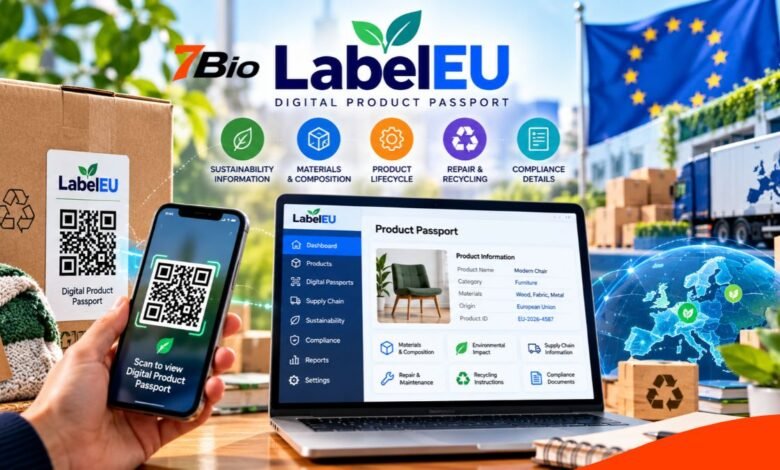
Labeleu focuses on digital product information, preparing for European compliance, and the changing way businesses communicate details about the goods they sell. The current LabelEU platform helps companies organize product records, prepare Digital Product Passports, and connect product information to accessible digital pages.
This development reflects an important change in European product regulation. Manufacturers and other economic operators are increasingly expected to provide accurate information about product identity, materials, sustainability characteristics and traceability. Rather than keeping every detail in disconnected documents, a Digital Product Passport offers a structured way to make relevant information accessible.
Understanding how the platform works is particularly useful for manufacturers, online retailers, importers, and businesses supplying European markets.
This article explains what Labeleu is, how its digital passport technology works, which European rules matter, and what businesses should check before adopting the service.
What Is Labeleu?
Labeleu, styled as LabelEU on the current platform, is a software service that helps businesses prepare and manage Digital Product Passports (DPPs). These passports contain structured product information and can be linked to QR codes that provide access to digital product records.
The platform is intended to simplify work that might otherwise require separate databases, spreadsheets, design software, and technical development. Businesses can organize product information, use category-specific fields, and prepare digital records through a central interface.
Its purpose should not be confused with official certification. Creating a digital record does not automatically establish that a product complies with every applicable European law. Compliance ultimately depends on the underlying product, the accuracy of submitted information and the requirements that apply to its category.
There is also a naming distinction worth recognizing. Older online references to Labeleu concern a label-printer business. Those references should not automatically be attributed to the current Digital Product Passport platform.
Understanding Digital Product Passports
A Digital Product Passport is an electronic record containing information about a physical product. Depending on the relevant legislation, it can include product identification, composition, technical details, environmental characteristics, responsible economic operators, and information relevant to repair or recycling.
A consumer might encounter a passport by scanning a QR code on packaging or a product label. The code links to a digital destination that contains information that would be difficult to fit on the physical label.
For example, consider a hypothetical furniture manufacturer selling a wooden desk. Its digital product record could provide the product model, material composition, manufacturer details, assembly guidance, and relevant disposal information. The exact mandatory contents would depend on the legislation that applies to that product.
This approach offers advantages beyond convenient access. Structured product records can help businesses maintain consistent information and improve communication across manufacturers, distributors, repair organizations, and recycling operators.
However, not every product category currently requires a Digital Product Passport. Legal obligations and their application dates differ, so it’s essential to understand the relevant regulatory framework before purchasing software.
How Labeleu Works
The platform follows a workflow that begins with product information and leads towards a structured digital record.
Creating a Product Record
Businesses begin by identifying the product and providing relevant details. These may include its name, category, materials, origin, and other characteristics.
The platform offers fields for categories such as textiles, batteries, furniture, and toys. Its published demonstration distinguishes between information connected to existing legal requirements and information suggested by the service.
This distinction matters because a software recommendation is not necessarily a statutory obligation.
Preparing the Digital Passport
Once you enter product details, the system organizes them into a digital passport format. The goal is a structured record that can be shared with the right audiences.
The platform supports importing information through spreadsheets, CSV files, and Shopify-related workflows, reducing the need to enter every product manually.
Creating Labels and QR Codes
LabelEU also describes tools for designing product labels and generating QR codes linked to passport pages.
A readable QR code provides convenient access. Still, businesses must verify that its destination is reliable, the underlying data is correct, and the information remains accessible for the required period.
Important: At the time of this review in October 2026, the platform offers draft creation, but public sales of passport publishing packs are paused. Businesses should distinguish features demonstrated by the service from publishing functionality currently available for purchase.
Key Features of the LabelEU Platform
The service brings together several tools intended to support digital product information management.
Structured product information: Category-specific fields help users organize product details and identify missing information.
Digital passport preparation: Users can create draft records before final publication, making the service potentially useful for early preparation.
QR-code integration: The intended publishing workflow associates product records with scannable codes, providing a digital access point.
Customizable label design: The platform advertises a drag-and-drop label designer and print-ready PDF exports.
Bulk data handling: Import functionality for spreadsheets and Shopify-related data may help businesses dealing with larger catalogs.
API availability: LabelEU advertises API integration for organizations that need to connect product information with other systems.
The platform’s public materials describe these features. Assess their practical suitability for a particular business through a demonstration and a review of the provider’s current service availability.
Labeleu and European Union Product Regulations
The regulatory environment provides the most important context for understanding why digital passport platforms exist.
The Ecodesign for Sustainable Products Regulation, formally Regulation (EU) 2024/1781, establishes a framework for introducing product-specific sustainability and information requirements.
The regulation includes a Digital Product Passport system, but it introduces requirements through applicable legal measures. Businesses should therefore avoid assuming that every product sold in Europe already needs a passport.
Other European regulations establish requirements for particular product categories.
Important Regulatory Dates
| Product category | Regulatory position |
|---|---|
| Electric vehicle, light means of transport and specified industrial batteries | Battery passports required from 18 February 2027 |
| Toys | New Toy Safety Regulation, including passport requirements, generally applies from 1 August 2030 |
| Textiles and clothing | Included in EU ecodesign planning, but no general ESPR passport application date was established as of October 2026 |
| Furniture | Included in EU ecodesign planning, with future product-specific requirements still dependent on regulatory development |
The battery requirement is particularly important for manufacturers of electric vehicle batteries, light means of transport batteries and industrial batteries with capacities exceeding 2 kWh.
For toys, the newer European rules introduce digital passport responsibilities as part of a wider system covering product safety and technical documentation.
Textile and furniture businesses should prepare their information systems while monitoring product requirements. Existing legal obligations, including applicable labeling and safety rules, continue independently of future Digital Product Passport measures.
In July 2026, the European Commission also adopted implementing arrangements for the Digital Product Passport registry under Regulation (EU) 2026/1778. The registry forms part of the wider infrastructure, but registration should not be mistaken for proof that an individual product satisfies all legal requirements.
Why Digital Product Passports Matter for Businesses
The usefulness of a digital passport extends beyond preparing for legislation.
Suppliers, purchasing departments, design teams, and compliance staff often share product information. Materials information may live in one file, manufacturing details in another, and supporting documents elsewhere.
A structured product record can bring these materials into a more manageable system.
For manufacturers, this may improve internal consistency and make it easier to identify missing supplier information. Retailers may benefit from clearer product descriptions, while importers can use consistent records to check information received from overseas suppliers.
Digital passports can also communicate information on repairability, recycling, and product traceability, provided the underlying details are reliable.
The consumer benefit is equally straightforward. Instead of relying entirely on packaging claims, buyers may be able to access additional information through a digital record.
Nevertheless, a passport is only as trustworthy as its contents. A polished digital page cannot compensate for inaccurate material declarations or unsupported sustainability claims.
How Much Does Labeleu Cost?
LabelEU’s published pricing information describes a free starting option with up to three draft passports.
The platform also displays intended passport packages with the following indicative prices:
| Proposed package | Number of passports | Displayed price |
|---|---|---|
| Starter | 5 | €50 |
| Growth | 25 | €199 |
| Scale | 100 | €699 |
These packages were not available for purchase when checked in October 2026. The figures reflect the provider’s published intended pricing, not currently available offers.
The service states that users can prepare drafts and explore its tools while commercial publishing is paused.
Before relying on any future package, a business should confirm the actual selling price, publication availability, contractual terms, data export rights and hosting arrangements.
For larger organizations, long-term access and compatibility with existing information systems may matter more than the initial price per passport.
Who Could Benefit From Labeleu?
Several types of organizations may find the service relevant.
Manufacturers preparing for product-specific European requirements can use the drafting process to organize information and identify missing documentation.
E-commerce businesses may benefit from keeping product details consistent across listings and digital records, especially when their catalogs change frequently.
Importers and distributors may use structured records to improve communication with suppliers and support their own compliance processes.
Small and medium-sized enterprises that lack dedicated software development teams may find a guided interface easier to evaluate than building a custom system.
UK companies are also a relevant audience. Although the United Kingdom is outside the European Union, businesses placing relevant products on the EU market may have obligations under EU product legislation.
Whether a particular rule applies depends on the product, the business’s role in the supply chain and the applicable regulatory provisions.
Common Mistakes Businesses Should Avoid
One major mistake is treating a Digital Product Passport as an automatic compliance certificate. A passport can contain declarations and supporting information, but it does not independently verify every statement.
Another problem is collecting data without checking its origin. If a supplier provides incorrect material information, transferring the figures into a digital record will not make them reliable.
Businesses should also avoid presenting anticipated regulations as enforceable law. European product requirements develop on different schedules, and deadlines must be checked against the relevant legal instruments.
Overlooking long-term access is another potential risk. QR codes need dependable destinations, and businesses should understand what happens if a service provider changes its pricing, closes an account, or stops operating.
Finally, environmental information should not be exaggerated. Sustainability claims need appropriate support, whether they appear on a printed label or a digital passport page.
What to Check Before Choosing a Digital Passport Provider
Selecting a service requires more than comparing subscription prices or interface designs.
First, establish which regulations apply to the business’s actual products. This determines the required data, access rights, and appropriate level of product identification.
Next, examine the provider’s ability to export data, maintain working product identifiers, and preserve access over time.
A business should also consider how easily it can update information when product specifications change. Incorrect or outdated records may create operational and compliance problems.
Security deserves attention, especially where records contain commercially sensitive supply-chain information. Public product information and restricted technical documentation may require different access permissions.
Finally, test the practical workflow with a small number of representative products before committing. This can reveal whether the system fits existing data and staff processes.
These questions apply to LabelEU and to competing Digital Product Passport services.
The Future of Digital Product Information
European product policy is moving towards clearer information about how products are made, used, maintained and recovered.
Digital Product Passports are one part of that wider transition. Their long-term significance will depend on reliable data, consistent technical standards, practical implementation, and cooperation across supply chains.
Platforms such as Labeleu illustrate how software providers are responding to these developments. However, a service’s success depends on its ability to support evolving requirements and provide dependable tools when businesses need them.
For organizations beginning their preparations, the best starting point is not necessarily buying software. It is understanding what information they already have, what details are missing, and which legal requirements apply.
Conclusion
Labeleu represents a software-based approach to organizing product information and preparing Digital Product Passports for the European market. Its advertised capabilities include structured product records, QR-code integration, label design and data-import options.
The platform may help businesses prepare for future reporting and traceability obligations, but businesses should check its current availability and suitability for specific products.
The central lesson is that digital product transparency begins with accurate information. Software can help organize and present that information, but responsible product documentation, supplier verification, and an understanding of applicable regulations remain essential.
(FAQs)
1. What is Labeleu used for?
Labeleu refers to the current LabelEU software platform, which helps businesses prepare and manage Digital Product Passports. Its advertised tools cover product records, QR codes, label design, and structured information management.
2. Is LabelEU an official European Union certification service?
No. LabelEU is a commercial software platform rather than an EU regulatory authority. Creating a passport through a service does not automatically certify that a product meets all applicable European requirements.
3. Are Digital Product Passports mandatory for every product in Europe?
No. Requirements differ between product categories. Certain batteries require passports from 18 February 2027, while the newer Toy Safety Regulation generally applies from 1 August 2030. Other product groups have separate regulatory timelines.
4. Can businesses use Labeleu for free?
The provider advertises the ability to create up to three draft passports without payment. As of October 2026, its published commercial passport packages were not available for purchase, so businesses should confirm current publication options before relying on the service.
5. Is Labeleu suitable for small businesses?
Potentially. Its guided interface, product fields, and import features may appeal to smaller organizations that don’t want to build their own digital passport software. Suitability depends on the business’s product categories, legal responsibilities, information quality, and the service features available at the time of use.





One Comment