
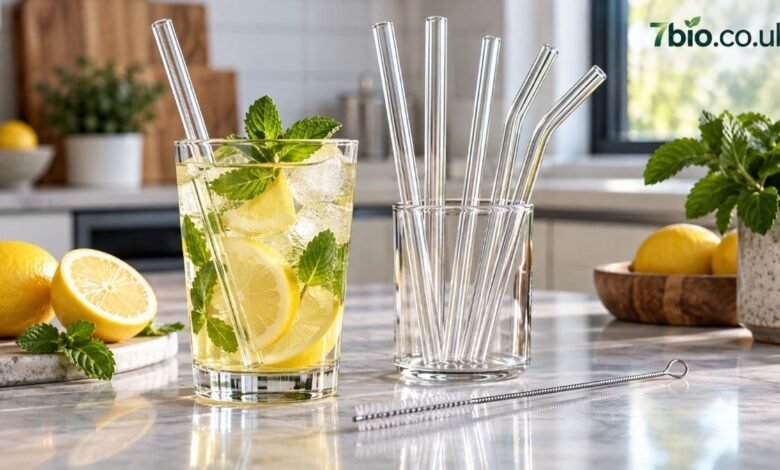
Glass straws are reusable drinking tubes designed as an alternative to disposable plastic and paper straws. Most quality versions are made from durable Glass, with borosilicate commonly used because it has relatively low thermal expansion and handles temperature changes better than ordinary Glass. They are transparent, easy to inspect, and suitable for many cold drinks, smoothies, and other everyday beverages.
Their benefits come with sensible limitations. Glass can chip or break, rigid straws require careful handling, and buying a reusable product does not automatically make every use environmentally superior. How long the straw lasts, how it is washed, and whether it genuinely replaces disposable alternatives all matter.
Quick Answer
Glass straws can be a useful reusable choice when they are well made, regularly cleaned, and checked for damage. They offer a clear, neutral-feeling drinking experience, but you should handle them carefully because Glass remains breakable.
What Are Glass Straws?
Glass drinking straws are hollow reusable tubes manufactured to perform the same basic function as disposable drinking straws. They come in straight and bent designs, and in different lengths and diameters for water, juice, cocktails, iced coffee, shakes, and smoothies.
Many manufacturers use borosilicate glass. Unlike conventional soda-lime Glass, borosilicate formulations have relatively low thermal expansion. This means they generally tolerate temperature changes more effectively, although that does not make every straw resistant to unlimited heat, impact, or sudden thermal shock.
The transparent construction is one of their most practical characteristics. With glass straws, residue inside the tube is visible, making it easier to check whether smoothie pulp, milk, or other material remains after washing.
Why Do People Choose Glass Straws?
The main reason is reusability. Instead of throwing away a straw after one drink, a reusable option can remain in circulation for repeated use when properly maintained.
Glass also has a smooth surface and doesn’t get soggy during a drink. For people who dislike the feel of stainless steel against their teeth or lips, transparent Glass can provide a more neutral alternative.
Another advantage is cleanliness visibility. An opaque metal or silicone straw can look clean from the outside while still containing residue internally. With clear Glass, users can hold the tube towards a light source and inspect much of the interior.
That does not mean glass straws are automatically the right choice for everyone. You must consider their rigid construction and breakability alongside their advantages.
Are Glass Straws Safe to Use?
They can be used safely when they are intact and handled responsibly, but no rigid drinking straw is completely risk-free.
Glass should be inspected before use. A straw with a chip, crack, sharp edge, or visible structural damage should not be used. Continuing to drink through damaged Glass creates an unnecessary injury risk.
Rigid straws can also cause injury during falls or accidental impacts. Drinking while running, playing, or moving quickly is therefore unwise, especially for young children. People who need a softer or more flexible drinking aid may be better served by silicone or another appropriate material.
Supervise children when using rigid straws. Safety and accessibility needs should always take priority over environmental or aesthetic preferences.
What Makes Borosilicate Glass Different?
Borosilicate glass contains silica and boron-containing compounds and is known for comparatively low thermal expansion. This makes it useful in applications where resistance to temperature change matters.
For drinking straws, this helps when moving between different beverage temperatures. However, borosilicate does not mean unbreakable. Mechanical impact, manufacturing defects, storage damage, or extreme temperature conditions can still cause cracking.
Consumers should therefore follow the temperature limits and care instructions supplied with the particular product rather than assuming all glass straws perform identically.
How to Choose the Right Glass Straw
Start with size. A narrow straw may work well for water, lemonade or iced coffee, while thick smoothies and shakes generally require a wider opening.
Length also matters. A straw that sits too low in a tall tumbler can be inconvenient, while an excessively long one may protrude enough to be knocked easily.
Look for clear product information describing the material, recommended use, cleaning instructions, and whether the product is dishwasher safe. A cleaning brush is also useful, especially for drinks that leave thicker residue.
Straight vs Bent Designs
A straight straw is simple and usually easy to brush through from one end to the other. Bent versions angle the drinking end towards the user and may feel more convenient with taller glasses.
Neither design is inherently superior. Choose the shape that fits your usual drinkware and is easy to clean.
Consider the Diameter
Diameter is often overlooked. A narrow drinking tube can become frustrating if you regularly make smoothies containing pulp, crushed fruit, or seeds.
For thicker beverages, wider glass straws reduce resistance and are easier to clean after use.
How to Clean Glass Straws Properly
Rinse the straw soon after finishing your drink. This simple habit prevents sugar, fruit pulp, dairy residue and other material from drying inside the tube.
For hand washing, use warm water, washing-up liquid and an appropriately sized straw brush. Pass the brush through the full length of the tube rather than cleaning only the openings.
After washing, rinse thoroughly and visually inspect the inside. Because Glass is transparent, remaining residue is normally easier to spot.
Dishwasher cleaning may be appropriate for products specifically labeled dishwasher safe. Always follow the manufacturer’s care instructions rather than assuming every product has the same temperature or dishwasher tolerance.
Let the straw dry before storing.
How Should Glass Straws Be Stored?
Store them to protect them from unnecessary impacts.
Do not throw loose Glass drinking straws into a crowded cutlery drawer where knives and heavy utensils can repeatedly strike them. A divided drawer, protective case, dedicated container, or original packaging is a better option.
When traveling, use a protective case. Hard objects can hit loose glass straws in a handbag, backpack, or luggage, and they may get damaged without the user noticing right away.
Inspect them again after traveling before putting them into a drink.
Glass vs Metal, Silicone and Paper Straws
Different materials solve different problems, so there is no universally perfect drinking straw.
| Material | Main Advantage | Main Limitation | Common Use |
|---|---|---|---|
| Glass | Transparent and reusable | Can chip or break | Careful everyday home use |
| Stainless steel | Strong and durable | Very rigid and opaque | Travel and frequent adult use |
| Silicone | Flexible and softer | Interior may be harder to inspect | Users who prefer flexibility |
| Paper | Disposable without plastic | Can soften during longer drinks | Parties and occasional use |
The right decision depends on the person using it, the beverage and the setting.
Someone drinking water at a desk may find glass practical. Someone carrying a straw through demanding outdoor activities may place more value on resistance to accidental impact.
Are Glass Straws Better for the Environment?
The answer requires more nuance than a simple yes or no.
Reusable products can reduce demand for disposable items, particularly when one item is kept and used for a long period. However, glass straws require raw materials, manufacturing, transport, and cleaning, all of which contribute to their life-cycle impact.
Research comparing drinking-straw materials has shown that washing method, reuse frequency and manufacturing can materially influence environmental results. A reusable straw may need substantial repeated use before its initial production impact is spread across enough drinks.
That means buying numerous reusable straw sets and rarely using them is not necessarily a meaningful sustainability improvement.
A practical approach is to buy only what you need, keep it for as long as it remains safe, and reuse it consistently. Cleaning them efficiently as part of normal washing, rather than running a separate appliance cycle for a few straws, can also avoid unnecessary resource use.
The UK Context for Disposable Plastic Straws
England restricts the supply of single-use plastic straws, although exemptions remain for specific circumstances, including certain medical, care and accessibility needs.
Government guidance distinguishes reusable products from single-use products and identifies reusable materials such as Glass, metal and other durable alternatives as options where appropriate.
These rules do not mean everyone must use glass straws. Accessibility requirements are specifically important, and a person who relies on a particular disposable or flexible straw should choose what safely meets their needs.
Common Mistakes to Avoid
One common mistake is treating reusable Glass as indestructible. A straw should always be discarded from use if you notice damage.
Another is forgetting to clean the inside. A quick rinse may be insufficient after smoothies, milk drinks, or sugary beverages.
Using a rigid straw while walking, running, or playing also increases the possibility of an impact injury.
Finally, don’t assume that buying more reusable products automatically creates a better environmental outcome. Extending the useful life of products you already own is often more sensible than continually replacing them.
Who Should Consider Another Material?
Glass may not be the most appropriate choice for young children, people who frequently bite straws, users with certain coordination difficulties, or anyone who needs a flexible drinking aid.
Silicone may be more suitable where softness matters. Stainless steel can resist everyday knocks, although its rigidity also requires care.
The best drinking straw is therefore not simply the one made from the most fashionable material. It is the one that meets the user’s practical and safety requirements and can realistically last.
FAQs
Are glass straws easy to clean?
Yes, particularly because their transparent construction makes residue easier to see. A narrow straw brush helps clean the full interior after thicker drinks.
Can glass straws break?
Yes. Even durable borosilicate products can crack or chip from impact or improper handling. Stop using a straw as soon as damage is visible.
Can you use them for hot drinks?
Some products may be designed for warmer beverages, particularly when made from borosilicate glass, but temperature limits vary. Follow the manufacturer’s instructions for the specific product.
Are Glass straws dishwasher safe?
Some are, but confirm dishwasher compatibility in the product’s care instructions rather than assuming it.
How long do reusable glass straws last?
There is no universal lifespan. Their usable life depends on construction, handling, and condition. Continue using an intact product according to its care instructions, but retire it if it becomes cracked, chipped, or otherwise damaged.
Are glass straws more sustainable than plastic ones?
They can reduce reliance on disposable straws when used repeatedly over time. Their total environmental impact also depends on manufacturing, cleaning, transportation, lifespan, and disposal.
Final Takeaway
Glass straws offer a clear, reusable, and practical alternative to disposable drinking straws for people who are comfortable handling Glass carefully. Their transparency makes cleaning easier to check, while borosilicate versions can offer useful resistance to temperature changes.
The key is responsible use. Choose the correct diameter and length, follow the manufacturer’s care guidance, clean the interior properly, and check for damage before drinking.
From an environmental perspective, the strongest habit is not simply purchasing something labeled reusable. It is keeping a suitable product in service, using it repeatedly and avoiding unnecessary replacement.