Best Pollo al Chilindron Near Me: How to Find Authentic Spanish Chicken
An informed guide to the traditional Aragonese chicken stew, its ingredients, regional history, and what separates an authentic preparation from an ordinary chicken dish.

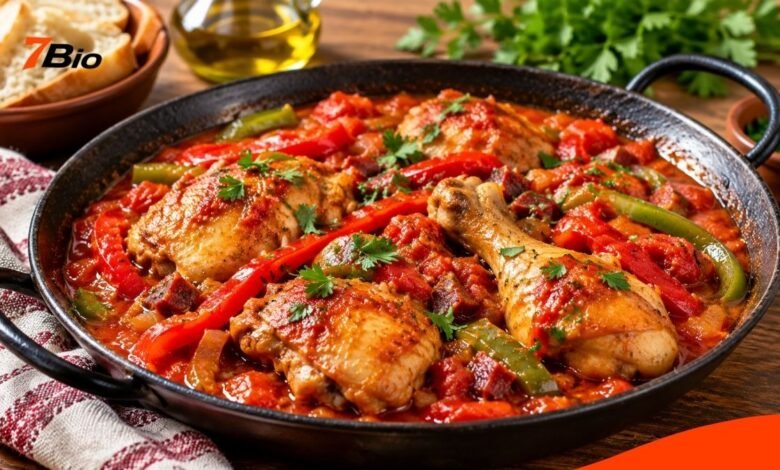
Searching for the best pollo al chilindrón near me starts with understanding this traditional Spanish chicken dish. Pollo al chilindrón is a slow-cooked stew from Aragón, made with chicken, peppers, tomatoes, onions, and garlic. Traditional versions frequently include cured ham, while some recipes also use wine. Spain’s official tourism website identifies the dish as part of Aragonese cuisine, and Zaragoza’s municipal tourism authority describes chilindrón as an important regional sauce and stew.
Finding an authentic restaurant version is not always straightforward. A Spanish restaurant may serve tapas, grilled chicken, or paella without offering this regional specialty.
This article explains the dish’s origins, traditional preparation, ingredients, restaurant selection criteria, and practical ways to identify a suitable local option without relying on unverified menu claims.
Quick Facts
- Dish: Pollo al chilindrón
- Country of origin: Spain
- Regional association: Aragón, with related traditions in neighboring areas
- Main ingredient: Chicken
- Core vegetables: Tomatoes, peppers, onions and garlic
- Traditional additions: Olive oil and often cured ham
- Cooking method: Browning followed by gentle stewing
- Typical accompaniments: Rice or potatoes
- Cuisine category: Traditional Spanish cooking
- Restaurant availability: Depends on the location and current menu
What Is Pollo al Chilindrón?
Pollo al chilindrón is a Spanish chicken stew distinguished by its vegetable-based sauce. The preparation usually begins by browning the chicken, then combining it with softened peppers, tomatoes, onions, and garlic.
Cook the ingredients together until the meat becomes tender and the vegetables form a concentrated sauce.
Unlike dishes built around cream or heavy spice mixtures, chilindrón relies largely on the flavor of vegetables, olive oil, and the chicken itself.
The traditional preparation published by Spain’s official tourism website includes cured ham from Teruel and white wine or dry sherry. Other documented preparations use slightly different quantities and methods.
This variation matters because authentic regional cooking isn’t defined by one rigid recipe.
The Spanish Origins Behind Pollo al Chilindrón
Aragón’s Culinary Tradition
Aragón, in north-eastern Spain, is strongly associated with pollo al chilindrón.
Its regional cuisine reflects an agricultural tradition involving vegetables, poultry, lamb and cured meats. The dish combines several of these ingredients in a single preparation.
Spain’s national tourism authority describes chicken as historically important to Aragonese celebrations, which helps explain chilindrón’s place in regional cooking.
Zaragoza’s tourism authority also links the sauce to neighboring Huesca and Navarra, where related preparations have developed.
Why Its Exact History Requires Caution
Although the dish is closely associated with Aragón, assigning it a precise invention date or a single creator would be misleading.
Zaragoza’s municipal tourism material explains that tomatoes and peppers entered European food culture following contact with the Americas and became established in popular cooking over subsequent centuries.
The familiar sauce therefore belongs to a culinary history shaped by changing ingredients and regional traditions.
Best Pollo al Chilindron Near Me: What Makes a Restaurant Worth Choosing?
When searching for the best pollo al chilindron near me, focus on whether a restaurant actually prepares the traditional dish, not whether it simply calls itself Spanish.
1. Check the Actual Menu
Look for the names pollo al chilindrón, pollo a la chilindrón or chicken chilindrón.
Restaurants may use different spellings or English translations. However, a listing for Spanish chicken, grilled chicken, or chicken with tomato sauce is not sufficient evidence that chilindrón is available.
2. Examine the Ingredients
An authentic preparation should reflect the sauce’s characteristic vegetable combination.
The most useful indicators are:
- Chicken browned before stewing
- Red or green peppers
- Tomatoes and onions
- Garlic and olive oil
- A gently cooked, savory sauce
Traditional versions often include cured ham, though documented recipes vary.
3. Consider the Cooking Technique
The method matters as much as the ingredients.
Chef José Andrés’ published version, featured by PBS Food, browns the chicken before slowly cooking onions and peppers and bringing the ingredients together in a stew.
A well-prepared version should have tender chicken and a sauce where the vegetables contribute substantial flavor.
4. Verify Availability Before Traveling
The most practical approach is to consult the restaurant’s current menu and contact the establishment directly.
Ask whether the dish is available that day, whether you must order it in advance, and whether it’s a regular menu item or an occasional special.
A restaurant’s general reputation does not confirm whether a particular dish is available.
Understanding the Traditional Ingredients
Chicken
Chicken forms the dish’s foundation. Traditional recipes commonly use a whole chicken cut into portions, allowing different pieces to cook together.
The preparation bakes the meat and then cooks it with the sauce until tender.
Peppers, Tomatoes and Onions
These vegetables give chilindrón its characteristic identity.
Peppers add sweetness and flavor, tomatoes bring acidity and body, and onions develop sweetness as they cook.
Garlic adds another savory layer.
The combination distinguishes the stew from plain roasted chicken or chicken served with a separate tomato sauce.
Cured Ham and Wine
Several authoritative Spanish recipes include cured pork ham, particularly ham associated with Teruel.
Wine also appears in some traditional preparations.
These ingredients are especially important for diners with religious or dietary restrictions. Don’t assume the dish is automatically halal, pork-free, or alcohol-free.
A restaurant can explain whether it uses substitutions and how the chicken is sourced.
How to Find Authentic Spanish Chicken Locally
People searching for the best pollo al chilindron near me may find that restaurants specializing in Spanish food are relatively uncommon in their area.
The search works better when you approach it in stages.
Begin with establishments that explicitly advertise Spanish regional cuisine. Review their published menus and search within them for the dish’s Spanish name.
If it is absent, contact the restaurant rather than assuming the kitchen can prepare it.
A tapas-specializing restaurant may be a reasonable place to enquire, but tapas and chilindrón are not interchangeable.
Another option is to look for Spanish food events or rotating regional menus. Availability must still be confirmed directly.
How Should Authentic Pollo al Chilindrón Taste?
A traditional version should have a savory vegetable sauce rather than a predominantly creamy or aggressively spicy flavor.
The peppers and onions add sweetness, while the tomatoes add acidity.
The chicken should be thoroughly cooked and tender, with the sauce coating the meat rather than sitting on top as an unrelated topping.
When included, cured ham adds saltiness and extra savory depth.
No single flavor profile is officially mandated, and regional or household preparations can vary.
Can Pollo al Chilindrón Be Made at Home?
Cooking the dish at home is a practical alternative when no nearby restaurant has confirmed availability.
Spain’s official tourism recipe uses chicken, tomatoes, green peppers, onion, garlic, olive oil, cured ham and wine.
The method involves browning the chicken, preparing the vegetables separately, then gently cooking everything together.
The published recipe estimates a total cooking time of about half an hour to an hour, depending on preparation.
For diners avoiding pork or alcohol, a modified version can omit those ingredients, although it will differ from the cited traditional recipe. Chicken stock or water may be used to adjust the sauce, with seasoning adapted accordingly.
For food safety, chicken should reach a safe internal temperature before serving.
What Is Confirmed and What Is Not
Confirmed
Pollo al chilindrón is an established Spanish chicken preparation, particularly associated with Aragón.
Its characteristic ingredients include chicken, peppers, tomatoes, onions, and garlic.
Official Spanish culinary and tourism sources document preparations that use cured ham, though details vary by recipe.
The dish can be accompanied by rice or potatoes.
Not Confirmed
No specific restaurant has been independently confirmed as the best place serving pollo al chilindrón in the reader’s immediate location.
Current menu availability, individual restaurant prices, and daily specials cannot be established from historical recipes or general restaurant listings.
No verified universal ranking exists for restaurants serving this regional specialty.
These distinctions are important because a reliable local food guide must separate established culinary information from changing commercial information.
FAQs
Readers searching for the best pollo al chilindrón near me often want to know what the dish contains, where it originated, and how to find an authentic preparation.
What is pollo al chilindrón made of?
It is traditionally made with chicken, peppers, tomatoes, onions, garlic, and olive oil. Many established recipes also include cured ham and wine.
Is pollo al chilindrón spicy?
Traditional versions are primarily savory and vegetable-based rather than very spicy. Individual restaurants may adapt the seasoning.
Is pollo al chilindrón halal?
Not necessarily. Traditional recipes can contain pork ham and wine, so diners should verify the ingredients, chicken sourcing, and preparation method before ordering.
Where can I find authentic pollo al chilindrón?
Look for Spanish restaurants serving regional cuisine, and confirm the dish is on their current menus. Restaurants specializing in Aragonese food are particularly relevant.
Conclusion
Pollo al chilindrón is a distinctive part of Spanish regional cooking, built around tender chicken and a sauce of peppers, tomatoes, onions and garlic. Its association with Aragón is well documented, while its individual recipes reflect regional and household variation.
For anyone searching for the best pollo al chilindron near me, the most reliable approach is to identify restaurants that serve the dish by name, check their ingredients, and confirm current availability before visiting. Authenticity should be assessed through the preparation itself, not through unsupported restaurant rankings.