
Beverley Cross: The Remarkable Playwright Behind Classic Musicals and Fantasy Films
The story of a British playwright, librettist and screenwriter whose creative career connected West End theatre, opera and unforgettable adventure cinema.

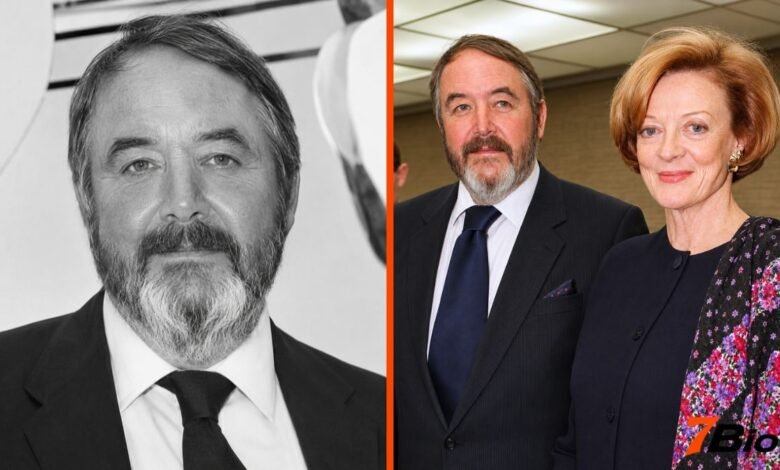
Beverley Cross (13 April 1931 – 20 March 1998) was an English playwright, librettist and screenwriter whose work made a lasting contribution to British theatre and cinema. His writing credits include the musical Half a Sixpence, the stage adaptation of Boeing-Boeing, and the fantasy films Jason and the Argonauts and Clash of the Titans. He was also married to celebrated British actress Dame Maggie Smith.
Although many people discover Cross through his marriage to Smith, his professional achievements deserve attention in their own right. From original plays to opera librettos and imaginative screenplays, he developed a remarkably varied career that brought his storytelling to audiences across different generations.
Quick Bio
| Detail | Information |
|---|---|
| Full Name | Alan Beverley Cross |
| Professional Name | Beverley Cross |
| Born | 13 April 1931 |
| Birthplace | London, England |
| Died | 20 March 1998 |
| Age at Death | 66 years |
| Nationality | English |
| Profession | Playwright, librettist, screenwriter |
| Notable Theatre Work | One More River, Half a Sixpence, Boeing-Boeing |
| Notable Films | Jason and the Argonauts, Sinbad and the Eye of the Tiger, Clash of the Titans |
| Spouse | Dame Maggie Smith (1975–1998) |
| Recognition | Tony Award nominations for Half a Sixpence in 1965 |
Who Was Beverley Cross?
Beverley Cross was a versatile British writer whose career crossed several branches of dramatic entertainment. He wrote original plays, adapted existing stories for the stage, created musical theatre books and opera librettos, and developed screenplays for major film productions.
His creative work covered a wide range of subjects. He could write about conflict and moral responsibility in serious drama, use misunderstandings to build theatrical comedy, or construct fantastic adventures involving figures from mythology.
That ability to move between genres distinguished him from writers whose careers remained within a single theatrical tradition.
Cross also worked during an important period of British entertainment history, when West End productions, musical theatre and international film projects offered writers opportunities to reach increasingly broad audiences.
Early Life and Educational Background
Growing Up Around Theatre
Alan Beverley Cross was born in London on 13 April 1931. His family had theatrical connections: his father was a theatre manager, and his mother was an actress.
This background introduced him to the performing arts before he began establishing himself professionally.
He attended Nautical College Pangbourne, an institution with a strong maritime tradition. His education was followed by military and seafaring experience, including service in the merchant marine.
Those experiences later informed his dramatic writing, particularly as he developed stories involving ships, authority, and difficult moral decisions.
Oxford and His First Professional Experiences
Cross subsequently studied at Balliol College, Oxford, where he participated in theatrical activities.
He also gained acting experience, including work associated with the Shakespeare Memorial Theatre at Stratford-upon-Avon.
Before establishing himself as a writer, he worked in performance and television production. These experiences introduced him to the practical demands of theatrical storytelling, including dialogue, character development, and the relationship between actors and audiences.
Rather than building his career primarily as a performer, Cross eventually concentrated on writing.
The Breakthrough That Established His Theatre Career
One More River and Early Recognition
Cross attracted professional attention with his play One More River, which premiered in Liverpool in 1958 before reaching London’s West End in 1959.
The drama centers on a shipboard mutiny and questions of responsibility, authority and justice. Its setting drew upon a world that Cross understood through his own maritime background.
The production demonstrated that he could develop serious dramatic material around tense human relationships.
Its success helped him establish a professional reputation while still a relatively young playwright.
His next notable play, Strip the Willow, featured Maggie Smith in an early stage role. The production became significant not only within Cross’s theatrical career but also in the personal history of two figures who would later marry.
Beverley Cross and His Success in Musical Theatre
Half a Sixpence Became a Major Achievement
One of Cross’s most recognizable theatre credits is Half a Sixpence, the musical comedy that premiered in London in 1963.
The production was adapted from Kipps, the novel by H. G. Wells, and featured music and lyrics by David Heneker.
Cross wrote the musical’s book, shaping the dramatic structure and spoken dialogue that connected its songs and scenes.
The production starred Tommy Steele and became a major success.
Its story follows Arthur Kipps, a young man whose unexpected change in financial circumstances brings new opportunities and complications.
The musical combines romantic comedy with questions about class, identity and personal happiness.
Cross’s role was to translate the novel’s narrative into a theatrical form that could accommodate musical performances while keeping the central characters and story recognizable.
Tony Award Recognition
Half a Sixpence reached Broadway in 1965.
Cross received a Tony Award nomination for Best Author (Musical), while the production also received a nomination for Best Musical.
These nominations represented an important international acknowledgment of his musical theatre work.
The production’s success also demonstrated his effectiveness as an adaptor, capable of reshaping established literary material for a different medium.
His Contribution to Comedy and Stage Adaptations
The Success of Boeing-Boeing
Another significant achievement was Cross’s English-language adaptation of Boeing-Boeing, the French farce written by Marc Camoletti.
The comedy revolves around a complicated romantic arrangement that becomes increasingly difficult to maintain.
Its humor depends on carefully timed misunderstandings, overlapping relationships, and escalating situations.
Cross’s adaptation became associated with the play’s successful English-language theatrical history.
The production enjoyed a lengthy West End run, and subsequent revivals kept the comedy in the public eye.
A 2008 Broadway revival also credited Cross among its translators.
Other Theatre Productions
Cross continued developing stage adaptations throughout his career.
His theatrical writing included an adaptation of The Scarlet Pimpernel, based on the novel by Baroness Orczy. The production appeared in London’s West End in 1985.
His wider catalog also included historical drama, children’s theatre and adaptations of European theatrical works.
These projects demonstrate the breadth of his writing interests beyond the two productions most frequently associated with his name.
Beverley Cross as a Playwright and Librettist
The description of Cross as a playwright and librettist reflects an important distinction in Cross’s professional career.
A playwright writes dramatic works intended for performance, while a librettist writes the text of an opera or other musical drama.
Cross worked successfully in both areas.
Collaborations with Richard Rodney Bennett
He wrote librettos for operas by the British composer Richard Rodney Bennett, including The Mines of Sulfur and Victory.
The latter was based on Joseph Conrad’s novel and premiered at the Royal Opera House in London in 1970.
Writing an opera libretto requires a different approach from producing an ordinary stage play. The language must support musical composition, dramatic movement and character expression.
Cross’s involvement in these productions shows how his storytelling extended into more formally structured musical drama.
The Rising of the Moon
Cross also collaborated with composer Nicholas Maw on the opera The Rising of the Moon.
The work premiered at Glyndebourne on 19 July 1970.
Glyndebourne’s production archive identifies Cross as the librettist, confirming his contribution to an important work of twentieth-century British opera.
His collaborations with established composers remain a meaningful part of his professional legacy, even though his screenplays have become more familiar to many modern audiences.
Film Career and Famous Screenplays
Cross’s screenwriting brought his work to cinema audiences, particularly through historical adventures and fantasy films.
Jason and the Argonauts (1963)
One of his most enduring screenwriting credits is Jason and the Argonauts.
The film draws upon Greek mythology and follows Jason’s dangerous quest for the Golden Fleece.
Its combination of legendary characters, ambitious adventure storytelling, and Ray Harryhausen’s stop-motion visual effects helped establish its lasting reputation among fantasy-film enthusiasts.
Cross’s screenplay provided a dramatic framework for the journey, giving structure to the sequence of mythological encounters.
Genghis Khan and Other Historical Adventures
Cross also received screenplay credits for The Long Ships (1964) and Genghis Khan (1965).
These productions expanded his association with large-scale adventure cinema.
Historical and mythological subjects suited the dramatic situations he often explored, including confrontation, leadership, loyalty, and difficult choices.
Sinbad and the Eye of the Tiger (1977)
Cross returned to fantasy adventure through Sinbad and the Eye of the Tiger.
The film follows the legendary sailor Sinbad on a journey involving magical threats and extraordinary creatures.
It continued his professional connection to the imaginative adventure cinema style associated with Ray Harryhausen.
Clash of the Titans (1981)
Perhaps his most widely recognized screenplay is Clash of the Titans, released in 1981.
The film draws upon the Greek myth of Perseus and features characters and creatures drawn from classical mythology.
It also became one of the notable fantasy films associated with Harryhausen’s visual-effects work.
The film’s continuing recognition has helped introduce Cross’s name to audiences who may never have encountered his stage productions.
His screenwriting career shows how theatrical experience can translate into cinematic storytelling on a much larger visual scale.
Beverley Cross and Maggie Smith: Their Marriage
Cross’s relationship with Dame Maggie Smith is another important reason readers search for his biography.
The two first met through theatrical circles in the early 1950s.
Their professional and personal lives followed separate paths before they eventually married in June 1975.
Smith had previously been married to actor Robert Stephens, with whom she had two sons, Chris Larkin and Toby Stephens.
Both sons pursued acting careers, and Cross became their stepfather.
Cross and Smith remained married until his death in March 1998.
Their relationship connected two established creative professionals, each with a substantial career in British theatre and entertainment.
Although Smith achieved greater international public recognition as a performer, Cross had already developed an independent body of work as a writer.
Why People Continue Searching for Beverley Cross
Interest in Cross generally comes from several overlapping areas of entertainment history.
Some readers encounter his name while researching Maggie Smith’s life and marriages. Others discover him through the credits of classic fantasy films, particularly Jason and the Argonauts and Clash of the Titans.
Theatre enthusiasts may recognize him as the writer of Half a Sixpence or as the adaptor of Boeing-Boeing.
Opera researchers also encounter his work through collaborations with Richard Rodney Bennett and Nicholas Maw.
These different points of interest explain why his professional identity cannot be reduced to a single occupation or relationship.
He belongs to the histories of British drama, musical theatre, opera and international cinema.
Death and Lasting Professional Legacy
Beverley Cross died in London on 20 March 1998, aged 66.
His death ended a writing career spanning several decades and artistic disciplines.
Yet his work remained accessible through theatrical productions, published scripts, film releases and recorded entertainment history.
One especially notable aspect of his legacy is the diversity of his creative output.
Writers who succeed in straight drama do not necessarily become equally comfortable with musical theatre or opera. Cross developed substantial credits in all three fields before also establishing a recognizable cinema career.
His contribution demonstrates the importance of adaptable storytelling skills in the performing arts.
Privacy, Accuracy and Historical Information
Cross’s career is documented through theatre archives, film catalogs, production records, and contemporary reporting.
These sources provide reliable information about his professional credits, major productions and widely reported biographical milestones.
Descriptions of his life should distinguish documented achievements from interpretations of his private relationships or personal character.
His literary and theatrical contributions offer substantial material for understanding his career without relying on unsupported stories or speculative claims.
Read this too: Kristina Watson: Her Remarkable Broadway Career and Enduring Marriage to Stephen Lang
FAQs
Who was Beverley Cross?
Beverley Cross was an English playwright, librettist and screenwriter who worked in theatre, opera and cinema. His notable credits include Half a Sixpence, Jason and the Argonauts and Clash of the Titans.
Was Beverley Cross married to Maggie Smith?
Yes. He married Dame Maggie Smith in June 1975. Their marriage continued until his death on 20 March 1998.
Which films did Beverley Cross write?
His screenwriting credits include Jason and the Argonauts (1963), The Long Ships (1964), Genghis Khan (1965), Sinbad and the Eye of the Tiger (1977) and Clash of the Titans (1981).
Was Beverley Cross an opera librettist?
Yes. He wrote librettos for composers including Richard Rodney Bennett and Nicholas Maw. His opera credits include The Mines of Sulfur, Victory, and The Rising of the Moon.
Did Beverley Cross receive a Tony Award nomination?
Yes. In 1965, he was nominated for Best Author (Musical) for Half a Sixpence. The production was also nominated for Best Musical.
Did Beverley Cross have a connection to Toby Stephens?
Yes. Beverley Cross was Toby Stephens’s stepfather. Stephens and his brother Chris Larkin are the sons of Maggie Smith and actor Robert Stephens.
Final Thoughts
Beverley Cross left a substantial record of creative achievement that extends far beyond his association with one of Britain’s most celebrated actresses.
From the serious drama of One More River to the musical appeal of Half a Sixpence and the mythology of Clash of the Titans, his career demonstrates an unusual command of different dramatic forms.
His continuing importance lies in that versatility. As a playwright, librettist and screenwriter, Cross helped bring a remarkable range of stories from the written page to the stage and screen.





One Comment