
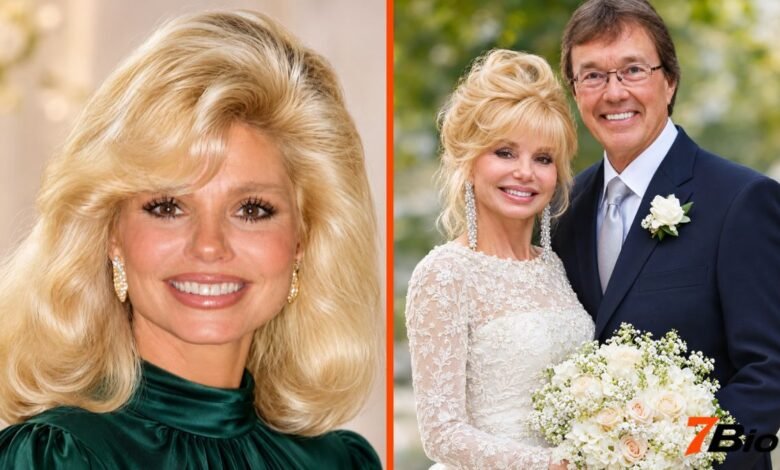
Bob Flick is an American folk singer, bassist, music producer, and founding member of The Brothers Four, the celebrated vocal group behind the 1960 hit Greenfields. He is also recognized for his marriage to Hollywood actress Loni Anderson, who portrayed Jennifer Marlowe in the television sitcom WKRP in Cincinnati.
Flick married Anderson on May 17, 2008, more than four decades after they first met at a film premiere in Minneapolis. Their marriage continued until Anderson’s death on August 3, 2025.
Although his relationship with the actress attracted considerable attention, Flick had established an impressive musical career long before their wedding. His work with The Brothers Four helped introduce American folk music to international audiences, while his later production and arranging projects expanded his contribution to the entertainment industry.
Quick Bio
| Detail | Information |
|---|---|
| Full Name | Bob Flick |
| Profession | Folk singer, bassist, producer and arranger |
| Nationality | American |
| Hometown | Seattle, Washington, USA |
| Education | Ballard High School; University of Washington |
| Musical Group | The Brothers Four |
| Group Founded | 1957 |
| Famous Recording | Greenfields (1960) |
| Known For | Folk music career and marriage to Loni Anderson |
| Spouse | Loni Anderson (married 2008–2025) |
| Notable Musical Role | Founding member and longtime leader of The Brothers Four |
Who Is Bob Flick?
Bob Flick belongs to a generation of American musicians who helped make acoustic folk music part of mainstream popular culture during the late 1950s and early 1960s.
As a founding member of The Brothers Four, he became associated with carefully arranged vocal harmonies, acoustic instrumentation, and songs built around memorable melodies and storytelling.
His musical identity is particularly connected to the upright bass and baritone singing. Both contributed to the quartet’s distinctive sound.
Unlike performers whose fame rests on an individual solo career, Flick achieved recognition through collaborative music-making. He played, sang, arranged, and helped maintain the group’s professional direction across changing musical eras.
For audiences unfamiliar with the American folk revival, his career also offers a useful introduction to a period when university musicians could move from informal campus performances to major recording contracts.
Early Life and Education in Seattle
Childhood Interest in Performance
Bob Flick grew up in Seattle, Washington, where his interest in entertainment developed during his school years.
According to the Ballard High School Foundation, he began organizing sketches and magic performances while attending Whittier Elementary School. Those early activities led to opportunities to entertain service members through an Elks USO troupe.
Music subsequently became an important part of his education.
At Ballard High School, Flick participated in a vocal ensemble called the Double Quartet, which consisted of eight singers. His involvement helped develop the musical interests that later became central to his professional life.
He was a member of Ballard High School’s class of 1956 and was subsequently recognized by the school’s foundation through its Wall of Recognition in 2000.
University of Washington Years
Flick entered the University of Washington in 1956.
There, he became involved with the Phi Gamma Delta fraternity and met three fellow students who shared his enthusiasm for music: Dick Foley, Mike Kirkland and John Paine.
The four began performing folk and calypso songs at fraternity gatherings and university events.
In an interview about the group’s beginnings, Flick explained that music initially represented an enjoyable part of student life rather than a carefully planned professional career.
That informal collaboration eventually developed into The Brothers Four.
The Brothers Four: From University Students to Folk Music Success
Forming the Group in 1957
The Brothers Four emerged in 1957 during a period of growing interest in American folk music.
Their early performances relied on acoustic instruments and vocal harmony rather than elaborate stage production.
The group’s musical approach distinguished it from some politically focused folk performers who became prominent in the following decade.
Flick described their material as popular folk music, emphasizing entertainment, traditional songs, and accessible storytelling.
Their developing reputation brought them opportunities beyond Seattle, including an appearance at the Hungry i nightclub in San Francisco.
Signing With Columbia Records
By 1958, the quartet had attracted Columbia Records’ attention.
A recording agreement took the musicians to New York, where they entered a competitive entertainment industry as folk music attracted substantial public interest.
The members were still young musicians whose professional careers had grown out of university performances. Nevertheless, their combination of instrumental playing and polished vocal arrangements helped them reach audiences beyond the college circuit.
The recording contract marked an important turning point in Flick’s musical journey.
The Success of Greenfields
The Brothers Four achieved their breakthrough with Greenfields, released in 1960.
The recording reached number two on the American pop chart, establishing the quartet as a successful recording act.
Its gentle arrangement and memorable harmonies reflected the qualities that listeners associated with the group.
The song also became an enduring part of their repertoire, helping introduce their music to subsequent generations.
For Flick, the achievement demonstrated how songs rooted in acoustic folk traditions could appeal to listeners across the mainstream music market.
A Long Career Beyond the Original Folk Revival
The Brothers Four continued performing through musical changes that transformed popular entertainment during the 1960s and beyond.
While rock music and the British Invasion reshaped the industry, the group maintained its association with traditional and contemporary folk material.
Its membership changed over the decades, but Flick remained an important figure in preserving its identity.
His professional responsibilities also extended beyond playing bass and singing.
The group’s official biography identifies him as a leader, composer, producer and arranger. His wider work includes music for television programs, documentary films and other audiovisual productions.
These activities reveal a professional career with several dimensions. Flick has contributed not only as an onstage performer but also through the creative and technical work involved in preparing music for different formats.
His Musical Legacy in 2026
The Brothers Four continued to advertise concert activity in 2026, including performances scheduled in Japan during September and Washington state during October.
Their official concert calendar illustrates the continuing international appeal of the group’s repertoire.
Flick’s long association with the quartet gives his career particular historical significance. He helped establish the group during the original American folk revival and remained closely connected to its musical direction many decades later.
Bob Flick and Loni Anderson: A Relationship That Began in 1963
Their First Meeting
One of the most memorable aspects of Bob Flick’s personal story is his relationship with actress Loni Anderson.
They first met on May 17, 1963, at a film premiere in Minneapolis, Minnesota.
At the time, The Brothers Four had already experienced chart success, while Anderson had not yet become the internationally recognized television actress familiar to later audiences.
A local newspaper arranged for Anderson to pose in a photograph with the musicians.
What initially seemed like an ordinary publicity opportunity would take on special meaning decades later.
Marriage on May 17, 2008
Flick and Anderson married in California on May 17, 2008, exactly 45 years after their first meeting.
The couple incorporated their original 1963 photograph into their wedding celebrations, creating a direct connection between their first encounter and their marriage.
Anderson’s son, Quinton Reynolds, walked her down the aisle.
Their wedding attracted entertainment-media coverage because Anderson was a familiar television personality and Flick already had an established reputation in the music industry.
The occasion also drew interest because of the unusual length of time separating their first meeting and eventual marriage.
Their Life Together
Following their wedding, Flick and Anderson occasionally appeared together at entertainment events and public celebrations.
Anderson continued to be recognized for her acting career, particularly her portrayal of Jennifer Marlowe in WKRP in Cincinnati. Flick remained a folk musician and member of The Brothers Four.
Their relationship was frequently described in entertainment coverage through the contrast between their respective professional backgrounds: television acting and popular folk music.
The couple remained married for more than 17 years.
Loni Anderson’s Death in 2025
Loni Anderson died on August 3, 2025, aged 79, at a Los Angeles hospital.
Her longtime publicist, Cheryl J. Kagan, confirmed her death, and the Associated Press reported it.
At the time of her death, Anderson was married to Bob Flick. She was also survived by her children, grandchildren, and other family members.
The news prompted renewed public interest in her television career and personal history, including her marriage to Flick.
For readers discovering his name through Anderson’s obituary, his earlier work with The Brothers Four provides important context. His professional achievements had already spanned several decades before the relationship became widely discussed.
Why Do People Search for Bob Flick?
Interest in Bob Flick generally comes from two overlapping areas of entertainment history.
The first is his role in The Brothers Four, particularly the group’s 1960 recording of Greenfields. Listeners researching American folk music, acoustic harmony groups, or early-1960s popular music often encounter his name.
The second is his relationship with Loni Anderson.
Her longstanding television popularity, their 2008 wedding, and her death in 2025 have all contributed to public searches about the musician.
Understanding both aspects gives a more complete picture of his life. He is not simply someone connected to a famous actress; he is an established performer whose career is part of the history of American popular folk music.
Public Information and Personal Privacy
Reliable accounts of Bob Flick’s life provide substantial information about his education, musical work, and marriage.
However, some personal details frequently repeated by celebrity biography websites are not supported by dependable documentation.
For example, exact net-worth estimates should not be presented as facts without credible financial evidence.
His biography is more accurately understood through documented professional achievements, historical recordings, published interviews, and confirmed family events.
Read this too: Justin Mikita: The Remarkable Career Connecting Broadway, Law and LGBTQ+ Advocacy
FAQs
Who is Bob Flick?
Bob Flick is an American folk singer, bassist, composer, and music producer. He helped establish The Brothers Four in 1957 and was married to actress Loni Anderson.
Was Bob Flick married to Loni Anderson?
Yes. Bob Flick married Loni Anderson on May 17, 2008. Their marriage lasted until her death on August 3, 2025.
What band was Bob Flick in?
He is a founding member of The Brothers Four, an American folk group that rose to prominence during the late 1950s and early 1960s.
What is Bob Flick’s most famous song?
He is best known for The Brothers Four’s recording of Greenfields, which reached number two on the American pop chart in 1960.
How did Bob Flick meet Loni Anderson?
They met at a film premiere in Minneapolis on May 17, 1963. Anderson posed for a photograph with The Brothers Four, and the picture later became part of their wedding celebrations.
What is Bob Flick known for in 2026?
He remains recognized for his longstanding association with The Brothers Four, his work as a musician and producer, and his marriage to the late Loni Anderson. The group’s official website listed concert activity during 2026.
Final Thoughts
Bob Flick’s life connects two distinctive chapters of American entertainment history: the rise of popular folk music and the celebrity culture surrounding television stars.
His musical achievements began with fellow university students in Seattle and developed into a professional career marked by successful recordings, international performances, and production work.
His marriage to Loni Anderson brought another dimension to his public story, especially because their relationship began with a chance meeting more than four decades before their wedding.
Yet his most enduring professional contribution remains the music he helped create and preserve through The Brothers Four. That legacy offers readers a fuller understanding of the musician behind a familiar Hollywood connection.





One Comment