Remote Nursing Jobs: A Practical Guide to Working From Home in Healthcare
Explore home-based nursing careers, professional requirements, salaries, application strategies, and the realities of virtual patient care.

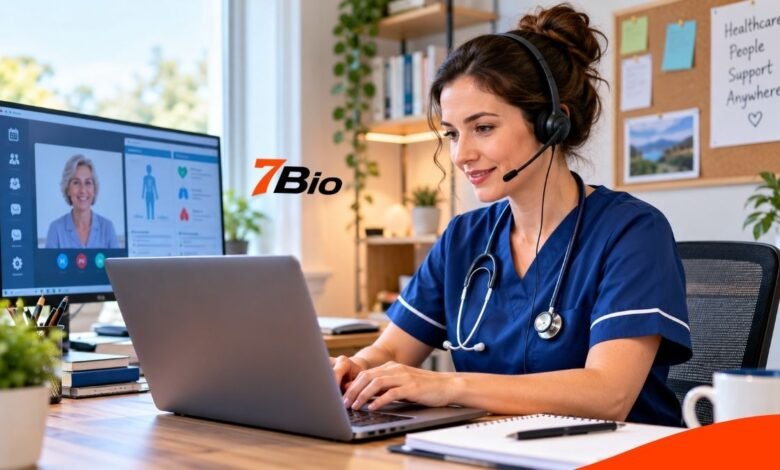
Remote nursing jobs let qualified healthcare professionals use their clinical knowledge without spending every working day in a hospital, GP surgery, or community clinic. Depending on the role, nurses may assess patients over the phone, review medical information, provide virtual consultations, coordinate ongoing care, or support clinical decisions through secure digital systems.
In the United Kingdom, home-based opportunities are available in NHS services, private healthcare organizations, occupational health, insurance-related assessment, and digital health. However, not every advertised remote position is fully home-based. Some require office attendance, clinical visits, in-person training or occasional travel.
For registered nurses considering a career change, the challenge is identifying roles that genuinely match their qualifications, experience and preferred working arrangements.
This guide explains the main remote nursing careers, how to qualify, where to search and what to check before accepting an offer.
What Are Remote Nursing Jobs?
Remote nursing involves carrying out nursing-related responsibilities outside a traditional clinical workplace, often using telephone systems, video consultations, electronic patient records, and secure healthcare platforms.
The work can involve direct patient contact or activities that support clinical services without hands-on treatment. For example, a telephone triage nurse may assess symptoms and determine the appropriate next step. At the same time, a clinical case manager may review records and coordinate services for people with complex healthcare needs.
The distinction between remote, hybrid, and location-independent employment matters. A fully remote nursing position may allow someone to work primarily from an approved home office. A hybrid position combines working from home with attendance at an office or clinical setting. Neither arrangement automatically allows an employee to work from another country.
Clinical responsibility does not disappear when nursing moves online. Patient safety, confidentiality, accurate documentation, and professional judgment remain essential.
9 Types of Remote Nursing Jobs in the UK
Different positions require different clinical backgrounds, communication abilities and levels of experience. The following roles provide realistic starting points for exploring the market.
| Nursing role | Main responsibilities | Typical working arrangement |
|---|---|---|
| Telephone triage nurse | Assess symptoms and advise on next steps | Remote or hybrid |
| Telehealth nurse | Provide telephone or video-based care | Remote or hybrid |
| Clinical functional assessor | Assess health-related functional needs and prepare reports | Remote or hybrid |
| Virtual ward nurse | Review patient observations and coordinate care | Hybrid or partly remote |
| Occupational health nurse | Support employee health assessments and advice | Remote, hybrid or onsite |
| Nurse case manager | Coordinate care plans and review clinical needs | Remote or hybrid |
| Nurse educator | Deliver professional training and learning support | Remote or hybrid |
| Clinical documentation reviewer | Review healthcare records and documentation quality | Employer-dependent |
| Digital health nurse | Support clinical technology, digital pathways and health informatics | Remote or hybrid |
These are career categories, not a list of currently available vacancies. Individual job descriptions determine the precise duties and location requirements.
1. Telephone Triage Nurse
Telephone triage nurses assess patients through structured conversations, asking relevant questions about symptoms, medical history and potential warning signs. Their responsibilities may include identifying situations that require urgent escalation, providing appropriate advice within approved pathways and documenting clinical decisions.
Services such as NHS 111, primary care providers and private telephone advice services may employ professionals with relevant assessment experience.
This work suits nurses who can communicate clearly, recognize clinical risk and make careful decisions without physically examining a patient.
2. Telehealth Nurse
Telehealth nurses communicate with patients by phone or video. Their activities may include follow-up consultations, ongoing condition management, treatment education, medication-related discussions within their competence, and coordinating referrals.
The exact scope depends on the healthcare service and the nurse’s professional qualifications.
Telehealth requires more than confidence with video calls. Nurses must understand the limitations of remote assessment, recognize when an in-person examination is necessary, and follow established escalation procedures.
3. Clinical Functional Assessor
Clinical functional assessment offers an alternative career for nurses interested in structured assessments and detailed report writing.
Some UK employers recruit registered nurses to assess how health conditions or disabilities affect a person’s daily activities and functioning. Duties may involve reviewing medical evidence, conducting telephone or video assessments and completing reports against specified assessment criteria.
These positions can provide more predictable working patterns than some hospital jobs, although individual contracts, workload expectations and training arrangements vary.
The work is primarily assessment-focused rather than providing ongoing treatment. Applicants should understand the independence, evidence standards and ethical responsibilities expected in these roles.
4. Virtual Ward Nurse
Virtual wards, sometimes described as hospital-at-home services, support selected patients who require hospital-level care while remaining in their usual place of residence.
Technology-enabled services let clinical teams review observations such as oxygen saturation, pulse, blood pressure, and other measurements through secure monitoring platforms.
Nurses may review incoming data, contact patients, identify deterioration and coordinate intervention with multidisciplinary teams.
A virtual ward job is not necessarily a work-from-home job. Some roles require community visits, clinical procedures, or attendance at a healthcare base. Applicants should carefully review the rota and location requirements.
5. Occupational Health Nurse
Occupational health nursing focuses on the relationship between health and work. Responsibilities can include employee health assessments, workplace wellbeing advice, return-to-work support, and reports prepared in line with professional and confidentiality requirements.
Some duties can be completed remotely, particularly consultations, administrative reviews and certain advisory activities. Others may require attendance at the workplace or clinical examinations.
Employers may request experience in occupational health and additional qualifications, depending on the role and responsibilities.
6. Nurse Case Manager
Nurse case managers help organize and review care for patients with multiple health needs, providers, or services.
Their work may include analyzing clinical records, communicating with healthcare professionals, coordinating treatment plans, and reviewing whether agreed arrangements remain appropriate.
Possible employers include healthcare providers, care coordination organizations, and some insurance-related services.
Successful case managers need strong organizational skills, sound clinical judgment, and accurate record-keeping.
7. Remote Nurse Educator
Nurse educators use professional experience to support learning, training and clinical development.
Activities may include delivering online teaching sessions, preparing learning resources, supporting professional development and explaining clinical procedures or standards to healthcare staff.
Some education roles involve occasional practical teaching or onsite assessment, so remote positions may still require travel.
Relevant teaching experience, specialist clinical expertise or an education qualification may strengthen an application.
8. Clinical Documentation Reviewer
Clinical documentation positions focus on the quality, accuracy and completeness of healthcare records.
Depending on the employer, nurses may review documentation against defined clinical and organizational standards, identify information gaps, support quality assurance and communicate with clinical teams.
These positions demand attention to detail and an understanding of clinical terminology. Some jobs also require familiarity with specific electronic record systems or specialist documentation standards.
They can appeal to experienced nurses who prefer analytical work, although many employers seek previous experience in audit, governance or documentation improvement.
9. Digital Health Nurse
Digital health nursing connects clinical practice with healthcare technology.
Nurses in digital services may help develop clinical workflows, support electronic patient record implementation, contribute to system training, or provide clinical input to digital service design.
The responsibilities vary considerably. Some roles are predominantly technical or project-based, while others remain directly patient-facing.
Knowledge of patient safety, clinical processes and information governance is particularly valuable.
Qualifications Needed for Remote Nursing Careers
Most positions involving registered nursing practice in the UK require registration with the Nursing and Midwifery Council (NMC).
Employers may also specify a particular nursing field, relevant clinical experience, specialist training, or familiarity with telephone assessment.
Important requirements commonly include:
- Current professional registration: Where required for the position, applicants must maintain appropriate NMC registration.
- Clinical competence: Nurses need knowledge and experience relevant to their assigned responsibilities.
- Communication skills: Clear questioning, listening, and written communication are vital in remote assessments.
- Digital confidence: Employees must use approved clinical systems and maintain accurate electronic records.
- Professional judgment: Remote consultations require recognizing uncertainty, safety concerns, and when to escalate.
- Information security: Patient details must be protected in accordance with applicable data protection requirements and employer policies.
Registered professionals must also have appropriate professional indemnity arrangements when practicing in their professional capacity.
Not every healthcare administration, recruitment, education, or technology role requires active nursing registration. Eligibility should always be assessed against the actual job description.
Where to Find Legitimate Remote Nursing Jobs
Finding suitable vacancies means looking beyond the general phrase “work from home nurse.” Employers frequently advertise positions using specialist job titles.
Search NHS Jobs
The official NHS Jobs recruitment platform provides opportunities from participating NHS organizations and other eligible healthcare employers.
Search for terms such as telephone triage nurse, clinical assessor, virtual ward nurse, nurse adviser or remote advanced nurse practitioner.
Where available, use the Home or remote working filter and examine each vacancy’s working pattern. A remote filter does not guarantee that the position involves no travel.
Explore Professional and Employer Career Pages
The Royal College of Nursing provides career guidance covering nursing opportunities outside conventional clinical settings. Jobseekers can also review the recruitment pages of private healthcare providers, occupational health companies, and digital health organizations.
General recruitment platforms such as Indeed and LinkedIn may provide additional listings, but important details should be checked with the actual employer.
Use Specific Search Terms
Instead of repeating one broad search, try combinations such as:
- Remote registered nurse UK
- Home-based telephone triage nurse
- Clinical assessor nurse remote
- Telehealth nurse work from home
- Occupational health nurse hybrid
- Remote nurse case manager
Set job alerts where supported, verify the publishing date, and check whether the employer is still accepting applications.
How Much Do Remote Nursing Jobs Pay?
No single reliable salary figure represents every remote nursing career in the UK.
Pay depends on the employer, seniority, specialist qualifications, location, contractual hours and responsibilities. An NHS-employed nurse may be paid under an applicable NHS pay framework, while private-sector assessors, occupational health professionals, and digital health specialists may have different salary arrangements.
Some advertisements include performance-related payments, allowances or bonuses. Do not treat these as guaranteed earnings unless the contract makes the conditions clear.
When comparing offers, examine the basic salary separately from potential bonuses. Also consider paid training, pension arrangements, annual leave, equipment provision, travel costs, professional development and the length of any probationary period.
A higher advertised salary may be less attractive if the role involves extensive reporting targets, frequent travel, or working hours that don’t suit the applicant.
How to Apply Successfully
A strong application should show how previous clinical experience transfers to the exact responsibilities advertised.
Start with the job description. Identify whether the position requires triage experience, assessment skills, specialist knowledge, or digital documentation. Tailor the application around those requirements rather than presenting a general list of nursing duties.
Describe relevant accomplishments accurately. Examples might include managing complex caseloads, supporting multidisciplinary communication, completing detailed patient assessments or using electronic clinical systems.
Applicants moving from ward-based practice should explain why their clinical knowledge is relevant to remote work. Experience recognizing deterioration, communicating sensitive information, and maintaining accurate records can be particularly useful.
Interview preparation should include clinical scenarios and discussions about safe decision-making. Employers may ask how a nurse would respond to incomplete information, a patient reporting worsening symptoms, or a technology failure during a consultation.
The strongest answers show an understanding of professional boundaries, appropriate escalation, and patient-centered care, rather than suggesting every problem can be solved remotely.
Benefits and Challenges of Working From Home as a Nurse
Remote nursing can reduce commuting and provide access to roles with working patterns different from traditional hospital shifts. Some assessment, education, or administrative roles may offer more predictable schedules, although flexibility is not guaranteed.
These opportunities can also let experienced professionals keep using their nursing knowledge in a different environment.
There are limitations. Remote consultations can make assessment harder when a physical examination isn’t possible. Continuous screen time, phone calls, and documentation targets can be tiring. Some professionals may also miss regular face-to-face interaction with colleagues and patients.
Working from home requires an appropriate private workspace, reliable connectivity and access to employer-approved equipment.
Healthcare information must never be handled casually. Nurses should follow approved information security procedures, protect screens and conversations from unauthorized access, and avoid transferring patient information to personal messaging or storage systems.
A good remote position should provide clear supervision, technical support, escalation pathways and appropriate professional development.
Can Newly Qualified Nurses Work Remotely?
Newly qualified nurses may encounter remote-related opportunities, but many independent assessment and clinical advice roles prefer or require experience in direct patient care.
That expectation reflects the judgment needed when physical examination is unavailable, and decisions depend on clinical information gathered through conversation or digital systems.
For someone beginning a nursing career, developing assessment skills, gaining experience with electronic records, and understanding relevant clinical pathways can build a stronger foundation for future remote applications.
The right route depends on the role, supervision availability, and the employer’s training requirements. Newly registered professionals should not assume that home-based clinical work is automatically suitable for inexperienced applicants.
Warning Signs of Remote Nursing Recruitment Scams
Healthcare professionals should approach suspicious recruitment ads carefully, especially when they arrive through unsolicited messages.
Warning signs include demands for unusual advance payments, requests for financial information before an employer’s identity can be established, unrealistic earnings promises, and pressure to accept an offer immediately.
Fraudulent recruiters may also imitate genuine organizations or describe nonexistent recruitment administration and background-check fees.
Before sending sensitive documents, independently verify the organization, check its official recruitment process, and confirm the advertised role exists.
Legitimate employment should involve clear information about duties, registration requirements, contractual terms, data protection responsibilities and appropriate onboarding arrangements.
Final Takeaway
Remote nursing jobs offer UK healthcare professionals several ways to apply clinical expertise beyond conventional hospital and community settings. Telephone triage, telehealth, functional assessment, care coordination, education and digital health each provide different responsibilities and working arrangements.
The best position depends on qualifications, experience, preferred working hours, and the type of patient contact an applicant wants to maintain.
Successful career decisions require more than finding an advertisement labeled remote. Understanding the actual duties, assessing patient-safety responsibilities and checking employer expectations are essential.
For nurses considering a transition, a focused search, a carefully prepared application, and a realistic understanding of home-based healthcare work provide a practical starting point.
FAQs
1. Can nurses work entirely from home in the UK?
Yes. Some telephone triage, clinical assessment, case management and other nursing-related positions can be performed entirely from an approved home-working location. However, many vacancies are hybrid or involve travel, training or occasional attendance at clinical facilities.
2. Do remote nursing jobs require an NMC registration?
UK roles involving registered nursing practice generally require appropriate NMC registration. Some non-clinical education, administration, recruitment or technology positions may not require active registration. Eligibility depends on the employer’s requirements and the nature of the duties.
3. Which remote nursing roles are suitable for experienced nurses?
Experienced nurses may consider telephone triage, telehealth, clinical functional assessment, occupational health, case management, documentation review, and specialist digital health positions. Suitability depends on the particular clinical background and any additional training required.
4. Are remote nursing jobs less stressful than hospital nursing?
Not necessarily. Some positions offer predictable hours or avoid the physical demands of ward work, but they may involve complex decisions, demanding caseloads, documentation deadlines and prolonged telephone or computer work. Stress levels depend on the role, workload and employer support.
5. Where is the best place to search for remote nursing vacancies?
NHS Jobs is a useful starting point for UK opportunities, especially when you combine it with its home or remote-working filter. Nurses can also search healthcare employers’ official career pages, professional nursing resources, and established recruitment websites using specific job titles rather than broad keywords.