
Furnace Repair: A Practical Guide to Diagnosing Heating Problems Safely
Learn which furnace problems you can safely check yourself, which warning signs need professional attention, and how to make a sensible repair-or-replace decision.

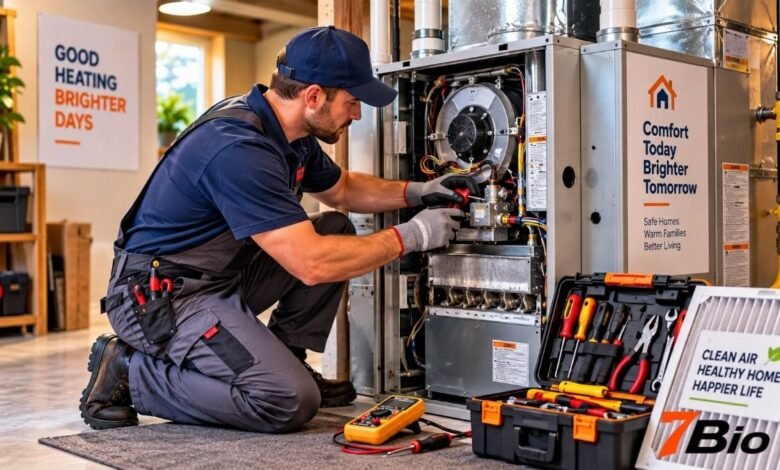
When a furnace stops heating properly, the safest response is not to replace parts right away. Effective furnace repair begins by identifying the symptom, checking a few low-risk causes, and recognizing when combustion, gas, electrical, or internal mechanical work requires a qualified technician.
A furnace can stop working because of something as straightforward as an incorrect thermostat setting, interrupted power, or restricted airflow. The same “no heat” symptom, however, can also result from ignition, venting, control-board, blower, or fuel-system faults. That is why diagnosis matters more than guessing which component has failed.
This guide focuses on residential forced-air furnaces, particularly gas-fired systems. It explains safe homeowner checks, common failure patterns, professional diagnosis, maintenance and repair-versus-replacement decisions. Industrial furnaces and domestic boilers require different procedures.
Quick Answer
Start furnace repair with the thermostat, electrical supply, air filter, vents, and any visible fault code. Stop troubleshooting and seek professional help when the problem involves gas, combustion, repeated electrical faults, internal controls, abnormal burning smells, suspected venting problems, or a carbon monoxide alarm.
What Does Furnace Repair Actually Involve?
A furnace isn’t a single component. It is a heating system whose controls and mechanical parts must operate in the correct sequence.
When a thermostat requests heat, a gas furnace typically must establish safe operating conditions before ignition. Depending on its design, that process can involve an inducer motor, pressure switch, ignition device, gas valve, and flame-sensing system. The blower then moves heated air through the ductwork.
If one stage doesn’t complete successfully, the furnace may shut down rather than keep running.
That distinction is useful because symptoms alone rarely prove which component has failed. A furnace that starts and stops repeatedly, for example, could have an airflow problem, a control fault, a flame-detection problem, or another issue. Accurate furnace repair therefore means finding the cause rather than replacing a component simply because it appears on a list of common failures.
Safe Furnace Checks You Can Make Before Calling a Technician
A homeowner can perform several basic checks without opening combustion components or interfering with safety controls.
Check the thermostat
Confirm that the thermostat is set to Heat and that the requested temperature is above the current indoor temperature.
If the thermostat uses replaceable batteries and its display is blank or behaving unusually, check the batteries per the instructions. Also confirm that a programmable thermostat hasn’t been left on an unexpected schedule or in an energy-saving mode.
Confirm the furnace has electrical power
Even a gas furnace depends on electricity for controls, motors, and ignition.
Check whether the furnace service switch has accidentally been turned off and whether the relevant circuit breaker has tripped. A breaker that trips again after being reset once can indicate an electrical problem and should not simply be reset repeatedly.
Inspect the air filter
Restricted airflow can interfere with heating performance and place extra load on equipment. DOE building-science guidance notes that a dirty or clogged filter can reduce airflow and increase furnace run time, motor wear, and energy use.
Remove or inspect the filter only as the equipment manufacturer directs. Replace disposable filters or clean reusable filters according to their instructions rather than assuming one universal replacement interval.
Check supply and return vents
Make sure obvious supply registers and return-air openings have not been unintentionally blocked by furniture, boxes, rugs, or other objects.
Poor airflow doesn’t automatically mean the furnace is defective. Duct restrictions, damaged ducts, and airflow imbalance can contribute to uneven temperatures and poor heating performance.
Record the fault code before resetting anything
Many modern furnaces have an LED indicator or display that stores or shows diagnostic information.
If a code is visible, write it down or photograph it before turning off the power. Interpret the code using the manual for the exact furnace model because manufacturers do not use one universal fault-code system.
Never bypass a pressure switch, rollout switch, limit switch, door interlock, or other safety device to run the furnace.
Common Furnace Problems and What the Symptoms May Mean
The following table is a troubleshooting guide, not a component diagnosis.
| Symptom | Possible areas to investigate | Safe homeowner action | When professional diagnosis is appropriate |
|---|
| Furnace will not start | Thermostat, power, control circuit, ignition sequence | Check thermostat, service switch, breaker and visible fault code | If basic checks do not restore operation |
| Furnace runs but house stays cold | Filter, airflow, ducts, burners, system capacity | Check filter and unobstructed vents | If airflow or heat output remains poor |
| Furnace starts then stops quickly | Restricted airflow, safety limit, flame sensing, control problem | Inspect filter and record fault code | Repeated short cycling should be diagnosed |
| Blower runs but air is not warm | Ignition, burners, thermostat/control problem | Confirm thermostat settings | Internal diagnosis normally required |
| Unusual grinding or repeated mechanical noise | Blower, inducer or motor components | Turn the system off if the noise is severe | Have moving or electrical components inspected |
| Water around a high-efficiency furnace | Condensate drain, trap or internal drainage | Avoid disturbing internal components | Persistent leakage needs diagnosis |
| Gas-type “rotten egg” smell | Possible fuel leak | Leave the building | Treat as an emergency |
| Carbon monoxide alarm | Possible combustion source in or around the property | Leave for fresh air | Contact emergency services and do not reuse suspect equipment until cleared |
Gas odor requires a different response.
If you smell the distinctive odor associated with natural gas, do not treat it as a normal furnace repair job.
U.S. Pipeline and Hazardous Materials Safety Administration guidance says people should leave the affected area, avoid flames, and avoid operating electrical switches or equipment that could produce an ignition source. Contact emergency services or the gas provider from a safe location.
Do not remain inside trying to identify where the smell originates.
Take a carbon monoxide alarm seriously.
Carbon monoxide is colorless and effectively odorless. Fuel-burning appliances, including malfunctioning furnaces, can be sources when combustion or venting is defective.
If a CO alarm sounds, CPSC guidance says occupants should move outside to fresh air, contact emergency services, and avoid re-entering until responders say it is safe. Do not operate equipment identified as the source until it is properly serviced.
A carbon monoxide detector is a safety layer, not a replacement for correct installation, maintenance, and venting.
Which Furnace Repairs Should Be Left to a Professional?
Professional furnace repair becomes appropriate once troubleshooting enters the combustion chamber, gas train, internal wiring, or safety-control system.
Examples include diagnosis or replacement involving:
- gas valves and gas piping;
- burners and combustion adjustment;
- ignition controls and igniters;
- flame sensors when internal servicing is required;
- pressure switches and inducer assemblies;
- control boards and line-voltage electrical components;
- blower motors and associated electrical components;
- heat exchangers;
- flues, vent connectors and combustion-air systems;
- safety limits and rollout controls.
The issue is not merely whether a homeowner can physically access a component. A furnace contains controls designed to stop operation when it detects unsafe conditions. Bypassing or incorrectly replacing one can hide the real cause and defeat the system’s protection.
CPSC recommends professional inspection and servicing of heating systems, including chimneys and flues.
What Should a Proper Furnace Repair Visit Include?
A useful service visit should provide more than the name of a failed part.
The technician should first understand the symptom and operating history, then reproduce or verify the fault when conditions allow. Diagnosis should follow the furnace’s operating sequence and take account of airflow, venting, ignition, and safety controls as relevant to the particular system.
After the repair, operate the system through a complete heating cycle so the technician can verify that the original fault has been corrected and the equipment shuts down normally.
For significant work, ask for a written explanation covering:
- What symptom or fault was confirmed?
- What component or condition caused it?
- What work is being recommended?
- Are additional venting, electrical or airflow corrections required?
- What parts and labor are included?
- What warranty applies to the repair?
- What operating checks will be performed afterward?
The ACCA quality-maintenance standard establishes recognized minimum inspection tasks for residential HVAC maintenance, illustrating why a systematic inspection is more useful than a quick component swap.
What Determines Furnace Repair Cost?
No single trustworthy nationwide price applies to every job.
The final cost can depend on the furnace model, failed component, diagnostic time, equipment accessibility, local labor rates, parts availability, warranty coverage, and whether emergency or after-hours service is required.
This is one reason online price lists should be treated as rough market references, not quotes.
When comparing estimates, look at scope, not only the total amount. An inexpensive quote that replaces one part without resolving a combustion, airflow, or venting problem may not represent better value.
Ask for an itemized written estimate before approving substantial work.
Furnace Repair or Replacement: How Should You Decide?
Age alone should not decide whether equipment stays or goes.
ENERGY STAR currently lists a furnace or boiler older than 15 years as one reason to consider replacement. It also points to frequent repairs, rising energy bills, and persistent comfort problems as signals that replacement deserves investigation. These are decision prompts, not an automatic rule requiring disposal at a particular age.
A relatively straightforward furnace repair may be sensible when the system is otherwise operating safely, the failed component is replaceable, and the equipment has not developed a pattern of repeated faults.
Replacement deserves closer consideration when several factors appear together: substantial age, repeated breakdowns, serious heat-exchanger or venting concerns, expensive major-component failures, poor efficiency, persistent comfort problems or difficult parts availability.
If a major diagnosis leads to a replacement recommendation, ask for the evidence behind it. For an expensive or safety-related diagnosis, obtaining a second qualified opinion can also be reasonable when the system has been safely shut down in the meantime.
Understand AFUE when comparing replacements.
For fuel-burning residential furnaces, AFUE — Annual Fuel Utilization Efficiency — describes how much of the fuel’s annual energy input is converted into useful space heat under the applicable test procedure.
ENERGY STAR’s current furnace criteria vary by furnace type and U.S. region. The key point for homeowners is that efficiency should be considered alongside proper sizing, duct condition, and installation quality, rather than treated as a model number that guarantees good performance.
How to Choose a Furnace Repair Contractor
Licensing and insurance requirements vary by location, so check the rules that apply where the property is located.
ENERGY STAR recommends understanding local requirements, getting written, itemized estimates, and considering warranties rather than choosing a contractor solely on price.
For a repair call, ask whether the contractor will diagnose the equipment before recommending parts. For replacement work, the contractor should assess the house and system rather than simply installing another furnace of the same nominal size.
Be cautious when a major replacement is recommended without an explanation of the diagnosed failure, or when safety-related claims are made without evidence to support them.
Preventing Avoidable Furnace Problems
Maintenance cannot prevent every failure, but neglect can contribute to poor airflow, inefficient operation, and unexpected breakdowns.
ENERGY STAR recommends professional pre-season HVAC check-ups and regular filter inspections. Its current guidance notes that dirty filters make heating and cooling systems work harder and can contribute to equipment problems.
For fuel-burning furnaces, CPSC recommends having the heating system professionally inspected and serviced annually, including attention to chimneys and flues.
Homeowners can also keep return and supply openings unobstructed, follow the furnace manufacturer’s maintenance schedule, keep accessible outdoor combustion or exhaust openings clear of debris, and test smoke and carbon monoxide alarms according to their instructions.
Common Furnace Troubleshooting Mistakes
One of the biggest mistakes is replacing a commonly blamed part without confirming why the furnace stopped.
Another is repeatedly resetting a tripped breaker or furnace lockout. A reset can temporarily clear a symptom while leaving its cause unresolved.
Do not defeat safety controls because an online video says doing so will prove that a component is faulty. A pressure switch, rollout switch, or limit control may react to another problem rather than cause it.
Finally, avoid assuming that every heating complaint originates inside the furnace. Thermostats, filters, ductwork, airflow restrictions, and building heat loss can all influence comfort.
Good furnace repair separates the symptom from the underlying cause.
Practical Furnace Repair Checklist
Before arranging non-emergency service:
- Confirm the thermostat is on Heat.
- Check thermostat batteries when applicable.
- Confirm furnace power and the circuit breaker.
- Inspect the accessible air filter.
- Check that obvious supply and return vents are unobstructed.
- Record any displayed fault code before resetting the furnace.
- Note when the failure occurs: before ignition, after ignition, or after the blower begins.
- Tell the technician about unusual sounds, smells, or repeated shutdowns.
- Do not open gas components or bypass safety switches.
- Treat a gas smell or CO alarm as a safety event, not a DIY repair problem.
FAQs
What is the first thing to check when a furnace stops working?
Start with the thermostat, electrical supply, and air filter. Confirm the thermostat is calling for heat and the furnace has power. If the furnace displays a diagnostic code, record it before resetting the system.
Can a dirty filter cause a furnace to stop heating?
A badly restricted filter can reduce airflow and contribute to overheating or poor furnace performance. DOE guidance confirms that clogged filters can reduce airflow, increase run time, and place additional wear on the motor.
Is DIY furnace repair safe?
Basic external checks such as reviewing thermostat settings or inspecting an accessible filter are generally different from repairing internal gas, combustion, electrical, or safety components. Qualified professionals should handle those internal faults based on the equipment and local requirements.
How often should a furnace be professionally serviced?
For fuel-burning heating systems, CPSC recommends professional inspection and servicing annually. Follow manufacturer requirements as well, since maintenance procedures differ by model.
Should I repair an old furnace or replace it?
No universal age or repair-price threshold settles every case. Consider the diagnosed fault, equipment condition, repair history, efficiency, safety, parts availability, and replacement cost together. ENERGY STAR suggests considering replacement once a furnace is more than 15 years old, particularly when repairs or energy bills are increasing.
What should I do if my furnace smells like gas?
Leave the affected area and avoid electrical switches, flames, or other possible ignition sources. From a safe location, contact emergency services or your gas provider. Do not stay inside trying to locate the leak.
Final Takeaway
Safe furnace repair is less about guessing which part has failed and more about following the evidence.
Homeowners can check the thermostat, power, filter, vents, and visible diagnostic information. Once the problem involves combustion, gas, electrical components, safety controls, unusual odors, or repeated shutdowns, professional diagnosis is the safer route.
When a repair is recommended, ask what failed, why it failed, and how normal operation will be verified afterward. When replacement is proposed, judge the decision using the furnace’s condition, age, repair history, efficiency and safety rather than relying on one arbitrary rule.
That approach can help you avoid unnecessary parts replacement while keeping the system’s safety controls intact.