
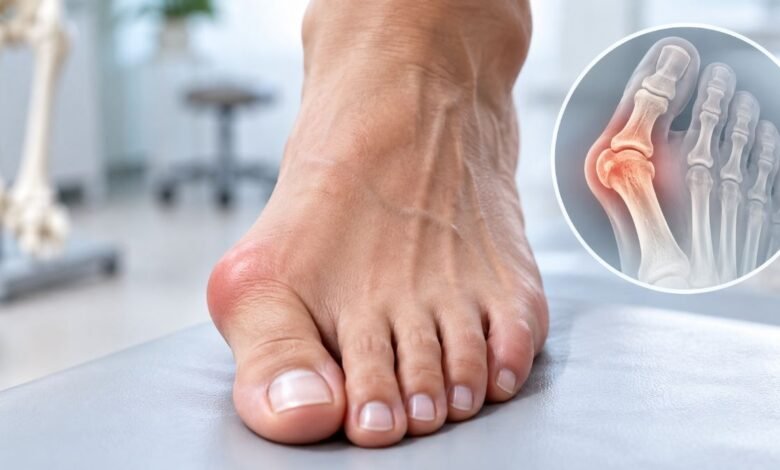
Hallux valgus is a common foot problem in which the big toe slowly moves toward the smaller toes, causing the joint at its base to stick out. This bump is known as a bunion, but the issue is more than just a lump on the side of the foot. Changes in bone position, joint movement, soft tissues, and pressure on the front of the foot can all cause discomfort. Some people have a visible bunion with little pain, while others feel soreness, have trouble finding comfortable shoes, or notice less mobility. Knowing how this condition develops can help you make better choices about shoes, pain relief, seeing a doctor, and treatment.
What Is Hallux Valgus?
The big toe joins the first metatarsal bone at a key joint used for standing and walking. With hallux valgus, the big toe moves toward the second toe, while the first metatarsal shifts away. This change makes the joint more noticeable.
The bump can get irritated if it rubs against shoes. The area around it might feel sore or swollen, and a change in the position of the big toe can affect how weight is distributed across the front of the foot. In severe cases, the big toe can press against the other toes, leading to calluses or other toe problems.
Not every bunion needs treatment. Surgery is rarely done just for how it looks. Care decisions usually depend on pain, trouble with daily activities, shoe fit, how the problem is changing, and your overall health.
Why Does a Bunion Develop?
There is usually more than one reason for bunions. Your foot shape and family history can increase your risk of getting them, while your shoes and how you use your feet can affect symptoms or how quickly the problem gets worse.
Foot Structure and Family Tendency
You do not directly inherit a bunion, but your foot shape and how your joints move can make you more likely to develop one. Things like bone shape, joint flexibility, and how your foot works all play a part. This is why bunions can run in families and why some people get them even if they do not often wear tight shoes.
Footwear and Repeated Pressure
Shoes that are narrow around the toes can compress the forefoot and place extra pressure on the big-toe joint. High heels also push your weight forward. While these shoes are not the only cause, they can worsen pain, rubbing, and crowding. Suitable heel height can often make daily activities more manageable.
Other Contributing Conditions
Some joint or tissue problems can be linked to foot deformities. Arthritis in the big-toe joint, very flexible joints, or other structural issues can affect your symptoms and treatment options. Since many conditions can cause pain near the big toe, it is important to have a professional check you if symptoms persist or are severe, rather than trying to diagnose yourself.
Common Symptoms and Signs
The most recognizable feature is a firm bump on the inside of your foot at the base of the big toe. However, symptoms can vary widely from person to person. Tenderness around the big toe joint, swelling, skin irritation, difficulty finding comfortable shoes, and discomfort when walking. Some people develop thickened skin or calluses where areas of the foot rub together. The big toe may press against or overlap the second toe as the deformity becomes more pronounced.
You might also feel pain under the ball of your foot because the changed alignment affects how weight is spread. The size of a bunion does not always match how much it hurts; a big bunion can be painless, while a small one might be very uncomfortable.
How Hallux Valgus Is Diagnosed
A doctor usually starts by looking at your foot and asking about pain, daily activities, shoes, medical history, and any changes over time. They may check your foot while you are standing, since this can make alignment problems easier to see.
If surgery is being considered, weight-bearing X-rays are commonly used to assess bone alignment and joint condition. Imaging can help determine severity and guide procedure selection. Not everyone with a bunion needs an X-ray, especially when symptoms are mild and surgery is not being planned.
It is especially important to see a doctor if a joint suddenly gets very red, hot, or very painful, since problems like gout, infection, arthritis, or injury can cause similar symptoms.
Non-Surgical Treatment Options
Conservative treatment cannot reliably straighten the underlying bone deformity, but it can reduce pressure and improve comfort. For many people, symptom control is enough to maintain normal activities.
Choose More Comfortable Footwear
The first thing to try is often changing your shoes. Choose ones with plenty of space for your toes, enough width, a soft top, and a firm sole. Shoes should not squeeze the bunion or push your toes together. Avoiding narrow or pointed shoes can help lower friction and pressure.
A shoe might be your usual size but still not fit well if its shape does not match your foot. Comfort and space for your toes are just as important as the size number.
Pads, Spacers, and Insoles
Bunion pads or soft sleeves can help reduce shoe-related rubbing. Toe spacers may make you more comfortable by keeping the big and second toes apart. Insoles or orthotics can help some people by spreading out pressure or supporting the foot.
These products are for managing symptoms, not for curing the problem. They do not usually fix a bunion that is already there.
Managing Pain and Irritation
Using a wrapped ice pack for short periods can help with soreness after activity. Some people can use over-the-counter pain medicine, but not everyone. Health conditions, allergies, pregnancy, or other medicines can affect what is safe, so ask a pharmacist or doctor if you are unsure.
Cutting back on activities that cause significant pain can help during flare-ups. The main goal is to stay active as much as you can without putting too much pressure on the joint.
When Is Surgery Considered?
Doctors may talk about surgery if pain stays bad even after trying non-surgical treatments, if the bunion makes daily life hard, or if you cannot find shoes that fit. The decision is based on symptoms and how your foot works, not just how it looks.
There is not one surgery that works for everyone. A common method is an osteotomy, in which the bone is cut and repositioned, often held in place with screws or other devices. The exact technique depends on your bunion, joint health, and the surgeon’s plan. Some surgeries require larger incisions, while others can be performed with smaller ones.
Recovery takes time. You may need special shoes to keep your foot raised, care for the wound, limit how much weight you put on your foot for a while, and slowly get back to normal activities. Swelling can last even after the first healing stage.
Complications are possible, including infection, stiffness, nerve irritation, delayed bone healing, persistent pain, recurrence, or problems with fixation. A surgeon should explain the expected benefits, recovery plan, and individual risks before treatment.
Can Hallux Valgus Be Prevented?
Not every case can be prevented because your foot shape and family history matter. Still, lowering extra pressure on the front of your foot can help keep you comfortable. For the toes, avoid footwear that repeatedly causes pain, and address persistent foot problems early. People who spend long periods standing or walking may benefit from rotating comfortable footwear and paying attention to pressure points before irritation becomes significant.
Claims that a splint, exercise, or home device can permanently erase a mature bunion should be treated cautiously. Exercises may support movement and comfort, but an established structural deformity is not generally corrected without surgery.
When to See a Healthcare Professional
It is a good idea to see a doctor if pain lasts for weeks even after changing shoes, if symptoms make walking or daily life hard, or if the bunion seems to be getting worse. People with diabetes, poor blood flow, numbness, inflammatory arthritis, or a history of foot ulcers should seek medical advice for any new foot issues.
More urgent assessment may be needed for severe swelling, spreading redness, fever, an open wound, sudden inability to bear weight, or other signs of infection or acute injury. These symptoms should not simply be assumed to come from a bunion.
Living Comfortably With a Bunion
Many people live well with bunions without surgery. Simple changes can help a lot, like picking shoes that fit your foot shape, using padding if there is rubbing, and changing activities if your joint gets sore.
It is best to judge treatment by how well you can move. Walking comfortably, working, exercising, and wearing practical shoes are more important than having a perfectly straight toe. If non-surgical steps stop working, a foot doctor or specialist can help you decide what to do next.
Conclusion
Hallux valgus is a change in the big-toe joint that can be painless or cause significant discomfort and difficulty moving. Foot shape, how your foot works, family history, and shoes all matter. Wearing wider shoes, using padding, toe spacers, or certain insoles can help with symptoms, but they usually do not fix the bunion.
Surgery can correct alignment in appropriately selected patients, but it requires careful assessment and a realistic understanding of recovery and possible complications. The best approach is individualized: manage symptoms, protect function, use comfortable footwear, and seek professional advice when pain or limitation persists.
FAQs
Is hallux valgus the same as a bunion?
The terms are closely related. Hallux valgus describes the altered alignment of the big toe, while a bunion is the prominent bump that develops around the joint at its base.
Can a bunion go away without surgery?
An established bony deformity usually does not resolve with conservative care. Non-surgical treatments can, however, reduce pressure, rubbing, and pain.
Do tight shoes cause every bunion?
No. Foot structure and inherited biomechanical tendencies are important, while narrow or poorly fitting shoes can contribute to pressure and aggravate symptoms.
When should surgery be considered?
Surgery is generally considered when pain or functional limitation remains significant despite appropriate non-surgical treatment. It is not usually recommended purely for appearance.
Can bunions return after surgery?
Yes. Recurrence is possible after correction, although individual risk depends on the original deformity, surgical technique, healing, and other factors.