
абаяс Explained: The History and Reality Behind Abaya Fashion
Editor's note: Official dress guidance and school policies may change. Check the linked authorities for the latest rules.

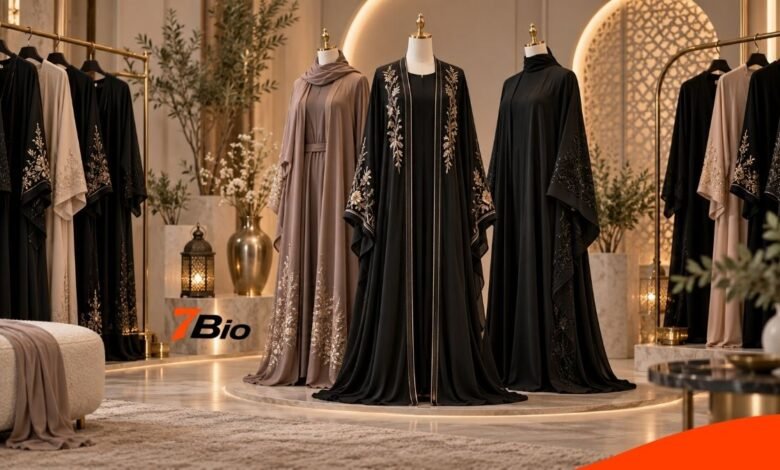
абаяс is a Cyrillic spelling encountered in online discussions of abayas, loose outer garments widely associated with modest dress. Based on the evidence reviewed for this article, it is not the name of a clearly identifiable public figure, company, or event. The garment has a longer, more varied history than the familiar image of a black robe suggests. The Metropolitan Museum of Art preserves a Syrian example dating from the late nineteenth to early twentieth century. At the same time, current British government guidance says female visitors to Saudi Arabia do not have to wear an abaya. Both facts challenge the idea that one design, meaning or rule applies everywhere.
Quick Facts
- Term addressed: абаяс, used here to refer to abayas.
- Basic form: A loose outer cloak or robe, with regional and historical variations.
- Historic example: The Metropolitan Museum of Art holds a Syrian abaya dated to the late nineteenth–early twentieth century.
- Historical wearers: The Met describes the cloak as a type of garment worn by both men and women.
- UK travel guidance: Female visitors to Saudi Arabia do not have to wear an abaya or cover their hair, according to the UK Foreign, Commonwealth & Development Office.
- Policy distinction: France restricts abaya-type clothing for pupils in state schools, not as a blanket ban on wearing abayas everywhere.
What абаяс Means — and Why the Spelling Matters
The English word abaya commonly refers to a full-length, loose-fitting outer garment; abayas is the plural. The Cyrillic string appears in some online clothing descriptions, but that doesn’t make it a standard dictionary spelling in every language that uses Cyrillic characters. A search for абаяс can therefore lead to garments and fashion listings rather than a biography.
That distinction matters editorially. Treating a clothing term as a person’s name would encourage invented birth dates, careers and relationships. It would also obscure what readers are more likely looking for: a clear explanation of the garment, its background and how it is worn.
Abayas are often discussed alongside hijabs, but the terms aren’t interchangeable. An abaya ordinarily refers to a garment covering the body, whereas a hijab commonly refers to a head covering. The two may be worn together, but neither term automatically describes the other.
An Older History Than the Modern Black Robe
The Metropolitan Museum of Art’s Abaya Cloak record describes an ornate Syrian garment probably made in Aleppo or Damascus in the late nineteenth or early twentieth century. It includes silk, cotton, and metal-wrapped thread. The museum explains that wealthy Bedouin and town and village residents commissioned elaborate examples for weddings, ceremonies, and diplomatic gifts.
This evidence complicates a widespread assumption. The museum calls the abaya a historically unisex type of cloak, whereas contemporary fashion discussions often focus on women’s garments. The same name can therefore cover forms and social uses that differ by time and place. That history explains why абаяс should not be defined only through contemporary women’s outfits.
The British Museum also catalogs an abaya as a rural man’s cloak made from cream wool. Together, these collections show why a single photograph cannot represent the full history of abaya clothing. Its familiar modern silhouette is only part of a broader clothing tradition.
These records document specific historical objects, not proof of one exact place or date for the abaya’s invention. A precise invention date has not been established by the sources reviewed here.
How Contemporary Abayas Became More Varied
Black, loose-fitting robes remain an important reference point in reporting on Saudi clothing. Yet color and construction have changed visibly over the years.
Reuters reported in March 2018 that some Saudi women wore light blue or pink abayas and adopted open-front designs over skirts or jeans. Another Reuters report that year described embroidered, colorful reinterpretations by Saudi designers. These were documented developments, not evidence that every wearer preferred them.
In fashion searches, абаяс may be grouped by cut, occasion or fabric rather than by region of origin. Today’s descriptive categories often include closed robes, front-opening layers and decorated occasion garments. Their appeal isn’t just about trends: different cuts allow different ways to layer clothing and express personal taste. That is a practical interpretation of the designs, not a claim about any individual wearer’s motive.
For someone comparing абаяс online, the practical questions begin with construction. Fabric composition, opacity, measurements, fastenings, and care instructions are more reliable indicators of suitability than a photograph or a label promising a particular cultural authenticity. None of those features alone establishes whether a garment meets someone’s personal or religious standards.
Clothing, Choice and Changing Rules
A discussion of абаяс becomes inaccurate when it presents clothing traditions and government requirements as if they were identical.
In September 2019, Reuters reported that Saudi Arabia’s tourism authorities said foreign women would not be required to wear abayas, although modest-dress expectations would remain. The current UK Foreign, Commonwealth & Development Office advice likewise states that female travelers need not wear the traditional robe or cover their hair. It also sets out expectations for loose-fitting clothing and coverage of elbows and knees.
Those statements concern visitors. They should not be used to make sweeping claims about the experiences of Saudi women, the expectations within particular communities or the choices people make for religious reasons.
France offers another example of why place matters. In 2023, its education ministry prohibited abaya-type clothing for pupils in public schools under rules on conspicuous religious expression. In September 2024, the Conseil d’État ruled the measure lawful. The decision concerns French state education; it does not ban abayas in all public spaces or across Europe.
For readers researching абаяс from the UK, the lesson is straightforward: local legal guidance, school policy, custom and personal preference are separate questions. A garment may be culturally meaningful without carrying the same legal status in every jurisdiction.
What Is Confirmed and What Is Not
Confirmed: Museums hold historical examples of abaya-style cloaks, including men’s garments. Reuters documented changing colors and designs in Saudi Arabia in 2018. Official British guidance says female travelers to Saudi Arabia are not required to wear an abaya. France’s highest administrative court upheld its public-school restriction in 2024.
Not established: No verified single inventor, universal origin date, standard worldwide design, or consistent global dress rule. Assertions that абаяс has one exclusive cultural meaning go beyond these sources. The spelling itself, based on the reviewed authoritative evidence, does not identify one notable individual or registered company.
Equally, the sources consulted provide no verified global sales figure or reliable 2026 market-growth estimate. Claiming one would turn a grounded cultural feature into unsupported commercial forecasting.
FAQs
Readers searching for абаяс usually want a definition first, followed by questions about clothing styles and dress requirements.
Is an abaya the same as a hijab?
No. An abaya is an outer garment, while a hijab usually refers to a head covering. A person may wear both, but the words describe different clothing items.
Are abayas always black?
No. Black is strongly associated with some traditions, but Reuters documented coloured, embroidered and open-front designs in Saudi Arabia in 2018.
Do British women have to wear an abaya when visiting Saudi Arabia?
No. The UK’s current official travel advice says female visitors do not have to wear an abaya or cover their hair. Travelers should still consult the latest dress guidance before departure.
Are abayas banned in Europe?
There is no Europe-wide ban established by the sources reviewed. France’s restriction applies specifically to pupils wearing abaya-type clothing in state schools.
Conclusion
The most useful way to understand абаяс is as a search term pointing towards the diverse history and present-day use of abayas, not as a biography subject or a uniform dress code. Museum collections demonstrate historical variety; reporting documents contemporary design choices; official guidance shows that legal expectations depend on location. Treating those three strands separately produces a more accurate picture of the garment than either fashion marketing or sweeping cultural generalizations.
